


Wydawcy
Katalog tematyczny
- Archeologia (109)
- Ekonomia, finanse, business (13704)
- Filozofia (1445)
- Historia (3040)
- Języki i językoznawstwo (2356)
- Lifestyle, hobby i rozrywka (475)
- Medycyna (9704)
- Nauki humanistyczne (4)
- Nauki o Ziemi i środowisku (2638)
- Nauki ścisłe (20412)
- Astronomia (294)
- Biologia (5119)
- Chemia (6540)
- Chemia analityczna (361)
- Chemia fizyczna (346)
- Chemia nieorganiczna (137)
- Chemia organiczna (535)
- Krystalografia (27)
- Minerologia (46)
- Fizyka (3309)
- Matematyka (4574)
- Nauki ścisłe, ogólnie (503)
- Nauki społeczne (8486)
- Nauki techniczne (13450)
- Prawo (1696)
- Publikacje informacyjne i interdyscyplinarne (1288)
- Religia i wierzenia (917)
- Technika komputerowa (4067)
- Zdrowie, relacje międzyludzkie i rozwój osobisty (657)





Informacje szczegółowe o książce
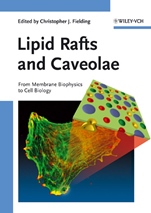
Lipid Rafts and Caveolae: From Membrane Biophysics to Cell Biology
ISBN 9783527312610
Autor: Christopher J. Fielding
Wydawca: Wiley
Dostępność: 3-6 tygodni
Cena: 1 043,70 zł
Przed złożeniem zamówienia prosimy o kontakt mailowy celem potwierdzenia ceny.
ISBN13: |
9783527312610 |
ISBN10: |
3527312617 |
Autor: |
Christopher J. Fielding |
Oprawa: |
Hardback |
Rok Wydania: |
2006-01-20 |
Ilość stron: |
294 |
Wymiary: |
248x176 |
Tematy: |
PN |
This keenly awaited first overview of the field represents a complete guide to the structure and function of the most important mammalian cell membrane organelles. Filling a huge gap in the primary literature, this book is the first to cover the subject in detail.
Following an introduction by Kai Simons, the discoverer of lipid rafts and the most prominent scientist in the field, chapters include:Historical BackgroundDistinct Structures and FunctionsStructural BasisSignalingViral Entry and Virion BuddingCholesterol TransportCaveolinsLipid ShellsCell Polarity and Intracellular TraffickingCancer Cells
The book is of prime importance to molecular and cell biologists, biochemists, membrane scientists, cancer researchers, and virologists.
Spis treści:
1 Lipid Rafts, Caveolae, and Membrane Traffic (Doris Meder and Kai Simons).
1.1 Introduction.
1.2 Basic Organization Principles of a Cell Membrane.
1.3 Evidence for Phase Separation in Model Membrane Systems: Liquid–Ordered and Liquid–Disordered Phases.
1.4 Evidence for Phase Separation in Cell Membranes: The “Raft Concept”.
1.5 Raft Domains are Clustered to Exert their Function.
1.6 The Apical Membrane of Epithelial Cells: A Percolating Raft Membrane at 25 oC.
1.7 Caveolae: Scaffolded Membrane Domains Rich in Raft Lipids.
1.8 Caveolae and Lipid Rafts in Membrane Traffic.
Abbreviations.
References.
2 The Forces that Shape Caveolae (Pierre Sens and Matthew S. Turner).
2.1 Introduction.
2.2 Physical Modeling of Lipid Membranes.
2.3 Caveolae as Invaginated Lipid Rafts.
2.4 Membrane Inclusions.
2.5 Caveolae as a Thermodynamic Phase Separation of Membrane Proteins.
2.6 Caveolae and Membrane Tension: Mechano–Sensitivity and Mechano–Regulation.
2.7 Conclusions.
Abbreviations.
References.
3 The Biophysical Characterization of Lipi
d Rafts (Pranav Sharma, Rajat Varma, and Satyajit Mayor).
3.1 Introduction: The Fluid Mosaic Model and Membrane Domains.
3.2 The Origin of the Raft Hypothesis.
3.3 The Role of Lipid–Anchored Proteins in the Development of the Membrane Raft Hypothesis.
3.4 The Case For and Against DRMs as Evidence for “Rafts” in Cell Membranes.
3.5 Why Are Biophysical Studies Useful for Understanding Lipid Rafts?
3.6 Diffusion–Based Measurements.
3.7 Proximity Measurements.
3.8 Conclusions.
Abbreviations.
References.
4 The Role of Caveolae and Noncaveolar Rafts in Endocytosis (Bo van Deurs, Frederik Vilhardt, Maria Torgersen, Kirstine Roepstorff, Anette M. Hommelgaard, and Kirsten Sandvig).
4.1 Introduction.
4.2 Caveolae are Largely Immobile, Nonendocytic Membrane Domains.
4.3 Caveolae May Show Local, Short–Range Motility: A Role in Transendothelial Transport?
4.4 An Internalization Wave of Caveolae can be Stimulated by Virus.
4.5 Role of Caveolae in Endocytosis of Cholera Toxin.
4.6 A Small Fraction of Caveolae may become Constitutively Internalized.
4.7 Caveosomes: Intracellular Caveolin–Associated Structures.
4.8 The Role of Dynamin in Caveolar Function.
4.9 Caveolin Immobilizes Rafts/Caveolar Invaginations.
4.10 A 2005 Consensus Model for Caveolar Endocytosis.
Acknowledgments.
Abbreviations.
References.
5 Role of Cholesterol in Signal Transduction from Caveolae (Christopher J. Fielding and Phoebe E. Fielding).
5.1 Introduction.
5.2 Lipids of Caveolae.
5.3 Proteins in Caveolae.
5.4 The Caveolin Scaffold Hypothesis.
5.5 FC Binding by Proteins Including Caveolin.
5.6 FC in Caveolae: Effects of Depletion and Loading.
5.7 FC Changes in Caveolae: Effects of Signal Transduction.
5.8 Summary.
Abbreviations.
References.
6 Phosphorylation of Caveolin and Signaling from Caveolae (Cynthia Corley Mastick, Amy Sanguinetti, Hai
ming Cao, and Suhani Thakker).
6.1 Introduction.
6.2 Signaling Pathways Leading to Caveolin Tyrosine Phosphorylation.
6.3 Signaling Pathways Downstream of Caveolin Tyrosine Phosphorylation.
6.4 Summary.
Abbreviations.
References.
7 Role of Lipid Microdomains in the Formation of Supramolecular Protein Complexes and Transmembrane Signaling (György Vámosi, Andrea Bodnár, György Vereb, János Szöllösi, and Sándor Damjanovich).
7.1 Introduction.
7.2 Biophysical Strategies for Studying the Lateral Organization of Membrane Proteins.
7.3 The Immunological Synapse.
7.4 Voltage–Gated K+ Channels in Lipid Rafts: Possible Involvement in Local Regulatory Processes.
7.5 Cell Fusion as a Tool for Studying Dynamic Behavior of Protein Clusters.
7.6 Lipid Rafts as Platforms for Cytokine Receptor Assembly and Signaling.
7.7 Organization and Function of Receptor Tyrosine Kinases is Linked to Lipid Microdomains.
Acknowledgments.
Abbreviations.
References.
8 Caveolin and its Role in Intracellular Chaperone Complexes (William V. Everson and Eric J. Smart).
8.1 Caveolae and Caveolin–1.
8.2 Caveolin Protein Structure, Domains, and Membrane Interactions.
8.3 Caveolin Expression and Localization in the Cell.
8.4 Caveolin Expression and Localization Varies Depending on the Physiological State of Cells in Culture.
8.5 Caveolin–1 Expression Confers a New Level of Regulation.
8.6 Caveolae Cholesterol and Caveolin Localization to Caveolae.
8.7 Caveolin and Cholesterol Cross Membranes During Trafficking.
8.8 Two Chaperone Complexes Regulate a Caveola–Cholesterol Trafficking Cycle.
8.9 Caveolae Linked to Nongenomic Actions and Uptake of Estrogen.
8.10 Protein Acylation and Caveolae.
8.11 Scavenger Receptors Localize to Caveolae.
8.12 Cholesterol Homeostasis Regulates Caveolin Localization and Organization of other Proteins in Caveolae
.
8.13 Chaperone Complexes Involved in Cholesterol Transport in Specialized Tissues.
8.14 Caveolin is Linked to Additional Sterol and Lipid Uptake and Trafficking Pathways.
8.15 Conclusions.
Abbreviations.
References.
9 The Roles of Caveolae and Caveolin in Cell Shape, Locomotion, and Stress Fiber Formation (Sang Chul Park and Kyung A. Cho).
9.1 Introduction.
9.2 Caveolin and Polarity.
9.3 Caveolin and Rho–family GTPases.
9.4 Caveolin and Focal Adhesion Complex.
9.5 The Dynamics of Caveolin and Actin.
9.6 Caveolae–Dependent Endocytosis via Actin Stress Fiber.
9.7 Summary.
Abbreviations.
References.
10 Lipid Rafts in Trafficking and Processing of Prion Protein and Amyloid Precursor Protein (Daniela Sarnataro, Vincenza Campana, and Chiara Zurzolo).
10.1 Introduction.
10.2 Lipid Rafts and Caveolae.
10.3 PrPc and Prion Diseases.
10.4 Alzheimer’s Disease: The Role of Rafts in APP Trafficking and Processing.
10.5 Conclusions.
Acknowledgments.
Abbreviations.
References.
11 Caveolae and the Endothelial Nitric Oxide Synthase (Olivier Feron).
11.1 Introduction.
11.2 Caveolin: A Scaffold for eNOS.
11.3 The Caveolin–eNOS Regulatory Cycle.
11.4 Lipoproteins and Caveolin–eNOS Interaction.
11.5 Angiogenesis and Caveolin–eNOS Interaction.
11.6 Vasodilation, Endothelial Permeability and Caveolin–eNOS Interaction.
11.7 Caveolin–3–eNOS Interaction in Cardiac Myocytes.
11.8 Conclusions.
Abbreviations.
References.
12 The Role of Caveolin–1 in Tumor Cell Survival and Cancer Progression (Dana Ravid and Mordechai Liscovitch).
12.1 Introduction.
12.2 The Caveolin–1 Gene and its Regulation During Differentiation and Transformation.
12.3 Divergent Expression of Caveolin–1 in Human Cancer: The Case of Lung Cancer.
12.4 Actions of Caveolin–1 in Cancer Cells: Effects of He
Koszyk
Książek w koszyku: 0 szt.
Wartość zakupów: 0,00 zł
Informacje


Kontakt
Gambit
Centrum Oprogramowania
i Szkoleń Sp. z o.o.
Al. Pokoju 29b/22-24
31-564 Kraków
Siedziba Księgarni
ul. Kordylewskiego 1
31-542 Kraków
+48 12 410 5991
+48 12 410 5987
+48 12 410 5989
Subskrypcje
Administratorem danych osobowych jest firma Gambit COiS Sp. z o.o. Na podany adres będzie wysyłany wyłącznie biuletyn informacyjny.
Autoryzacja płatności

Informacje na temat autoryzacji płatności poprzez PayU.

© Copyright 2012: GAMBIT COiS Sp. z o.o. Wszelkie prawa zastrzeżone.
Projekt i wykonanie: Alchemia Studio Reklamy