


Wydawcy
Katalog tematyczny
- Archeologia (109)
- Ekonomia, finanse, business (13704)
- Filozofia (1445)
- Historia (3040)
- Języki i językoznawstwo (2356)
- Lifestyle, hobby i rozrywka (475)
- Medycyna (9704)
- Nauki humanistyczne (4)
- Nauki o Ziemi i środowisku (2638)
- Nauki ścisłe (20412)
- Nauki społeczne (8486)
- Nauki techniczne (13450)
- Prawo (1696)
- Publikacje informacyjne i interdyscyplinarne (1288)
- Religia i wierzenia (917)
- Technika komputerowa (4067)
- Zdrowie, relacje międzyludzkie i rozwój osobisty (657)





Informacje szczegółowe o książce
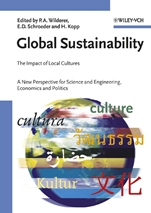
Global Sustainability: The Impact of Local Cultures, A New Perspective for Science and Engineering, Economics and Politics
ISBN 9783527312368
Autor: Peter A. Wilderer, Edward D. Schroeder, Horst Kopp
Wydawca: Wiley
Dostępność: 3-6 tygodni
Cena: 990,15 zł
Przed złożeniem zamówienia prosimy o kontakt mailowy celem potwierdzenia ceny.
ISBN13: |
9783527312368 |
ISBN10: |
3527312366 |
Autor: |
Peter A. Wilderer, Edward D. Schroeder, Horst Kopp |
Oprawa: |
Hardback |
Rok Wydania: |
2004-11-26 |
Ilość stron: |
265 |
Wymiary: |
249x181 |
Tematy: |
AT |
This first book to focus on cultural diversity as a key element of sustainable development in the context of science and engineering provides cross–disciplinary information and assistance in understanding our world in transition. As such, it furnishes the global scientific community and decision makers in governmental and non–governmental institutions as well as in industry with much–need information on how the various factors affecting sustainable development –– including culture –– depend on and interfere with each other.
Featuring a contribution by the President of the Club of Rome, HRH Prince El Hassan bin Talal, this is vital reading for all (natural) scientists, engineers, economists, ecologists, environmental organizations, and consultants.
Spis treści:
Preface.
List of Contributors.
Key Note Address.
1 History and Mandate of Sustainability: From Local Forestry to Global Policy.
1.1 Sustainability: Key Word in the Today’s Policy Discussion.
1.2 History and Definitions of “Sustainability”.
1.2.1 Development of the Technical Terminus in Forestry.
1.2.2 Application in Environmental Politics.
1.2.3 The Definition of “Sustainability” – A Social Negotiation Process on Local and Global Levels?
1.3 Experiences from Forestry and Transfer into other Economic Fields – Possibilities and Limits.
1.3.1 Peculiarities of Forest Ecosystems and Forest Management.
1.3.2 Concept of Industrial Ecology.
1.3.3 Limits in Transferring the Forestry Model to other Economic Sectors.
1.3.4 Approximation to the Ideal “Sustainability”.
1.4 Conclusion.
Acknowledgement.
References.
2 Sustainable Development: Exploring the Cross–Cultural Dimension.
2.1 Introduction.
2.2 Perspectives on Sustainable Development.
2.3 Prerequisites for Sustainable Development.
2.4 Sustainability: Essentials for
a Realistic Cross–Cultural Concept.
2.5 Qualitative Growth as a Prerequisite for Sustainable Development.
2.6 Outlook.
References.
3 Sustainable Development and Cultural Diversity.
3.1 Introduction.
3.2 The Vertical vs. Horizontal Dimension of Sustainability.
3.3 The Relevance of Cultural Diversity.
3.4 Globalization and Cultural Diversity.
3.5 Agricultural Sector.
3.6 Media Industry.
3.7 Tourism.
3.8 Conclusion.
References.
4 Technological Progress in Different Cultures and Periods: Historical Evolution Projected into the Future.
4.1 Introduction.
4.2 Historical Perspective.
4.2.1 Why and Where Technological Progress?
4.2.2 Religious and Secular Approaches.
4.2.3 Perception of Nature as an Obstacle to Technical Progress.
4.2.4 Enlightenment: A Step towards Modern Times.
4.3 Modernity and the Sustainability Concept.
4.3.1 The Twentieth Century.
4.3.2 The Twenty–first Century.
4.4 In Search of a Coherent Evolution of Technology: Past and Future.
4.5 Conclusions.
References.
5 Views of Sustainability: Elements of a Synthesis.
5.1 Introduction.
5.2 Definitions.
5.2.1 The Weak Version.
5.2.2 The Strong Version.
5.2.3 Alternative Views and Discussion.
5.3 Accounting for SD.
5.4 The Hartwick–Solow Rule.
5.5 Substitutability and the Role of Technical Progress.
5.6 Catastrophe Points.
5.7 Summary Classification of Economic Models.
5.8 Discount Rate.
5.9 Discussion.
References.
6 A New Way of Thinking about Sustainability, Risk and Environmental Decision–Making.
6.1 Introduction.
6.2 Complicated Technology vs. Complex Technology.
6.3 Errors in Thinking and Attitudes.
6.4 The Current View of Sustainability and Risk Analysis.
6.5 A New View of Sustainability.
6.6 An Expanded View of Risk.
6.7 An Expanded Process of Environmental Decision Making.
6.8 Conclusions.
References.
7 Humility and Establishing the Sustainable Environment.
7.1 Introduction.
7.2 Pristine Environments and Preservation.
7.3 Specieism.
7.4 Where Do We Go/How Do We Get There?
7.5 Conclusions.
Acknowledgment.
References.
8 Conflicts and Conflict–solving as Chances to Make the Concept of Sustainable Development Work.
8.1 Sustainability as a Conflict–generating Vision.
8.2 Approaches to Conflict Resolution.
8.3 The Integrative Concept of Sustainable Development as a Framework for Cultural Conflict Resolution.
8.3.1 The Integrative Concept – An Overview.
8.3.2 Conclusions Drawn for Cultural Conflict Management.
8.4 Research Perspectives.
8.5 Summary.
References.
9 Sustainability through Science–Technology–Society Education.
9.1 Introduction.
9.2 What is Science–Technology–Society Education?
9.2.1 STS and Sustainability.
9.3 Sample Educational Topics Involving the Everglades.
9.3.1 A Sample Instructional Activity.
9.4 Issues.
9.5 Summary and Implications.
References.
10 Sustainability and Consumption of Raw Materials in Germany.
10.1 Religion and Sustainability are in Great Demand.
10.1.1 Why do We Not Use the Knowledge of the Ancients?
10.1.2 The Present Economic Trends and Ecological Effects.
10.1.3 The Prices Do Not Say Ecological Truth.
10.1.4 Existence of the Possibility to Decouple Economic Growth from the Ecologic Destruction?
10.1.5 Sustainability as a Survival Strategy.
10.1.6 Worldwide Interlacing Will Make our Prosperity Safe.
10.2 Conclusions.
References.
11 Sustainability, Culture and Regional Scales: Some Remarks from Human Geography.
References.
12 Sustainable Development in Asia: Traditional Ideas and Irreversible Processes.
12.1 Introduction.
12.2 Population Growth as a Major Challenge to Sustainable Development.
12.3 Traditional Ideas of Sustainabili
ty and the Technocratic Ambitions of Modern Governments.
12.4 Sustainable Societies in Asia.
12.5 Conclusions.
References.
13 Sustainability of Development and Valuation of Non–renewable Resources: An Analysis in the Context of Local Cultures.
13.1 Introduction.
13.2 Sustainability in the Context of Economics of Ecology.
13.3 Energy Options and Sustainable Development in the Developing World.
13.4 Cultural Norms and Concerns for Sustainability in Formulating
Development Strategy by National and International Agencies.
13.5 Conclusions.
References.
14 Sustainability in Latin American Countries: Challenge and Opportunities for Argentina.
14.1 Introduction.
14.2 Core Areas for Sustainable Development.
14.3 What are the Consequences?
14.4 Where Should We Go: Evolution and Tendency?
14.5 How Do We Get There: Driving Forces?
14.6 Eco–Efficiency Production.
14.7 Joining Efforts to Sustainable Development.
14.8 Some Cases from Argentina.
14.9 Conclusions.
References.
15 On the Roles Engineers May Play in the Attempt to Meet Basic Demands of Man and Nature.
15.1 Millennium Development Goals.
15.2 Engineers and Sustainability.
15.3 Design of Technology in a Globalizing World.
15.3.1 The Cultural Dimension.
15.3.2 The Global Dimension.
15.3.3 Synthesis.
15.4 Urgent Questions to be Answered.
15.5 Conclusions.
References.
16 Integrating Cultural Aspects in the Implementation of Large Water Projects.
16.1 General Conditions.
16.2 Agenda 21 and Integrated Water Resources Management as a Steering Model.
16.3 Parameters of Success Under the Aspect of “Implicit Culture”.
16.4 Success Components According to the TTW–Model.
16.5 Appropriate Technology.
16.6 Management.
16.7 Personalities.
16.8 Idea of the Implementation of Cultural Strength as an “Explicit Cultural Aim”.
16.9 Integral Plannin
Koszyk
Książek w koszyku: 0 szt.
Wartość zakupów: 0,00 zł
Informacje


Kontakt
Gambit
Centrum Oprogramowania
i Szkoleń Sp. z o.o.
Al. Pokoju 29b/22-24
31-564 Kraków
Siedziba Księgarni
ul. Kordylewskiego 1
31-542 Kraków
+48 12 410 5991
+48 12 410 5987
+48 12 410 5989
Subskrypcje
Administratorem danych osobowych jest firma Gambit COiS Sp. z o.o. Na podany adres będzie wysyłany wyłącznie biuletyn informacyjny.
Autoryzacja płatności

Informacje na temat autoryzacji płatności poprzez PayU.

© Copyright 2012: GAMBIT COiS Sp. z o.o. Wszelkie prawa zastrzeżone.
Projekt i wykonanie: Alchemia Studio Reklamy