


Wydawcy
Katalog tematyczny
- Archeologia (109)
- Ekonomia, finanse, business (13704)
- Filozofia (1445)
- Historia (3040)
- Języki i językoznawstwo (2356)
- Lifestyle, hobby i rozrywka (475)
- Medycyna (9704)
- Nauki humanistyczne (4)
- Nauki o Ziemi i środowisku (2638)
- Nauki ścisłe (20412)
- Astronomia (294)
- Biologia (5119)
- Chemia (6540)
- Chemia analityczna (361)
- Chemia fizyczna (346)
- Chemia nieorganiczna (137)
- Chemia organiczna (535)
- Krystalografia (27)
- Minerologia (46)
- Fizyka (3309)
- Matematyka (4574)
- Nauki ścisłe, ogólnie (503)
- Nauki społeczne (8486)
- Nauki techniczne (13450)
- Prawo (1696)
- Publikacje informacyjne i interdyscyplinarne (1288)
- Religia i wierzenia (917)
- Technika komputerowa (4067)
- Zdrowie, relacje międzyludzkie i rozwój osobisty (657)





Informacje szczegółowe o książce
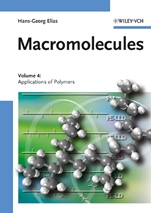
Macromolecules: Volume 4: Applications of Polymers
ISBN 9783527311750
Autor: Hans–Georg Elias
Wydawca: Wiley
Dostępność: 3-6 tygodni
Cena: 1 359,75 zł
Przed złożeniem zamówienia prosimy o kontakt mailowy celem potwierdzenia ceny.
ISBN13: |
9783527311750 |
ISBN10: |
3527311750 |
Autor: |
Hans–Georg Elias |
Oprawa: |
Hardback |
Rok Wydania: |
2009-05-13 |
Ilość stron: |
727 |
Wymiary: |
247x181 |
Tematy: |
PN |
Macromolecules" provides a broad survey of the entire subject; integrated representations of chemistry, physics, and technology, precise descriptions and definitions of basic phenomena; and balanced treatments of facts and theory. The book series thus intends to bridge the gap between introductory textbooks and the highly specialized texts and monographs that cover only part of polymer science and technology.
Volume I is concerned with the fundamentals of chemical structures and principles of synthesis of macromolecules.
Volume II discussed a weslth of individual polymers and their industrial syntheses, classified according to their chemical structure.
Volume III focuses on the fundamentals of physical structure and properties.
Volume IV describes industrially important polymers, their adjuvants, processing, and applications as fibers, fabrics, elastomers, working materials (including composites and blends), porous polymers, packaging materials, solutions and gels, coatings, adhesives and inks, electrical insulators and conductors, and optical materials, LEDs, solar cells, etc.
Spis treści:
Motto.
Preface.
List of Symbols.
1 Introduction.
1.1 Materials.
1.2 Polymeric Materials.
Literature to Chapter 1.
References to Chapter 1.
2 Polymers.
2.1 Chemical Structure.
2.2 Physical Structure.
Literature to Chapter 2.
3 Polymer Adjuvants.
3.1 Overview.
3.2 Dyestuffs.
3.3 Fillers.
3.4 Other Adjuvants for Application Properties.
3.5 Processing Aids.
3.6 Chemically Acting Adjuvants.
Literature to Chapter 3.
References to Chapter 3.
4 Processing.
4.1 Introduction.
4.2 Flow Properties.
4.3 Processing Fundamentals.
4.4 Processing of Viscous Materials.
4.5 Processing of Viscoelastic Polymers.
4.6 Forming.
4.7 Fabricating.
4.8 Surface Finish.
Literature to Chapter 4.
References to Chapter 4.
5 Testing.
5.1 Overview
.
5.2 Thermal Properties.
5.3 Tensile Testing.
5.4 Impact Strength.
5.5 Hardness.
Literature to Chapter 5.
References to Chapter 5.
6 Fibers and fabrics.
6.1 Introduction.
6.2 Manufacture of Fibers and Threads.
6.3 Textile Fibers.
6.4 Yarns.
6.5 Textiles.
6.6 Textile Finishing.
6.7 Technical Organic Fibers.
6.8 Inorganic Fibers.
6.9 Paper.
6.10 Leathers.
Literature to Chapter 6.
References to Chapter 6.
7 Rubbers and Elastomers.
7.1 Overview.
7.2 Raw Rubbers.
7.3 General Purpose Rubbers.
7.4 Specialty Rubbers.
7.5 Thermoplastic Elastomers.
7.6 Liquid–crystalline Elastomers.
7.7 Recycling and Reclaiming.
Literature to Chapter 7.
References to Chapter 7.
8 Thermoplastics and Thermosets.
8.1 Introduction.
8.2 Standard Thermoplastics.
8.3 Engineering Thermoplastics.
8.4 High–Performance Thermoplastics.
8.5 Thermosets.
8.6 Disposal and Recycling.
Literature to chapter 8.
References to Chapter 8.
9 Polymer Composites.
9.1 Polymer Systems.
9.2 Mixture Rules.
9.3 Tensile Moduli.
9.4 Strengths.
9.5 Fracture Elongation.
9.6 Thermal Properties.
9.7 Rheological Properties.
9.8 Macrocomposites.
Historical Notes to Chapter 9.
Literature to Chapter 9.
References to Chapter 9.
10 Polymer Mixtures.
10.1 Overview.
10.2 Miscibility.
10.3 Plasticized Polymers.
10.4 Polymer Blends.
10.5 Porous Polymers.
Literature to Chapter 10.
References to Chapter 10.
11 Polymer Solutions and Gels.
11.1 Overview.
11.2 Solubility of Polymers.
11.3 Viscosity of Polymer Solutions.
11.4 Polymer Solutions.
11.5 Polymer Dispersions.
11.6 Polymer Gels.
Literature to Chapter 11.
References to Chapter 11.
12 Coatings and Adhesive.
12.1 Introduction.
12.2 Polymers in and at Surfaces.
12.3 Adhesives.
12.4 Paints and Coatings.
12.5 Prin
ting Inks.
12.6 Depots.
Literature to Chapter 12.
References to Chapter 12.
13 Packaging Materials.
13.1 Introduction.
13.2 Permeation.
13.3 Applications.
Literature to Chapter 13.
References to Chapter 13.
14 Electrical and Electronic Uses of Polymers.
14.1 Introduction.
14.2 Insulators.
14.3 Electrical Conductors.
Historical Notes to Chapter 14.
Literature to Chapter 14.
References to Chapter 14.
15 Polymers in Optics and Optoelectronics.
15.1 Geometrical Optical Properties.
15.2 Effects of Light Scattering.
15.3 Optoelectronics and Photonics.
Literature to Chapter 15.
References to Chapter 15.
16 Appendix.
16.1 SI Physical Quantities and Units.
16.2 Conversion of Units.
16.3 Concentrations.
16.4 Ratios of Physical Quantities.
16.5 Polymer Codes: General Aspects.
16.6 Names and Codes of Fibers.
16.7 Codes for Rubbers.
16.8 Codes for Thermoplastics and Thermosets.
16.9 Other Codes.
Literature about Physical Measures and Units.
17 Subject Index.
Advice.
Nota biograficzna:
Hans–Georg Elias was born in 1928. He studied at the Technical University of Hanover, Germany, and received his Ph.D. at the Technical University of Munich in 1957. After habilitation at the Swiss Federal Institute of Technology (Zurich) in 1961, he was appointed Senior Lecturer and later a professor of organic–chemical technology. In 1971, he became founding president and professor of Polymer Science at the Michigan Molecular Institute (MMI) in Midland, Michigan. During these years, he also worked as consultant to the polymer industry in Germany, Switzerland, and the United States and expert witness to companies and the court. He was an in–house consultant at The Dow Chemical Co., Midland (MI) (1983/84) and an independent consultant between 1985 and 1993. He continues to teach occasionally at MMI.
Professor
Elias has published more than 200 scientific and technical papers and two patents on the synthesis, characterization, structure, properties, and application of synthetic and biological polymers. His ten authored or edited books have been published in English, French, German, and/or Russian. He has lectured on invitation in fifteen countries and was a member of editorial boards of five polymer journals.
Okładka tylna:
"Macromolecules" provides a broad survey of the entire subject; integrated representations of chemistry, physics, and technology, precise descriptions and definitions of basic phenomena; and balanced treatments of facts and theory. The book series thus intends to bridge the gap between introductory textbooks and the highly specialized texts and monographs that cover only part of polymer science and technology.
Volume I is concerned with the fundamentals of chemical structures and principles of synthesis of macromolecules.
Volume II discussed a weslth of individual polymers and their industrial syntheses, classified according to their chemical structure.
Volume III focuses on the fundamentals of physical structure and properties.
Volume IV describes industrially important polymers, their adjuvants, processing, and applications as fibers, fabrics, elastomers, working materials (including composites and blends), porous polymers, packaging materials, solutions and gels, coatings, adhesives and inks, electrical insulators and conductors, and optical materials, LEDs, solar cells, etc.
Koszyk
Książek w koszyku: 0 szt.
Wartość zakupów: 0,00 zł
Informacje


Kontakt
Gambit
Centrum Oprogramowania
i Szkoleń Sp. z o.o.
Al. Pokoju 29b/22-24
31-564 Kraków
Siedziba Księgarni
ul. Kordylewskiego 1
31-542 Kraków
+48 12 410 5991
+48 12 410 5987
+48 12 410 5989
Subskrypcje
Administratorem danych osobowych jest firma Gambit COiS Sp. z o.o. Na podany adres będzie wysyłany wyłącznie biuletyn informacyjny.
Autoryzacja płatności

Informacje na temat autoryzacji płatności poprzez PayU.

© Copyright 2012: GAMBIT COiS Sp. z o.o. Wszelkie prawa zastrzeżone.
Projekt i wykonanie: Alchemia Studio Reklamy