


Wydawcy
Katalog tematyczny
- Archeologia (109)
- Ekonomia, finanse, business (13704)
- Filozofia (1445)
- Historia (3040)
- Języki i językoznawstwo (2356)
- Lifestyle, hobby i rozrywka (475)
- Medycyna (9704)
- Nauki humanistyczne (4)
- Nauki o Ziemi i środowisku (2638)
- Nauki ścisłe (20412)
- Astronomia (294)
- Biologia (5119)
- Chemia (6540)
- Chemia analityczna (361)
- Chemia fizyczna (346)
- Chemia nieorganiczna (137)
- Chemia organiczna (535)
- Krystalografia (27)
- Minerologia (46)
- Fizyka (3309)
- Matematyka (4574)
- Nauki ścisłe, ogólnie (503)
- Nauki społeczne (8486)
- Nauki techniczne (13450)
- Prawo (1696)
- Publikacje informacyjne i interdyscyplinarne (1288)
- Religia i wierzenia (917)
- Technika komputerowa (4067)
- Zdrowie, relacje międzyludzkie i rozwój osobisty (657)





Informacje szczegółowe o książce
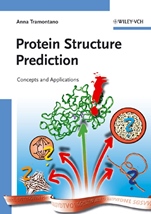
Protein Structure Prediction: Concepts and Applications
ISBN 9783527311675
Autor: Anna Tramontano, Arthur M. Lesk
Wydawca: Wiley
Dostępność: 3-6 tygodni
Cena: 422,10 zł
Przed złożeniem zamówienia prosimy o kontakt mailowy celem potwierdzenia ceny.
ISBN13: |
9783527311675 |
ISBN10: |
352731167X |
Autor: |
Anna Tramontano, Arthur M. Lesk |
Oprawa: |
Paperback |
Rok Wydania: |
2006-01-20 |
Ilość stron: |
228 |
Wymiary: |
243x171 |
Tematy: |
PN |
While most textbooks on bioinformatics focus on genetic algorithms and treat protein structure prediction only superficially, this course book assumes a novel and unique focus. Adopting a didactic approach, the author explains all the current methods in terms of their reliability, limitations and user–friendliness. She provides practical examples to help first–time users become familiar with the possibilities and pitfalls of computer–based structure prediction, making this a must–have for students and researchers.
Spis treści:
Foreword.
Preface.
Acknowledgments.
Introduction.
1 Sequence, Function, and Structure Relationships.
1.1 Introduction.
1.2 Protein Structure.
1.3 The Properties of Amino Acids.
1.4 Experimental Determination of Protein Structures.
1.5 The PDB Protein Structure Data Archive.
1.6 Classification of Protein Structures.
1.7 The Protein–folding Problem.
1.8 Inference of Function from Structure.
1.9 The Evolution of Protein Function.
1.10 The Evolution of Protein Structure.
1.11 Relationship Between Evolution of Sequence and Evolution of Structure.
2 Reliability of Methods for Prediction of Protein Structure.
2.1 Introduction.
2.2 Prediction of Secondary Structure.
2.3 Prediction of Tertiary Structure.
2.4 Benchmarking a Prediction Method.
2.5 Blind Automatic Assessments.
2.6 The CASP Experiments.
3 Ab–initio Methods for Prediction of Protein Structures.
3.1 The Energy of a Protein Configuration.
3.2 Interactions and Energies.
3.3 Covalent Interactions.
3.4 Electrostatic Interactions.
3.5 Potential–energy Functions.
3.6 Statistical–mechanics Potentials.
3.7 Energy Minimization.
3.8 Molecular Dynamics.
3.9 Other Search Methods: Monte Carlo and Genetic Algorithms.
3.10 Effectiveness of Ab–initio Methods for Folding a Protein.
4 Evolutionary–
;based Methods for Predicting Protein Structure: Comparative Modeling.
4.1 Introduction.
4.2 Theoretical Basis of Comparative Modeling.
4.3 Detection of Evolutionary Relationships from Sequences.
4.4 The Needleman and Wunsch Algorithm.
4.5 Substitution Matrices.
4.6 Template(s) Identification Part I.
4.7 The Problem of Domains.
4.8 Alignment.
4.9 Template(s) Identification Part II.
4.10 Building the Main Chain of the Core.
4.11 Building Structurally Divergent Regions.
4.12 A Special Case: Immunoglobulins.
4.13 Side–chains.
4.14 Model Optimization.
4.15 Other Approaches.
4.16 Effectiveness of Comparative Modeling Methods.
5 Sequence–Structure Fitness Identification: Fold–recognition Methods.
5.1 The Theoretical Basis of Fold–recognition.
5.2 Profile–based Methods for Fold–recognition.
5.3 Threading Methods.
5.4 Profile–Profile Methods.
5.5 Construction and Optimization of the Model.
6 Methods Used to Predict New Folds: Fragment–based Methods.
6.1 Introduction.
6.2 Fragment–based Methods.
6.3 Splitting the Sequence into Fragments and Selecting Fragments from the Database.
6.4 Generation of Structures.
7 Low–dimensionality Prediction: Secondary Structure and Contact Prediction.
7.1 Introduction.
7.2 A Short History of Secondary structure Prediction Methods.
7.3 Automatic learning Methods.
7.3.1 Artificial Neural Networks.
7.3.2 Support Vector Machines.
7.4 Secondary structure Prediction Methods Based on Automatic Learning Techniques.
7.5 Prediction of Long–range Contacts.
8 Membrane Proteins.
8.1 Introduction.
8.2 Prediction of the Secondary Structure of Membrane Proteins.
8.3 The Hydrophobic Moment.
8.4 Prediction of the Topology of Membrane Proteins.
9 Applications and Examples.
9.1 Introduction.
9.2 Early Attempts.
9.3 The HIV Prote
ase.
9.4 Leptin and Obesity.
9.5 The Envelope Glycoprotein of the Hepatitis C Virus.
9.6 HCV Protease.
9.7 Cyclic Nucleotide Gated Channels.
9.8 The Effectiveness of Models of Proteins in Drug Discovery.
9.9 The Effectiveness of Models of Proteins in X–ray Structure Solution.
Conclusions.
Glossary.
Index.
Nota biograficzna:
Anna Tramontano is Professor of Biochemistry at the Medical Faculty of the University of Rome "La Sapienza" since 2001. She received her PhD in Physics from the University of Naples (Italy) in 1980 and held various appointments at research institutes in Europe and in the U.S. before becoming Professor of Bioinformatics at the University of Milan in 1990. From 1996 to 2001 she held the position as director of Computational Biology and Chemistry at the Merck Research Laboratories in Rome.
Anna Tramontano is among the organizers of the CASP (critical assessment of protein structure prediction) conferences and is on the editorial boards of several journals.
Okładka tylna:
While most textbooks on bioinformatics focus on genetic algorithms and treat protein structure prediction only superficially, this course book assumes a novel and unique focus. Adopting a didactic approach, the author explains all the current methods in terms of their reliability, limitations and user–friendliness. She provides practical examples to help first–time users become familiar with the possibilities and pitfalls of computer–based structure prediction, making this a must–have for students and researchers.
Koszyk
Książek w koszyku: 0 szt.
Wartość zakupów: 0,00 zł
Informacje


Kontakt
Gambit
Centrum Oprogramowania
i Szkoleń Sp. z o.o.
Al. Pokoju 29b/22-24
31-564 Kraków
Siedziba Księgarni
ul. Kordylewskiego 1
31-542 Kraków
+48 12 410 5991
+48 12 410 5987
+48 12 410 5989
Subskrypcje
Administratorem danych osobowych jest firma Gambit COiS Sp. z o.o. Na podany adres będzie wysyłany wyłącznie biuletyn informacyjny.
Autoryzacja płatności

Informacje na temat autoryzacji płatności poprzez PayU.

© Copyright 2012: GAMBIT COiS Sp. z o.o. Wszelkie prawa zastrzeżone.
Projekt i wykonanie: Alchemia Studio Reklamy