


Wydawcy
Katalog tematyczny
- Archeologia (109)
- Ekonomia, finanse, business (13704)
- Filozofia (1445)
- Historia (3040)
- Języki i językoznawstwo (2356)
- Lifestyle, hobby i rozrywka (475)
- Medycyna (9704)
- Nauki humanistyczne (4)
- Nauki o Ziemi i środowisku (2638)
- Nauki ścisłe (20412)
- Astronomia (294)
- Biologia (5119)
- Biochemia (575)
- Biologia człowieka (14)
- Biologia komórkowa (377)
- Biologia molekularna (398)
- Biologia rozwoju (130)
- Biologia, ogólnie (1277)
- Botanika (280)
- Hydrobiologia (92)
- Mikrobiologia (363)
- Mykologia (22)
- Zoologia (303)
- Chemia (6540)
- Fizyka (3309)
- Matematyka (4574)
- Nauki ścisłe, ogólnie (503)
- Nauki społeczne (8486)
- Nauki techniczne (13450)
- Prawo (1696)
- Publikacje informacyjne i interdyscyplinarne (1288)
- Religia i wierzenia (917)
- Technika komputerowa (4067)
- Zdrowie, relacje międzyludzkie i rozwój osobisty (657)





Informacje szczegółowe o książce
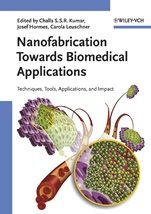
Nanofabrication Towards Biomedical Applications: Techniques, Tools, Applications, and Impact
ISBN 9783527311156
Autor: Challa S. S. R. Kumar, Josef Hormes, Carola Leuschner
Wydawca: Wiley
Dostępność: 3-6 tygodni
Cena: 1 043,70 zł
Przed złożeniem zamówienia prosimy o kontakt mailowy celem potwierdzenia ceny.
ISBN13: |
9783527311156 |
ISBN10: |
3527311157 |
Autor: |
Challa S. S. R. Kumar, Josef Hormes, Carola Leuschner |
Oprawa: |
Hardback |
Rok Wydania: |
2005-02-15 |
Ilość stron: |
442 |
Wymiary: |
253x179 |
Tematy: |
PS |
That man–made nanomaterials are on a comparable size scale with natural biological materials such as antibodies and proteins greatly facilitates their actual use, and the understanding of biology and medicine with the help of nanotechnology will enable the production of nanoscale biomimetic materials. Manifold new uses derive from up to now inaccessible physical characteristics and novel properties that come with nano size, and their exploitation for applications ranges from drug delivery to biosensors, and opens an immense new field of nanoscale life sciences.
This book not only covers scientific aspects of nanofabrication for biomedical research, but also the implications for the industry, society and education. It provides a comprehensive perspective of ongoing research, and readers from materials science, engineering, chemistry, biology and medical backgrounds will find detailed accounts of the design and synthesis of nanomaterials as well as the tools and techniques involved in their characterization and production for applications in biology and medicine.
Spis treści:
Preface.
List of Contributors.
I Fabrication of Nanomaterials.
1 Synthetic Approaches to Metallic Nanomaterials (Ryan Richards and Helmut Bönnemann).
1.1 Introduction.
1.2 Wet Chemical Preparations.
1.3 Reducing Agents.
1.4 Electrochemical Synthesis.
1.5 Decomposition of Low–Valency Transition Metal Complexes.
1.6 Particle Size Separations.
1.7 Potential Applications in Materials Science.
2 Synthetic Approaches for Carbon Nanotubes (Bingqing Wei, Robert Vajtai, and Pulickel M. Ajayan).
2.1 Introduction.
2.2 Family of Carbon Nanomaterials.
2.3 Synthesis of Carbon Nanotubes.
2.4 Controllable Synthesis of Carbon Nanotube Architectures.
2.5 Perspective on Biomedical Applications.
2.6 Conclusion.
3 Nanostructured Systems from Low–Dimensional Building Blocks (Dongha
i Wang, Maria P. Gil, Guang Lu, and Yunfeng Lu).
3.1 Introduction.
3.2 Nanostructured System by Self–Assembly.
3.3 Biomimetic and Biomolecular Recognition Assembly.
3.4 Template–Assisted Integration and Assembly.
3.5 External–Field–Induced Assembly.
3.6 Direct Synthesis of 2D/3D Nanostructure.
3.7 Applications.
3.8 Concluding Remarks.
4 Nanostructured Collagen Mimics in Tissue Engineering (Sergey E. Paramonov and Jeffrey D. Hartgerink).
4.1 Introduction.
4.2 Collagen Structural Hierarchy.
4.3 Amino Acid Sequence and Secondary Structure.
4.4 Experimental Observation of the Collagen Triple Helix.
4.5 Folding Kinetics.
4.6 Stabilization Through Sequence Selection.
4.7 Stabilization via Hydroxyproline: The Pyrrolidine Ring Pucker.
4.8 Triple Helix Stabilization Through Forced Aggregation.
4.9 Extracellular Matrix and Collagen Mimics in Tissue Engineering.
4.10 Sticky Ends and Supramolecular Polymerization.
4.11 Conclusion.
5 Molecular Biomimetics: Building Materials Natures Way, One Molecule at a Time (Candan Tamerler and Mehmet Sarikaya).
5.1 Introduction.
5.2 Inorganic Binding Peptides via Combinatorial Biology.
5.3 Physical Specificity and Molecular Modeling.
5.4 Applications of Engineered Polypeptides as Molecular Erectors.
5.5 Future Prospects and Potential Applications in Nanotechnology.
II Characterization Tools for Nanomaterials and Nanosystems.
6 Electron Microscopy Techniques for Characterization of Nanomaterials (Jian–Min (Jim) Zuo).
6.1 Introduction.
6.2 Electron Diffraction and Geometry.
6.3 Theory of Electron Diffraction.
6.4 High–Resolution Electron Microscopy.
6.5 Experimental Analysis.
6.6 Applications.
6.7 Conclusions and Future Perspectives.
7 X–Ray Methods for the Characterization of Nanoparticles (Hartwig Modrow).
7.1 Introduction.
7.2 X–Ray Diffraction:
Getting to Know the Arrangement of Atoms.
7.3 Small–Angle X–Ray Scattering: Learning About Particle Shape and Morphology.
7.4 X–Ray Absorption: Exploring Chemical Composition and Local Structure.
7.5 Applications.
7.6 Summary and Conclusions.
A.1 General Approach.
A.2 X–Ray Diffraction.
A.3 Small–Angle Scattering.
A.4 X–Ray Absorption.
8 Single–Molecule Detection and Manipulation in Nanotechnology and Biology (Christopher L. Kuyper, Gavin D. M. Jeffries, Robert M. Lorenz, and Daniel T. Chiu).
8.1 Introduction.
8.2 Optical Detection of Single Molecules.
8.3 Single–Molecule Manipulations Using Optical Traps.
8.4 Applications in Single–Molecule Spectroscopy.
8.5 Single–Molecule Detection with Bright Fluorescent Species.
8.6 Nanoscale Chemistry with Vesicles and Microdroplets.
8.7 Perspectives.
9 Nanotechnologies for Cellular and Molecular Imaging by MRI (Patrick M. Winter, Shelton D. Caruthers, Samuel A. Wickline, and Gregory M. Lanza).
9.1 Introduction.
9.2 Cardiovascular Disease.
9.3 Cellular and Molecular Imaging.
9.4 Cellular Imaging with Iron Oxides.
9.5 Molecular Imaging with Paramagnetic Nanoparticles.
9.6 Conclusions.
III Application of Nanotechnology in Biomedical Research.
10 Nanotechnology in Nonviral Gene Delivery (Latha M. Santhakumaran, Alex Chen, C. K. S. Pillai, Thresia Thomas, Huixin He, and T. J. Thomas).
10.1 Introduction.
10.2 Agents That Provoke DNA Nanoparticle Formation.
10.3 Characterization of DNA Nanoparticles.
10.4 Mechanistic Considerations in DNA Nanoparticle Formation.
10.5 Systemic Gene Therapy Applications.
10.6 Future Directions.
11 Nanoparticles for Cancer Drug Delivery (Carola Leuschner and Challa Kumar).
11.1 Introduction.
11.2 Cancer: A Fatal Disease and Current Approaches to Its Cure.
11.3 Characteristics of Tumor Tissues.
11.4 Dru
g Delivery to Tumors.
11.5 Physicochemical Properties of Nanoparticles in Cancer Therapy.
11.6 Site–Specific Delivery of Chemotherapeutic Agents Using Nanoparticles.
11.7 Nonviral Gene Therapy with Nanoparticles.
11.8 Hyperthermia.
11.9 Controlled Delivery of Chemotherapeutic Drugs Using Nanoparticles.
11.10 Nanoparticles to Circumvent MDR.
11.11 Potential Problems in Using Nanoparticles for Cancer Treatment.
11.12 Future Outlook.
12 Diagnostic and Therapeutic Applications of Metal Nanoshells (Christopher Loo, Alex Lin, Leon Hirsch, Min–Ho Lee, Jennifer Barton, Naomi Halas, Jennifer West, and Rebekah Drezek).
12.1 Introduction.
12.2 Methodology.
12.3 Results and Discussion.
12.4 Conclusions.
13 Decorporation of Biohazards Utilizing Nanoscale Magnetic Carrier Systems (Axel J. Rosengart and Michael D. Kaminski).
13.1 introduction.
13.2 Technological Need.
13.3 Technical Basis.
13.4 Technology Specifications.
14 Nanotechnology in Biological Agent Decontamination (Peter K. Stoimenov and Kenneth J. Klabunde).
14.1 Introduction.
14.2 Standard Methods for Chemical Decontamination of Biological Agents.
14.3 Nanomaterials for Decontamination.
14.4 Magnesium Oxide.
14.5 Mechanism of Action.
14.6 Titanium Dioxide.
14.7 Summary.
IV Impact of Biomedical Nanotechnology on Industry, Society, and Education.
15 Too Small to See: Educating the Next Generation in Nanoscale Science and Engineering (Anna M. Waldron, Keith Sheppard, Douglas Spencer, and Carl A. Batt).
15.1 Introduction.
15.2 Nanotechnology as a Motivator for Engaging Students.
15.3 The Nanometer Scale.
15.4 Understanding Things Too Small to See.
15.5 Creating Hands–On Science Learning Activities to Engage the Mind.
15.6 Things That Scare Us.
15.7 The Road Ahead.
16 Nanobiomedical Technology: Financial, Legal, Clinical, Political, Ethical, and Societal Challen
Koszyk
Książek w koszyku: 0 szt.
Wartość zakupów: 0,00 zł
Informacje


Kontakt
Gambit
Centrum Oprogramowania
i Szkoleń Sp. z o.o.
Al. Pokoju 29b/22-24
31-564 Kraków
Siedziba Księgarni
ul. Kordylewskiego 1
31-542 Kraków
+48 12 410 5991
+48 12 410 5987
+48 12 410 5989
Subskrypcje
Administratorem danych osobowych jest firma Gambit COiS Sp. z o.o. Na podany adres będzie wysyłany wyłącznie biuletyn informacyjny.
Autoryzacja płatności

Informacje na temat autoryzacji płatności poprzez PayU.

© Copyright 2012: GAMBIT COiS Sp. z o.o. Wszelkie prawa zastrzeżone.
Projekt i wykonanie: Alchemia Studio Reklamy