


Wydawcy
Katalog tematyczny
- Archeologia (109)
- Ekonomia, finanse, business (13704)
- Filozofia (1445)
- Historia (3040)
- Języki i językoznawstwo (2356)
- Lifestyle, hobby i rozrywka (475)
- Medycyna (9704)
- Nauki humanistyczne (4)
- Nauki o Ziemi i środowisku (2638)
- Nauki ścisłe (20412)
- Astronomia (294)
- Biologia (5119)
- Chemia (6540)
- Chemia analityczna (361)
- Chemia fizyczna (346)
- Chemia nieorganiczna (137)
- Chemia organiczna (535)
- Krystalografia (27)
- Minerologia (46)
- Fizyka (3309)
- Matematyka (4574)
- Nauki ścisłe, ogólnie (503)
- Nauki społeczne (8486)
- Nauki techniczne (13450)
- Prawo (1696)
- Publikacje informacyjne i interdyscyplinarne (1288)
- Religia i wierzenia (917)
- Technika komputerowa (4067)
- Zdrowie, relacje międzyludzkie i rozwój osobisty (657)





Informacje szczegółowe o książce
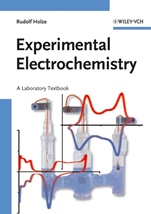
Experimental Electrochemistry: A Laboratory Textbook
ISBN 9783527310982
Autor: Rudolf Holze
Wydawca: Wiley
Dostępność: 3-6 tygodni
Cena: 236,25 zł
Przed złożeniem zamówienia prosimy o kontakt mailowy celem potwierdzenia ceny.
ISBN13: |
9783527310982 |
ISBN10: |
3527310983 |
Autor: |
Rudolf Holze |
Oprawa: |
Paperback |
Rok Wydania: |
2009-05-13 |
Ilość stron: |
260 |
Wymiary: |
245x169 |
Tematy: |
PN |
Electrochemistry is part of our daily life: It powers our cell phones, notebook computers and many other electronic devices. It provides the power to start our cars in the morning, it is undesirably present in corrosion, but also needed in metal winning and refining. The list is seemingly endless. Similarly, electrochemical processes, methods, models, and concepts are present in numerous fields of science and technology. Electrochemistry as a subject is an extremely interdisciplinary science, and, being an experimental science, it demands the direct hands–on testing of a model or a theory.
This textbook fills the gap for a wide–ranging collection of reproducible experiments suitable for course work at all levels, from high school to university. The careful selection presented here is based on experiments developed and installed as part of laboratory courses for students of chemistry and materials science, as well as other sciences. In addition it contains experiments developed for teachers at the various levels where pupils will encounter electrochemistry for the first time.
Following a brief overview, the book goes on to deal with electrochemistry at equilibrium and with flowing current, while further chapters cover analytical electrochemistry, non–traditional methods, electrochemical energy storage and conversion, as well as technical electrochemistry. Throughout, the author presents the obvious relationship between theory and experiment, while highlighting the practical importance of the experiments in our daily lives. The scope of electrochemistry is not only illustrated by the diversity of methods and concepts, it is also demonstrated by the range of instruments and tools employed. In all the descriptions the emphasis is placed on clear, well–defined, and lucid descriptions, including everything needed for a successful repetition of the experiment, while avoiding unnecessary details. If necessary, further references to text
books, review articles, and research papers are given.
Complementing textbooks on electrochemistry, this is a must for lecturers as well as for students in chemistry and related fields.
Spis treści:
Preface.
Foreword.
Symbols and Acronyms.
1 Introduction – An Overview of Practical Electrochemistry.
Practical Hints.
Electrodes.
Measuring Instruments.
Electrochemical Cells.
Data Recording.
2 Electrochemistry in Equilibrium.
Experiment 2.1: The Electrochemical Series.
Experiment 2.2: Standard Electrode Potentials and the Mean Activity Coefficient.
Experiment 2.3: pH–Measurements and Potentiometrically Indicated Titrations.
Experiment 2.4: Redox Titrations (Cerimetry).
Experiment 2.5: Differential Potentiometric Titration.
Experiment 2.6: Potentiometric Measurement of the Kinetics of the Oxidation of Oxalic Acid.
Experiment 2.7: Polarization and Decomposition Voltage.
3 Electrochemistry with Flowing Current.
Experiment 3.1: Ion Movement in an Electric Field.
Experiment 3.2: Paper Electrophoresis.
Experiment 3.3: Charge Transport in Electrolyte Solution.
Experiment 3.4: Conductance Titration.
Experiment 3.5: Chemical Constitution and Electrolytic Conductance.
Experiment 3.6: Faraday’s Law.
Experiment 3.7: Kinetics of Ester Saponification.
Experiment 3.8: Movement of Ions and Hittorf Transport Number.
Experiment 3.9: Polarographic Investigation of the Electroreduction of Formaldehyde.
Experiment 3.10: Galvanostatic Measurement.
Experiment 3.11: Cyclic Voltammetry.
Experiment 3.12: Slow Scan Cyclic Voltammetry.
Experiment 3.13: Kinetic Investigations with Cyclic Voltammetry.
Experiment 3.14: Numerical Simulation of Cyclic Voltammograms.
Experiment 3.15: Cyclic Voltammetry with Microelectrodes.
Experiment 3.16: Cyclic Voltammetry of Organic Molecules.
Experiment 3.17: Cyclic Voltammetry in Nonaqueous Solut
ions.
Experiment 3.18: Cyclic Voltammetry with Sequential Electrode Processes.
Experiment 3.19: Cyclic Voltammetry of Aromatic Hydrocarbons.
Experiment 3.20: Cyclic Voltammetry of Aniline and Polyaniline.
Experiment 3.21: Galvanostatic Step Measurements.
Experiment 3.22: Chronoamperometry.
Experiment 3.23: Chronocoulometry.
Experiment 3.24: Rotating Disc Electrode.
Experiment 3.25: Rotating Ring–Disc Electrode.
Experiment 3.26: Measurement of Electrode Impedances.
Experiment 3.27: Corrosion Cells.
Experiment 3.28: Aeration Cell.
Experiment 3.29 Concentration Cell.
Experiment 3.30 Salt Water Drop Experiment According to Evans.
Experiment 3.31: Passivation and Activation of an Iron Surface.
Experiment 3.32: Cyclic Voltammetry with Corroding Electrodes.
Experiment 3.33: Oscillating Reactions.
4 Analytical Electrochemistry.
Experiment 4.1: Ion–sensitive Electrode.
Experiment 4.2 Potentiometrically Indicated Titrations.
Experiment 4.3 Bipotentiometrically Indicated Titration.
Experiment 4.4 Conductometrically Indicated Titration.
Experiment 4.5 Electrogravimetry.
Experiment 4.6 Coulometric Titration.
Experiment 4.7 Amperometry.
Experiment 4.8 Polarography (Fundamentals).
Experiment 4.9 Polarography (Advanced Methods).
Experiment 4.10 Anodic Stripping Voltammetry.
Experiment 4.11 Abrasive Stripping Voltammetry.
Experiment 4.12 Polarographic Analysis of Anions.
Experiment 4.13 Tensammetry.
5 Non–Traditional Electrochemistry.
Experiment 5.1 UV–Vis Spectroscopy.
Experiment 5.2 Surface Enhanced Raman Spectroscopy.
Experiment 5.3 Infrared Spectroelectrochemistry.
Experiment 5.4 Electrochromism.
6 Electrochemical Energy Conversion and Storage.
Experiment 6.1 Lead Acid Accumulator.
Experiment 6.2 Discharge Behavior of Nickel–Cadmium Accumulators.
Experiment 6.3 Performance Data of a Fuel Cell.
7 Electrochem
ical Production.
Experiment 7.1 Cementation Reaction.
Experiment 7.2 Galvanic Copper Deposition.
Experiment 7.3 Electrochemical Oxidation of Aluminum.
Experiment 7.4 Kolbe Electrolysis of Acetic Acid.
Experiment 7.5 Electrolysis of Acetyl Acetone.
Experiment 7.6 Anodic Oxidation of Malonic Acid Diethylester.
Experiment 7.7 Indirect Anodic Dimerization of Acetoacetic Ester (3–oxo–butyric acid ethyl ester).
Experiment 7.8 Electrochemical Bromination of Acetone.
Experiment 7.9 Electrochemical Iodination of Ethano.
Experiment 7.10 Electrochemical Production.
Experiment 7.11 Yield of Chlor–alkali Electrolysis According to the Diaphragm Process.
Appendix.
Index.
Nota biograficzna:
Rudolf Holze studied chemistry at the University of Bonn, Germany. He received his PhD for his work on components for electrochemical energy converting and storage systems. After that he went to the Case Western Reserve University, Cleveland, USA and dedicated himself to investigating the structure and dynamics of electrochemical double layer using spectroscopical methods. In 1987 Holze moved to the University of Oldenburg, Germany where he became professor in physical chemistry in 1989. Currently Rudolf Holze is professor at the Technical University of Chemnitz, Germany where his research is focused on structure and dynamics at electrified interfaces with emphasis on the development of experimental methods and the application of out know–how on problems of technological importance. He is author of numerous publications and several books.
Okładka tylna:
Electrochemistry is part of our daily life: It powers our cell phones, notebook computers and many other electronic devices. It provides the power to start our cars in the morning, it is undesirably present in corrosion, but also needed in metal winning and refining. The list is seemingly endless. Similarly, electrochemical pro
Koszyk
Książek w koszyku: 0 szt.
Wartość zakupów: 0,00 zł
Informacje


Kontakt
Gambit
Centrum Oprogramowania
i Szkoleń Sp. z o.o.
Al. Pokoju 29b/22-24
31-564 Kraków
Siedziba Księgarni
ul. Kordylewskiego 1
31-542 Kraków
+48 12 410 5991
+48 12 410 5987
+48 12 410 5989
Subskrypcje
Administratorem danych osobowych jest firma Gambit COiS Sp. z o.o. Na podany adres będzie wysyłany wyłącznie biuletyn informacyjny.
Autoryzacja płatności

Informacje na temat autoryzacji płatności poprzez PayU.

© Copyright 2012: GAMBIT COiS Sp. z o.o. Wszelkie prawa zastrzeżone.
Projekt i wykonanie: Alchemia Studio Reklamy