


Wydawcy
Katalog tematyczny
- Archeologia (109)
- Ekonomia, finanse, business (13704)
- Filozofia (1445)
- Historia (3040)
- Języki i językoznawstwo (2356)
- Lifestyle, hobby i rozrywka (475)
- Medycyna (9704)
- Chirurgia (272)
- Inne gałęzie medycyny (1871)
- Medycyna kliniczna (4187)
- Choroby wewnętrzne (514)
- Dermatologia (51)
- Diagnostyka medyczna (3)
- Endokrynologia (144)
- Gastroenterologia (27)
- Geriatria (50)
- Ginekologia i położnictwo (134)
- Hematologia (46)
- Hepatologia (10)
- Kardiologia (71)
- Laryngologia (12)
- Nefrologia (10)
- Neurologia (500)
- Oftalmologia (50)
- Pediatria (33)
- Pulmunologia (32)
- Reumatologia (14)
- Terapia genowa (1)
- Układ mięśniowo-szkieletowy (1)
- Urologia (14)
- Medycyna niekonwencjonalna (14)
- Medycyna przedkliniczna (269)
- Medycyna, ogólnie (1740)
- Medyczne służby pomocnicze (745)
- Studia medyczne (16)
- Weterynaria (548)
- Nauki humanistyczne (4)
- Nauki o Ziemi i środowisku (2638)
- Nauki ścisłe (20412)
- Nauki społeczne (8486)
- Nauki techniczne (13450)
- Prawo (1696)
- Publikacje informacyjne i interdyscyplinarne (1288)
- Religia i wierzenia (917)
- Technika komputerowa (4067)
- Zdrowie, relacje międzyludzkie i rozwój osobisty (657)





Informacje szczegółowe o książce
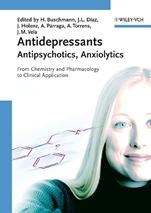
Antidepressants, Antipsychotics, Anxiolytics: From Chemistry and Pharmacology to Clinical Application 2 Volume Set
ISBN 9783527310586
Autor: Helmut Buschmann, Jörg Holenz, Antonio Párraga, Antoni Torrens, José Miguel Vela,
Wydawca: Wiley
Dostępność: 3-6 tygodni
Cena: 2 260,65 zł
Przed złożeniem zamówienia prosimy o kontakt mailowy celem potwierdzenia ceny.
ISBN13: |
9783527310586 |
ISBN10: |
3527310584 |
Autor: |
Helmut Buschmann, Jörg Holenz, Antonio Párraga, Antoni Torrens, José Miguel Vela, |
Oprawa: |
Hardback |
Rok Wydania: |
2007-03-09 |
Numer Wydania: |
2 Volume Set |
Ilość stron: |
1260 |
Wymiary: |
250x182 |
Tematy: |
MJ |
Antidepressants and related psychiatric drugs are the most important prescription drugs worldwide, accounting for a market volume of 20 billion US$ per year. This handbook provides a complete and detailed overview of all currently available psychiatric drugs, covering more than 250 different compounds.
Particular features include:the most important information on the chemistry, pharmacology and therapeutic use of a given druga special layout with margin notes and compound structures allowing for quick and easy access to the desired information
Written by drug developers from the pharmaceutical industry, novel drugs currently under development and new methods of treatment are listed side by side with classical drugs, allowing a direct comparison of traditional and innovative therapeutic approaches.
Spis treści:
Preface 1.
Preface 2.
A view from Esteve.
Dedication and Acknowledgements.
List of Contributors.
Glossary.
VOLUME 1.
1 Depressive Disorders.
1.1 Introductory and Basic Aspects.
Neurobiology of Mood Disorders (Luz Romero, Ana Montero, Begoña Fernández and José M. Vela).
1.1.1 Definition of mood disorders, impact on a global scale and unmet needs.
1.1.2 Causes and associations in mood disorders: genetics and pharmacogenetics.
1.1.3 Pathogenesis of mood disorders.
1.1.4 Concluding remarks.
References.
1.2 Clinics.
Clinical Aspects of Depressive Disorders (Rosario Pérez–Egea, Victor Pérez, Dolors Puigdemont and Enric Alvarez).
1.2.1 Introduction.
1.2.2 Classification.
1.2.3 Epidemiology.
1.2.4 Physiopathology.
1.2.5 Treatment of affective disorders.
References.
Preface 2.
1.3 Pharmacology.
Pharmacotherapy of Depression (Begoña Fernández, Luz Romero and Ana Montero).
11.3.1 Introduction.
1.3.2 Current antidepressant treatments.
1.3.3 N
ew strategies for antidepressant treatments.
1.3.4 Concluding remarks.
References.
1.4 Experimental Research.
Modeling Human Depression by Animal Models (Ana Montero, Begoña Fernández and Luz Romero).
1.4.1 Introduction.
1.4.2 Types of validity.
1.4.3 Animal models of depression.
1.4.4 Some concluding remarks.
References.
1.5 Chemistry.
Marketed Drugs and Drugs in Development (Jörg Holenz, José Luis Díaz and Helmut Buschmann).
1.5.1 Summary of drug classes.
1.5.2 Tricyclic and tetracyclic antidepressants.
1.5.3 Serotonergic agents.
1.5.4 Noradrenaline reuptake inhibitors.
1.5.5 Monoamine oxidase inhibitors.
1.5.6 Miscellaneous agents.
1.5.7 Compounds launched in single countries.
1.5.8 New opportunities for marketed drugs.
1.5.9 Summary of antidepressants in development.
References.
2 Schizophrenia and Other Psychoses.
2.1 Introductory and Basic Aspects.
Current Status and Challenges in Schizophrenia Research (Francesc Artigas).
2.1.1 Introduction.
2.1.2 Clinical diagnosis and assessment of schizophrenia.
2.1.3 Epidemiology.
2.1.4 Course of schizophrenia.
2.1.5 Brain pathology in schizophrenia.
2.1.6 Pathogenesis and pathophysiology of schizophrenia.
2.1.7 Concluding remarks.
References.
2.2 Clinics.
Schizophrenia: A Clinical Review (Salvador Ros and Francisco Javier Arranz).
2.2.1 Introduction.
2.2.2 Background.
2.2.3 Epidemiology.
2.2.4 General semiology.
2.2.5 Positive symptoms in schizophrenia.
2.2.6 Negative symptoms in schizophrenia.
2.2.7 Cognitive alterations in schizophrenia.
2.2.8 Characteristics of cognitive deterioration in schizophrenia.
2.2.9 Methods to evaluate cognitive deterioration in schizophrenia.
2.2.10 Affective symptoms in schizophrenia.
2.2.11 Schizophrenia and suicide.
2.2.12 Onset and states.
2.2.13 Etiopathogeny.<
br>2.2.14 Prognosis.
2.2.15 Schizophrenia therapy.
References.
2.3 Pharmacology.
Pharmacotherapy of Schizophrenia (Analía Bortolozzi, Llorenç Díaz–Mataix and Francesc Artigas).
2.3.1 Antipsychotic drugs: introduction.
2.3.2 Atypical Antipsychotics: introduction.
2.3.3 Other major investigational approaches.
2.3.4 Concluding remarks: challenges in drug discovery.
References.
2.4 Experimental Research.
Modeling schizophrenia in experimental animals (Pau Celada, Anna Castañé, Albert Adell and Francesc Artigas).
2.4.1 Introduction.
2.4.2 Neurophysiology of schizophrenia.
2.4.3 Pharmacological models of schizophrenia.
2.4.4 Neurodevelopmental models.
2.4.5 Genetic models.
2.4.6 Other animal models.
2.4.7 Concluding remarks.
References.
2.5 Chemistry.
Marketed Drugs and Drugs in Development (Antonio Párraga, Jörg Holenz and Helmut Buschmann).
2.5.1 Summary of drug classes.
2.5.2 Typical antipsychotics.
2.5.3 Atypical antipsychotics.
2.5.4 Drugs in development.
References.
VOLUME 2.
3 Anxiety.
3.1 Introductory and Basic Aspects.
3.1.1 Definition and classification of anxiety disorders (Francisca López–Ríos, Serafín Gómez–Martín and Antonio Molina–Moreno).
References.
3.1.2 Epidemiology of anxiety disorders (Flor Zaldívar–Basurto and José M. García–Montes).
References.
3.1.3 Etiology of Anxiety (Margarita Moreno, Ginesa López–Crespo and Pilar Flores).
References.
3.1.4 Anxiety disorders and drug abuse (Diana Cardona–Mena, Margarita Moreno and Pilar Flores).
References.
3.1.5 Neurobiology of anxiety (I): Panic disorder, posttraumatic stress disorder, social phobia and obsessive–compulsive disorder (Lola Roldán–Tapia, Ginesa L&#
243;pez–Crespo, Francisco Antonio Nieto–Escámez and Diana Cardona–Mena).
References.
3.1.6 Neurobiology of anxiety (II): Childhood anxiety, generalized anxiety disorder and mixed anxiety–depressive disorder (Francisco Antonio Nieto–Escámez, Ginesa López–Crespo, Lola Roldán–Tapia and Fernando Cañadas–Pérez).
References.
3.1.7 Consequences of anxiety on memory processes (I): Introductory and clinical aspects (Fernando Cañadas–Pérez, Francisco Antonio Nieto–Escámez, Lola Roldán–Tapia and Ginesa López–Crespo).
References.
3.1.8 Consequences of anxiety on memory processes (II): Neurobiological aspects (Francisco Nieto–Escámez, Fernando Cañadas–Pérez, Lola Roldán–Tapia and Fernando Sánchez–Santed).
References.
3.2 Clinics.
Clinical Aspects of Anxiety (Blanca Gutiérrez and Jorge Cervilla).
3.2.1 Conceptual introduction.
3.2.2 Panic disorder.
3.2.3 Generalized anxiety disorder.
3.2.4 Phobic anxiety disorders.
3.2.5 Obsessive–compulsive disorder.
3.2.6 Conclusion.
References.
3.3 Pharmacology.
Pharmacology of Anxiety (José Manuel Baeyens).
3.3.1 Introduction.
3.3.2 Drugs used in treatment of anxiety disorders: an overview.
3.3.3 Generalized anxiety disorder (GAD).
3.3.4 Social anxiety disorder (SAD) or social phobia.
3.3.5 Simple or specific phobia.
3.3.6 Panic disorder (PD).
3.3.7 Posttraumatic stress disorder (PTSD).
3.3.8 Obsessive–compulsive disorder (OCD).
References.
3.4 Experimental Research.
Modeling Human Anxiety by Animal Models (Enrique Portillo and José Miguel Vela).
3.4.1 General concepts on animal models.
3.4.2 General aspects of human anxiety.
3.4.3 Animal anxiety.
3.4.4 Potential issues in animal
models of anxiety.
3.4.5 Conclusions: Implication for drug discovery.
References.
3.5 Chemistry.
Marketed Drugs and Drugs in Development (Mónica García–López, Susana Yenes, Helmut Buschmann and Antoni Torrens).
3.5.1 Summary of drug classes.
3.5.2 Benzodiazepines.
3.5.3 Serotonergic drugs.
3.5.4 GABAergic agents.
3.5.5 Dopaminergic agents.
3.5.6 Serotonin reuptake stimulants.
3.5.7 5–HT2 receptor antagonists.
3.5.8 –adrenoceptor antagonists.
3.5.9 Glucocorticoid receptor antagonists.
3.5.10 GAT–1 inhibitors.
3.5.11 Calcium channel blockers.
3.5.12 No–described mechanism of action.
3.5.13 Drugs in development.
References.
4 Attention Deficit and Hyperactivity Disorders.
4.1 Introductory and Basic Aspects.
Neurobiological aspects of Attention Deficit and Hyperactivity Disorders (Javier Burgueño, Rafael Franco and Francisco Ciruela).
4.1.1 Definition and introductory clues.
4.1.2 Etiology of ADHD.
References.
4.2 Clinics.
Attention Deficit Hyperactivity Disorder: Clinical and Therapeutic Facts (Francisco Javier Arranz and Salvador Ros).
4.2.1 Introduction.
4.2.2 Epidemiology.
4.2.3 Etiology.
4.2.4 Pathophysiology.
4.2.5 Clinical features.
References.
4.3 Pharmacology.
Pharmacology: Targets of Drug Action (Francisco Ciruela, Rafael Franco and Javier Burgueño).
4.3.1 Neurobiological evidence for ADHD as an organic phenomenon.
4.3.2 Neurochemistry of ADHD: Neurotransmitter imbalance.
References.
4.4 Chemistry.
Marketed Drugs and Drugs in Development (Jörg Holenz, José Luis Díaz and Helmut Buschmann).
4.4.1 Summary of drug classes.
4.4.2 Drugs in development.
References.
Index.
Nota biograficzna:
The editors all work for the Spanish–based pharmaceutical company Esteve, a
world leader in neuropharmaceuticals.
Helmut Buschmann is the research director of Esteve, in charge of the discovery and development of new active substances for a variety of neurological disorders. He was formerly the head of research at Gruenenthal, a Germany–based pharma company that also specialized in neuropharmaceuticals. During his time at Gruenenthal, he published a widely acclaimed book on analgesics that pioneered the integrated approach followed also in his most recent book.
Okładka tylna:
Antidepressants and related psychiatric drugs are the most important prescription drugs worldwide, accounting for a market volume of 20 billion US$ per year. This handbook provides a complete and detailed overview of all currently available psychiatric drugs, covering more than 250 different compounds.
Particular features include:the most important information on the chemistry, pharmacology and therapeutic use of a given druga special layout with margin notes and compound structures allowing for quick and easy access to the desired information
Written by drug developers from the pharmaceutical industry, novel drugs currently under development and new methods of treatment are listed side by side with classical drugs, allowing a direct comparison of traditional and innovative therapeutic approaches.
Koszyk
Książek w koszyku: 0 szt.
Wartość zakupów: 0,00 zł
Informacje


Kontakt
Gambit
Centrum Oprogramowania
i Szkoleń Sp. z o.o.
Al. Pokoju 29b/22-24
31-564 Kraków
Siedziba Księgarni
ul. Kordylewskiego 1
31-542 Kraków
+48 12 410 5991
+48 12 410 5987
+48 12 410 5989
Subskrypcje
Administratorem danych osobowych jest firma Gambit COiS Sp. z o.o. Na podany adres będzie wysyłany wyłącznie biuletyn informacyjny.
Autoryzacja płatności

Informacje na temat autoryzacji płatności poprzez PayU.

© Copyright 2012: GAMBIT COiS Sp. z o.o. Wszelkie prawa zastrzeżone.
Projekt i wykonanie: Alchemia Studio Reklamy