


Wydawcy
Katalog tematyczny
- Archeologia (109)
- Ekonomia, finanse, business (13704)
- Filozofia (1445)
- Historia (3040)
- Języki i językoznawstwo (2356)
- Lifestyle, hobby i rozrywka (475)
- Medycyna (9704)
- Nauki humanistyczne (4)
- Nauki o Ziemi i środowisku (2638)
- Nauki ścisłe (20412)
- Astronomia (294)
- Biologia (5119)
- Chemia (6540)
- Chemia analityczna (361)
- Chemia fizyczna (346)
- Chemia nieorganiczna (137)
- Chemia organiczna (535)
- Krystalografia (27)
- Minerologia (46)
- Fizyka (3309)
- Matematyka (4574)
- Nauki ścisłe, ogólnie (503)
- Nauki społeczne (8486)
- Nauki techniczne (13450)
- Prawo (1696)
- Publikacje informacyjne i interdyscyplinarne (1288)
- Religia i wierzenia (917)
- Technika komputerowa (4067)
- Zdrowie, relacje międzyludzkie i rozwój osobisty (657)





Informacje szczegółowe o książce
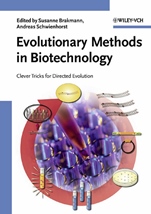
Evolutionary Methods in Biotechnology: Clever Tricks for Directed Evolution
ISBN 9783527307999
Autor: Susanne Brakmann, Andreas Schwienhorst
Wydawca: Wiley
Dostępność: 3-6 tygodni
Cena: 1 167,60 zł
Przed złożeniem zamówienia prosimy o kontakt mailowy celem potwierdzenia ceny.
ISBN13: |
9783527307999 |
ISBN10: |
3527307990 |
Autor: |
Susanne Brakmann, Andreas Schwienhorst |
Oprawa: |
Hardback |
Rok Wydania: |
2004-06-22 |
Ilość stron: |
227 |
Wymiary: |
246x186 |
Tematy: |
PN |
Miniturization and high throughput assay technology have brought the power of molecular evolution to the bioscience laboratory. Applied wisely, the evolutionary approach can quickly yield the desired result even where other methods have failed.
From library generation by random or directed mutagenesis to screening and selection techniques – the crucial steps for successful evolutionary biotechnology are described in detail in this practical guide that also includes valuable troubleshooting hints on frequently encountered problems.
Modern methods for the surface display of peptides and proteins, selective enrichment of nucleic acid aptamers and high–throughput screening of industrial biocatalysts are explained, and computer–based methods for in silico protein and RNA engineering are described as an alternative to in vitro approaches. A special section covers the patenting regulations with regard to biotechnological innovations derived from directed evolution.
As an added bonus, a CD–ROM is included that contains software tools for library design, selection of mutagenesis positions, and various predictive algorithms.
In short, this practice oriented handbook is an indispensable tool for every scientist working in this interdisciplinary research area.
Spis treści:
1 Introduction (Susanne Brakmann and Andreas Schwienhorst).
References.
2 Generation of Mutant Libraries Using Random Mutagenesis (Susanne Brakmann and Björn F. Lindemann).
2.1 Introduction.
2.2 Materials.
2.2.1 Materials for Random PCR Mutagenesis.
2.2.2 Materials for Mutator Strain Passage.
2.3 Protocols.
2.3.1 Protocol for Random PCR Mutagenesis According to Joyce.
2.3.2 Protocol for Mutator Strain Passage.
2.4 Troubleshooting.
References.
3 DNA Shuffling (Hikaru Suenaga, Masatoshi Goto, and Kensuke Furukawa).
3.1 Introduction.
3.2 Materials.
3.2.1 For Prepa
ration of Parental Genes.
3.2.2 For Random Fragmentation by DNase I.
3.2.3 For Collection of DNA Fragments in Specific Molecular Size Ranges.
3.2.4 For Reassembly of These Fragments by Primerless PCR.
3.2.5 For Amplification of Reassembled Products by Conventional PCR with Primers.
3.3 Protocol.
3.3.1 Preparation of Parental Genes.
3.3.2 Random Fragmentation by DNase I.
3.3.3 Collection of DNA Fragments in Specific Molecular Size Ranges.
3.3.4 Reassembly of These Fragments by Primerless PCR.
3.3.5 Amplification of Reassembled Products by Conventional PCR with Primers.
3.4 Troubleshooting.
3.4.1 Insufficient DNase I Fragmentation.
3.4.2 Little or No Product of Primerless PCR.
3.4.3 Little or No Product of PCR with Primers.
3.4.4 The Product of PCR with Primers is Multi–banded.
3.5 Amplification Examples.22
References.
4 DNA Recombination Using StEP (Milena Ninkovic).
4.1 Introduction.
4.2 Materials.
4.2.1 StEP PCR.
4.2.2 Purification of an Appropriate DNA Fragment.
4.2.3 Equipment.
4.3 Protocol.
4.4 Technical Tips.
4.4.1 Problem: Little or No PCR Product (Full–length Product) after PCR.
4.4.2 Problem: High Background Levels of DNA after PCR.
4.5 StEP in Directed Evolution.
References.
5 FACS Screening of Combinatorial Peptide and Protein Libraries Displayed on the Surface of Escherichia coli Cells (Thorsten M. Adams, Hans–Ulrich Schmoldt, and Harald Kolmar).
5.1 Introduction.
5.2 Materials.
5.2.1 Escherichia coli Strains and Plasmids.
5.2.2 Liquid Media and Agar Plates.
5.2.3 Biological and Chemical Materials.
5.2.4 Equipment.
5.3 Protocols.
5.3.1 Verification of Cell Surface Exposure of the Passenger Protein.
5.3.2 Labeling of the Target Protein.
5.3.3 Library Construction.
5.3.4 Combinatorial Library Screening by FACS and MACS.
5.4 Troubleshooting.
5.5 Major Applic
ations.
References.
6 Selection of Phage–displayed Enzymes (Patrice Soumillion).
6.1 Introduction.
6.2 Materials.
6.2.1 Buffers, Reagents and Consumables.
6.2.2 Strains and Vectors.
6.3 Protocols.
6.3.1 The Phage–enzyme.
6.3.2 Library Construction.
6.3.3 Selection.
6.4 Troubleshooting.
6.4.1 Phage Titers Are Not Reproducible.
6.4.2 Phage–enzymes Degrade with Time.
6.4.3 Phages Are Not Genetically Stable.
6.4.4 The ‘out/in’ Ratio Does Not Increase with Selection Rounds.
6.5 Major Applications.
References.
7 Selection of Aptamers (Heiko Fickert, Heike Betat, and Ulrich Hahn).
7.1 Introduction.
7.2 Materials.
7.2.1 Immobilization of Target Molecules.
7.2.2 PCR.
7.2.3 In vitro Transcription.
7.2.4 RNA Purification.
7.2.5 Selection of Aptamers.
7.2.6 Reverse Transcription.
7.3 Protocols.
7.3.1 Selection of RNA Aptamers.
7.3.2 Selection of 2—–Modified RNA Aptamers.
7.3.3 Selection of ssDNA Aptamers.
7.3.4 Cloning and Sequencing.
7.3.5 Characterization of Aptamers.
7.3.6 Example: Isolation of Moenomycin A–specific Aptamers.
7.4 Troubleshooting.
7.5 Major Applications.
References.
8 Methods for Selecting Catalytic Nucleic Acids (Benjamin L. Holley, and Bruce E. Eaton).
8.1 Introduction.
8.2 Materials and Equipment.
8.3 Protocols.
8.3.1 Generating the Starting Library.
8.3.2 Transcription.
8.3.3 Ligation.
8.3.4 Nucleic Acid–catalyzed Reactions.
8.3.5 Reverse Transcription.
8.3.6 Partitioning.
8.4 Troubleshooting.
8.5 Major Applications.
References.
9 High–throughput Screening of Enantioselective Industrial Biocatalysts (Manfred T. Reetz).
9.1 Introduction.
9.2 Materials and Equipment.
9.2.1 Assays Based on Mass Spectrometry.
9.2.2 Assays Based on NMR Spectrometry.
9.2.3 Assay Based on FTIR S
pectroscopy.
9.2.4 Assays Based on UV/Visible Spectroscopy.
9.2.5 Enzyme–coupled UV/Visible–based Assay for Hydrolases.
9.3 Protocols.
9.3.1 Assays Based on Mass Spectrometry.
9.3.2 Assays Based on NMR Spectroscopy.
9.3.3 Assay Based on FTIR Spectroscopy.
9.3.4 Assays Based on UV/Visible Spectroscopy.
9.3.5 Enzyme–coupled UV/Visible–based Assay for Hydrolases.
9.3.6 Further Assays.
9.4 Troubleshooting.
9.4.1 Comments on the Kazlauskas Test.
9.4.2 Potential Problems when Performing Kinetic Resolution.
9.5 Conclusions.
References.
10 Computer–assisted Design of Doped Libraries (Dirk Tomandl and Andreas Schwienhorst).
10.1 Introduction.
10.2 Materials.
10.3 Protocol.
10.4 Troubleshooting.
10.5 Major Applications.
References.
11 Directed in silico Mutagenesis (Markus Wiederstein, Peter Lackner, Ferry Kienberger, Manfred J. Sippl).
11.1 Introduction.
11.2 Materials.
11.2.1 PDB Files.
11.2.2 Knowledge–based Potentials.
11.2.3 Polyprotein, Z–scores.
11.2.4 In silico Mutagenesis.
11.2.5 Summary.
11.3 Protocol.
11.3.1 ProSa Setup and Interaction.
11.3.2 ProSa Objects.
11.3.3 Session 1 (mut script1.cmd).
11.3.4 Session 2 (mut script2.cmd).
11.3.5 Session 3 (mut script3.cmd).
11.3.6 Session 4 (mut script4.cmd).
11.3.7 Tips & Tricks.
11.4 Troubleshooting.
11.5 Major Applications.
References.
12 RNA Folding in silico(Christoph Flamm, Ivo L. Hofacker, Peter F. Stadler).
12.1 Introduction.
12.2 Materials.
12.2.1 Typographical Conventions.
12.2.2 RNA Web Services.
12.3 Protocols.
12.3.1 Secondary Structures for Individual Sequences.
12.3.2 Consensus Structures of a Sample of Sequences.
12.3.3 Sequence Design.
12.3.4 Analysis of SELEX Experiments.
12.3.5 A Note for the Experts: Write your Own
Koszyk
Książek w koszyku: 0 szt.
Wartość zakupów: 0,00 zł
Informacje


Kontakt
Gambit
Centrum Oprogramowania
i Szkoleń Sp. z o.o.
Al. Pokoju 29b/22-24
31-564 Kraków
Siedziba Księgarni
ul. Kordylewskiego 1
31-542 Kraków
+48 12 410 5991
+48 12 410 5987
+48 12 410 5989
Subskrypcje
Administratorem danych osobowych jest firma Gambit COiS Sp. z o.o. Na podany adres będzie wysyłany wyłącznie biuletyn informacyjny.
Autoryzacja płatności

Informacje na temat autoryzacji płatności poprzez PayU.

© Copyright 2012: GAMBIT COiS Sp. z o.o. Wszelkie prawa zastrzeżone.
Projekt i wykonanie: Alchemia Studio Reklamy