


Wydawcy
Katalog tematyczny
- Archeologia (109)
- Ekonomia, finanse, business (13704)
- Filozofia (1445)
- Historia (3040)
- Języki i językoznawstwo (2356)
- Lifestyle, hobby i rozrywka (475)
- Medycyna (9704)
- Nauki humanistyczne (4)
- Nauki o Ziemi i środowisku (2638)
- Nauki ścisłe (20412)
- Astronomia (294)
- Biologia (5119)
- Chemia (6540)
- Chemia analityczna (361)
- Chemia fizyczna (346)
- Chemia nieorganiczna (137)
- Chemia organiczna (535)
- Krystalografia (27)
- Minerologia (46)
- Fizyka (3309)
- Matematyka (4574)
- Nauki ścisłe, ogólnie (503)
- Nauki społeczne (8486)
- Nauki techniczne (13450)
- Prawo (1696)
- Publikacje informacyjne i interdyscyplinarne (1288)
- Religia i wierzenia (917)
- Technika komputerowa (4067)
- Zdrowie, relacje międzyludzkie i rozwój osobisty (657)





Informacje szczegółowe o książce
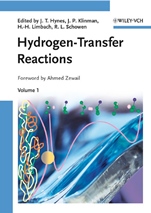
Hydrogen–Transfer Reactions: 4 Volume Set
ISBN 9783527307777
Autor: James T. Hynes, Judith P. Klinman, Hans–Heinrich Limbach, Richard L. Schowen
Wydawca: Wiley
Dostępność: 3-6 tygodni
Cena: 3 314,85 zł
Przed złożeniem zamówienia prosimy o kontakt mailowy celem potwierdzenia ceny.
ISBN13: |
9783527307777 |
ISBN10: |
352730777X |
Autor: |
James T. Hynes, Judith P. Klinman, Hans–Heinrich Limbach, Richard L. Schowen |
Oprawa: |
Hardback |
Rok Wydania: |
2006-11-03 |
Numer Wydania: |
4 Volume Set |
Ilość stron: |
1603 |
Wymiary: |
255x185 |
Tematy: |
PN |
Hydrogen transfer processes occur in a wide variety of reactions, ranging from biochemistry to polymers, making this a very important chemical element in synthesis, biochemistry and industrial applications.
This multivolume work is a comprehensive reference on the theory, occurrence and application of hydrogen transfer processes. Adopting an integrated approach, it includes essential information on the theoretical basis, the fundamental types, and the latest techniques used to reveal, monitor, as well as measure hydrogen transfer reactions. Renowned experts from a number of disciplines provide a thorough overview on all aspects of hydrogen transfer in natural and artificial systems, thus aiding readers in their own research.
Numerous tables and illustrations facilitate fast and easy access to the desired information, making this an indispensable source of knowledge for every research group working in the field.
Spis treści:
Foreword.
Preface.
Preface to Volumes 1 and 2.
List of Contributors to Volumes 1 and 2.
I Physical and Chemical Aspects, Parts I–III.
Part I Hydrogen Transfer in Isolated Hydrogen Bonded Molecules, Complexes and Clusters.
1 Coherent Proton Tunneling in Hydrogen Bonds of Isolated Molecules: Malonaldehyde and Tropolone (Richard L. Redington).
1.1 Introduction.
1.2 Coherent Tunneling Splitting Phenomena in Malonaldehyde.
1.3 Coherent Tunneling Phenomena in Tropolone.
1.4 Tropolone Derivatives.
1.5 Concluding Remarks.
2 Coherent Proton Tunneling in Hydrogen Bonds of Isolated Molecules: Carboxylic Dimers (Martina Havenith).
2.1 Introduction.
2.2 Quantum Tunneling versus Classical Over Barrier Reactions.
2.3 Carboxylic Dimers.
2.4 Benzoic Acid Dimer.
2.5 Formic Acid Dimer.
2.6 Conclusion.
3 Gas Phase Vibrational Spectroscopy of Strong Hydrogen Bonds (Knut R. Asmis, Daniel M. Neumark,
and Joel M. Bowman).
3.1 Introduction.
3.2 Methods.
3.3 Selected Systems.
3.4 Outlook.
4 Laser–driven Ultrafast Hydrogen Transfer Dynamics (Oliver Kühn Leticia González).
4.1 Introduction.
4.2 Theory.
4.3 Laser Control.
4.4 Conclusions and Outlook.
Part II Hydrogen Transfer in Condensed Phases.
5 Proton Transfer from Alkane Radical Cations to Alkanes (Jan Ceulemans).
5.1 Introduction.
5.2 Electronic Absorption of Alkane Radical Cations.
5.3 Paramagnetic Properties of Alkane Radical Cations.
5.4 The Brønsted Acidity of Alkane Radical Cations.
5.5 The r–Basicity of Alkanes.
5.6 Powder EPRSpectra of Alkyl Radicals.
5.7 Symmetric Proton Transfer from Alkane Radical Cations to Alkanes: An Experimental Study in c–Irradiated n–Alkane Nanoparticles Embedded in a Cryogenic CCl3F Matrix.
5.8 Asymmetric Proton Transfer from Alkane Radical Cations to Alkanes: An Experimental Study in c–Irradiated Mixed Alkane Crystals.
6 Single and Multiple Hydrogen/Deuterium Transfer Reactions in Liquids and Solids (Hans–Heinrich Limbach).
6.1 Introduction.
6.2 Theoretical.
6.3 Applications.
6.4 Conclusions.
7 Intra– and Intermolecular Proton Transfer and Related Processes in Confined Cyclodextrin Nanostructures (Abderrazzak Douhal).
7.1 Introduction and Concept of Femtochemistry in Nanocavities.
7.2 Overview of the Photochemistry and Photophysics of Cyclodextrin Complexes.
7.3 Picosecond Studies of Proton Transfer in Cyclodextrin Complexes.
7.4 Femtosecond Studies of Proton Transfer in Cyclodextrin Complexes.
7.5.3 2–(2′–Hydroxyphenyl)–4–methyloxazole.
7.5.4 Orange II.
7.6 Concluding Remarks.
8 Tautomerization in Porphycenes (Jacek Waluk).
8.1 Introduction.
8.2 Tautomerization in the Ground Electronic State.
8.3 Tautome
rization in the Lowest Excited Singlet State.
8.4 Tautomerization in the Lowest Excited Triplet State.
8.5 Tautomerization in Single Molecules of Porphycene.
8.6 Summary.
9 Proton Dynamics in Hydrogen–bonded Crystals (Mikhail V. Vener).
9.1 Introduction.
9.2 Tentative Study of Proton Dynamics in Crystals with Quasi–linear H–bonds.
9.3 DFT Calculations with Periodic Boundary Conditions.
9.4 Conclusions.
Part III Hydrogen Transfer in Polar Environments.
10 Theoretical Aspects of Proton Transfer Reactions in a Polar Environment (Philip M. Kiefer and James T. Hynes).
10.1 Introduction.
10.2 Adiabatic Proton Transfer.
10.3 Nonadiabatic JTunneling’ Proton Transfer.
10.4 Concluding Remarks.
11 Direct Observation of Nuclear Motion during Ultrafast Intramolecular Proton Transfer (Stefan Lochbrunner, Christian Schriever, and Eberhard Riedle).
11.1 Introduction.
11.2 Time–resolved Absorption Measurements.
11.3 Spectral Signatures of Ultrafast ESIPT.
11.4 Reaction Mechanism.
11.5 Reaction Path Specific Wavepacket Dynamics in Double Proton Transfer Molecules.
11.6 Conclusions.
12 Solvent Assisted Photoacidity (Dina Pines and Ehud Pines).
12.1 Introduction.
12.2 Photoacids, Photoacidity and FLrster Cycle.
12.3 Evidence for the General Validity of the FLrster Cycle and the K∗a Scale.
12.4 Factors Affecting Photoacidity.
12.5 Solvent Assisted Photoacidity: The <sup>1</sup>L<sub>a</sub>, <sup>1</sup>L<sub>b</sub> Paradigm.
12.6 Summary,
13 Design and Implementation of “Super” Photoacids (Laren M. Tolbert and Kyril M. Solntsev).
13.1 Introduction.
13.2 Excited–state Proton Transfer (ESPT).
13.3 Nature of the Solvent.
13.4 ESPT in Biolog
ical Systems.
13.5 Conclusions.
Foreword.
Preface.
Preface to Volumes 1 and 2.
List of Contributors to Volumes 1 and 2.
I Physical and Chemical Aspects, Parts IV–VII.
Part IV Hydrogen Transfer in Protic Systems.
14 Bimolecular Proton Transfer in Solution (Erik T. J. Nibbering and Ehud Pines).
14.1 Intermolecular Proton Transfer in the Liquid Phase.
14.2 Photoacids as Ultrafast Optical Triggers for Proton Transfer.
14.3 Proton Recombination and Acid–Base Neutralization.
14.4 Reaction Dynamics Probing with Vibrational Marker Modes.
15 Coherent Low–frequency Motions in Condensed Phase Hydrogen Bonding and Transfer (Thomas Elsaesser).
15.1 Introduction.
15.2 Vibrational Excitations of Hydrogen Bonded Systems.
15.3 Low–frequency Wavepacket Dynamics of Hydrogen Bonds in the Electronic Ground State.
15.4 Low–frequency Motions in Excited State Hydrogen Transfer.
15.5 Conclusions.
16 Proton–Coupled Electron Transfer: Theoretical Formulation and Applications (Sharon Hammes–Schiffer).
16.1 Introduction.
16.2 Theoretical Formulation for PCET.
16.3 Applications.
16.4 Conclusions.
17 The Relation between Hydrogen Atom Transfer and Proton–coupled Electron Transfer in Model Systems (Justin M. Hodgkiss, Joel Rosenthal, and Daniel G. Nocera).
17.1 Introduction.
17.2 Methods of HAT and PCET Study.
17.3 Unidirectional PCET.
17.4 Bidirectional PCET.
17.5 The Different Types of PCET in Biology.
17.6 Application of Emerging Ultrafast Spectroscopy to PCET.
Part V Hydrogen Transfer in Organic and Organometallic Reactions.
18 Formation of Hydrogen–bonded Carbanions as Intermediates in Hydron Transfer between Carbon and Oxygen (Heinz F. Koch).
18.1 Proton Transfer from Carbon Acids to Methoxide Ion.
18.2 Proton Transfer f
rom Methanol to Carbanion Intermediates.
18.3 Proton Transfer Associated with Methoxide Promoted Dehydrohalogenation Reactions.
18.4 Conclusion.
19 Theoretical Simulations of Free Energy Relationships in Proton Transfer (Ian H. Williams).
19.1 Introduction.
19.2 Qualitative Models for FERs.
19.3 FERs from MO Calculations of PESs.
19.4 FERs from VB Studies of Free Energy Changes for PT in Condensed Phases.
19.5 Concluding Remarks.
20 The Extraordinary Dynamic Behavior and Reactivity of Dihydrogen and Hydride in the Coordination Sphere of Transition Metals (Gregory J. Kubas).
20.1 Introduction.
20.2 H2 Rotation in Dihydrogen Complexes.
20.3 NMRStudies of H2 Activation, Dynamics, and Transfer Processes.
20.4 Intramolecular Hydrogen Rearrangement and Exchange.
20.5 Summary.
21 Dihydrogen Transfer and Symmetry: The Role of Symmetry in the Chemistry of Dihydrogen Transfer in the Light of NMR Spectroscopy (Gerd Buntkowsky and Hans–Heinrich Limbach).
21.1 Introduction.
21.2 Tunneling and Chemical Kinetics.
21.3 Symmetry Effects on NMRLineshapes of Hydration Reactions.
21.4 Symmetry Effects on NMRLineshapes of Intramolecular Dihydrogen Exchange Reactions.
21.5 Summary and Conclusion.
Part VI Proton Transfer in Solids and Surfaces.
22 Proton Transfer in Zeolites (Joachim Sauer).
22.1 Introduction – The Active Sites of Acidic Zeolite Catalysts.
22.2 Proton Transfer to Substrate Molecules within Zeolite Cavities.
22.3 Formation of NH4+ ions on NH3 adsorption.
22.4 Methanol Molecules and Dimers in Zeolites.
22.5 Water Molecules and Clusters in Zeolites.
22.6 Proton Jumps in Hydrated and Dry Zeolites.
22.7 Stability of Carbenium Ions in Zeolites.
23 Proton Conduction in Fuel Cells (Klaus–Dieter Kreuer).
23.1 Introduction.
23.2 Proton Conducting Electrolytes a
nd Their Application in Fuel Cells.
23.3 Long–range Proton Transport of Protonic Charge Carriers in Homogeneous Media.
23.4 Confinement and Interfacial Effects.
23.5 Concluding Remarks.
24 Proton Diffusion in Ice Bilayers (Katsutoshi Aoki).
24.1 Introduction.
24.2 Experimental Method.
24.3 Spectral Analysis of the Diffusion Process.
24.4 Summary.
25 Hydrogen Transfer on Metal Surfaces (Klaus Christmann).
25.1 Introduction.
25.2 The Principles of the Interaction of Hydrogen with Surfaces: Terms and Definitions.
25.3 The Transfer of Hydrogen on Metal Surfaces.
25.4 Alcohol and Water on Metal Surfaces: Evidence of H Bond Formation and H Transfer.
25.5 Conclusion.
26 Hydrogen Motion in Metals (Rolf Hempelmann and Alexander Skripov).
26.1 Survey.
26.2 Experimental Methods.
26.3 Experimental Results on Diffusion Coefficients.
26.4 Experimental Results on Hydrogen Jump Diffusion Mechanisms.
26.5 Quantum Motion of Hydrogen.
26.6 Concluding Remarks.
Part VII Special Features of Hydrogen–Transfer Reactions.
27 Variational Transition State Theory in the Treatment of Hydrogen Transfer Reactions (Donald G. Truhlar and Bruce C. Garrett).
27.1 Introduction.
27.2 Incorporation of Quantum Mechanical Effects in VTST.
27.3 H–atom Transfer in Bimolecular Gas–phase Reactions.
27.4 Intramolecular Hydrogen Transfer in Unimolecular Gas–phase Reactions.
27.5 Liquid–phase and Enzyme–catalyzed Reactions.
27.6 Examples of Condensed–phase Reactions.
27.7 Another Perspective.
27.8 Concluding Remarks.
28 Quantum Mechanical Tunneling of Hydrogen Atoms in Some Simple Chemical Systems (K. U. Ingold).
28.1 Introduction.
28.2 Unimolecular Reactions.
28.3 Bimolecular Reactions.
29 Multiple Proton Transfer: From Stepwise to Concerted (Zorka Smedarchina, Willem Sie
brand, and Antonio Fernández–Ramos).
29.1 Introduction.
29.2 Basic Model.
29.3 Approaches to Proton Tunneling Dynamics.
29.4 Tunneling Dynamics for Two Reaction Coordinates.
29.5 Isotope Effects.
29.6 Dimeric Formic Acid and Related Dimers.
29.7 Other Dimeric Systems.
29.8 Intramolecular Double Proton Transfer.
29.9 Proton Conduits.
29.10 Transfer of More Than Two Protons.
29.11 Conclusion.
Foreword.
Preface.
Preface to Volumes 3 and 4.
List of Contributors to Volumes 3 and 4.
II Biological Aspects, Parts I–II.
Part I Models for Biological Hydrogen Transfer.
1 Proton Transfer to and from Carbon in Model Reactions (Tina L. Amyes and John P. Richard).
1.1 Introduction.
1.2 Rate and Equilibrium Constants for Carbon Deprotonation in Water.
1.3 Substituent Effects on Equilibrium Constants for Deprotonation of Carbon.
1.4 Substituent Effects on Rate Constants for Proton Transfer at Carbon.
1.5 Small Molecule Catalysis of Proton Transfer at Carbon.
1.6 Comments on Enzymatic Catalysis of Proton Transfer.
2 General Acid–Base Catalysis in Model Systems (Anthony J. Kirby).
2.1 Introduction.
2.2 Structural Requirements and Mechanism.
2.3 Intramolecular Reactions.
2.4 Proton Transfers to and from Carbon.
2.5 Hydrogen Bonding, Mechanism and Reactivity.
3 Hydrogen Atom Transfer in Model Reactions (Christian Sch&ouml;neich).
3.1 Introduction.
3.2 Oxygen–centered Radicals.
3.3 Nitrogen–dentered Radicals.
3.4 Sulfur–centered Radicals.
3.5 Conclusion.
4 Model Studies of Hydride–transfer Reactions (Richard L. Schowen).
4.1 Introduction.
4.2 The Design of Suitable Model Reactions.
4.3 The Role of Model Reactions in Mechanistic Enzymology.
4.4 Models for Nicotinamide–mediated Hydrogen Transfer.
4.5 Mode
ls for Flavin–mediated Hydride Transfer.
4.6 Models for Quinone–mediated Reactions.
4.7 Summary and Conclusions.
4.8 Appendix: The Use of Model Reactions to Estimate Enzyme Catalytic Power.
5 Acid–Base Catalysis in Designed Peptides (Lars Baltzer).
5.1 Designed Polypeptide Catalysts.
5.2 Catalysis of Ester Hydrolysis.
5.3 Limits of Activity in Surface Catalysis.
5.4 Computational Catalyst Design.
5.5 Enzyme Design.
Part II General Aspects of Biological Hydrogen Transfer.
6 Enzymatic Catalysis of Proton Transfer at Carbon Atoms (John A. Gerlt).
6.1 Introduction.
6.2 The Kinetic Problems Associated with Proton Abstraction from Carbon.
6.3 Structural Strategies for Reduction of &Delta;G<sup>o</sup>.
6.4 Experimental Paradigms for Enzyme–catalyzed Proton Abstraction from Carbon.
6.5 Summary.
7 Multiple Hydrogen Transfers in Enzyme Action (M. Ashley Spies and Michael D. Toney).
7.1 Introduction.
7.2 Cofactor–Dependent with Activated Substrates.
7.3 Cofactor–Dependent with Unactivated Substrates.
7.4 Cofactor–Independent with Activated Substrates.
7.5 Cofactor–Independent with Unactivated Substrates.
7.6 Summary.
8 Computer Simulations of Proton Transfer in Proteins and Solutions (Sonja Braun–Sand, Mats H. M. Olsson, Janez Mavri, and Arieh Warshel).
8.1 Introduction.
8.2 Simulating PT Reactions by the EVB and other QM/MM Methods.
8.3 Simulating the Fluctuations of the Environment and Nuclear Quantum Mechanical Effects.
8.4 The EVB as a Basis for LFERof PT Reactions.
8.5 Demonstrating the Applicability of the Modified Marcus’ Equation.
8.6 General Aspects of Enzymes that Catalyze PT Reactions.
8.7 Dynamics, Tunneling and Related Nuclear Quantum Mechanical Effects.
8.8 Concluding Remarks.
Foreword.
Preface.
Koszyk
Książek w koszyku: 0 szt.
Wartość zakupów: 0,00 zł
Informacje


Kontakt
Gambit
Centrum Oprogramowania
i Szkoleń Sp. z o.o.
Al. Pokoju 29b/22-24
31-564 Kraków
Siedziba Księgarni
ul. Kordylewskiego 1
31-542 Kraków
+48 12 410 5991
+48 12 410 5987
+48 12 410 5989
Subskrypcje
Administratorem danych osobowych jest firma Gambit COiS Sp. z o.o. Na podany adres będzie wysyłany wyłącznie biuletyn informacyjny.
Autoryzacja płatności

Informacje na temat autoryzacji płatności poprzez PayU.

© Copyright 2012: GAMBIT COiS Sp. z o.o. Wszelkie prawa zastrzeżone.
Projekt i wykonanie: Alchemia Studio Reklamy