


Wydawcy
Katalog tematyczny
- Archeologia (109)
- Ekonomia, finanse, business (13704)
- Filozofia (1445)
- Historia (3040)
- Języki i językoznawstwo (2356)
- Lifestyle, hobby i rozrywka (475)
- Medycyna (9704)
- Nauki humanistyczne (4)
- Nauki o Ziemi i środowisku (2638)
- Nauki ścisłe (20412)
- Astronomia (294)
- Biologia (5119)
- Chemia (6540)
- Chemia analityczna (361)
- Chemia fizyczna (346)
- Chemia nieorganiczna (137)
- Chemia organiczna (535)
- Krystalografia (27)
- Minerologia (46)
- Fizyka (3309)
- Matematyka (4574)
- Nauki ścisłe, ogólnie (503)
- Nauki społeczne (8486)
- Nauki techniczne (13450)
- Prawo (1696)
- Publikacje informacyjne i interdyscyplinarne (1288)
- Religia i wierzenia (917)
- Technika komputerowa (4067)
- Zdrowie, relacje międzyludzkie i rozwój osobisty (657)





Informacje szczegółowe o książce
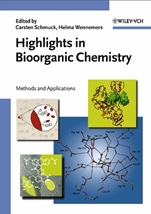
Highlights in Bioorganic Chemistry: Methods and Applications
ISBN 9783527306565
Autor: Carsten Schmuck, Helma Wennemers, Ronald Breslow
Wydawca: Wiley
Dostępność: 3-6 tygodni
Cena: 882,00 zł
Przed złożeniem zamówienia prosimy o kontakt mailowy celem potwierdzenia ceny.
ISBN13: |
9783527306565 |
ISBN10: |
3527306560 |
Autor: |
Carsten Schmuck, Helma Wennemers, Ronald Breslow |
Oprawa: |
Paperback |
Rok Wydania: |
2004-02-03 |
Ilość stron: |
600 |
Wymiary: |
244x173 |
Tematy: |
PN |
This is a fascinating introduction to the topic. Spanning the spectrum of nucleic acid chemistry, carbohydrates, peptides, molecular recognition, biosynthesis and natural biosynthesis, right up to medical and biophysical chemistry, the book provides advanced students and those already working in the field with a balanced overview.
In more than 30 contributions, a new generation of recognized scientists gives an account of the latest research in such areas asArtificial receptors for the stabilization of ß–sheet structuresCarbohydrate recognition by artificial receptorsCombinatorial chemistry as a tool for the discovery of catalystsThe interaction of NO and peroxynitrite with hemoglobin and myoglobinInhibitors against human mast–cell–tryptase as a potential approach to conquering asthmaThe selectivity of DNA replication.
A readily accessible survey for everyone wishing to stay abreast of developments.
With a foreword by Roland Breslow.
Spis treści:
Foreword.
Preface.
List of Contributors.
PART 1: BIOMOLECULES AND THEIR CONFORMATION.
1.1 Equilibria of RNA Secondary Structures (R. Micura & C. Höbartner).
1.2 Synthesis and Application of Proline and Pipecolic Acid Derviatives: Tools for Stabilization of Peptide Secondary Structures (W. Maison).
1.3 Stabilization of Peptide Microstructures by Coordination of Metal Ions (M. Albrecht).
1.4 Conformational Restriction of Sphingolipids (T. Kolter).
1.5 ß–Amino Acids in Nature (F. von Nussbaum & P. Spiteller).
1.6 Biosynthesis of ß–Amino Acids (P. Spiteller & F. von Nussbaum ).
PART 2: NON–COVALENT INTERMOLECULAR INTERACTIONS.
2.1 Carbohydrate Recognition by Artificial Receptors (A. Lützen).
2.2 Cyclopeptides as Macrocyclic Host Molecules for Charged Guests (S. Kubik).
2.3 Bioorganic Receptors for Amino Acids
and Peptides: Combining Rational Design with Combinatorial Chemistry (C. Schmuck, et al.).
2.4 Artficial Receptors for the Stabilization of ß–Sheet Structures (T. Scrader, et al.).
2.5 Evaluation of the DNA–binding Properties of Cationic Dyes by Absorption and Emission Spectroscopy (H. Ihmels, et al.).
2.6 Interaction of Nitrogen Monoxide and Peroxynitrite with Hemoglobin and Myoglobin (S. Herold).
2.7 Synthetic Approaches to Study Multivalent Carbohydrate–Lectin Interactions (V. Wittmann).
PART 3: STUDIES IN DRUG DEVELOPMENTS.
3.1 Building a Bridge Between Chemistry and Biology—Molecular Forceps that Inhibit the Farnesylation of RAS (H. Nestler).
3.2 Inhibitors Against Human Mast Cell Tryptase: A Potential Approach to Attack Asthma? (T. Martin).
3.3 Preparation of Novel Steroids by Microbiological and Combinatorial Chemistry (C. Huwe, et al.).
3.4 Enantiomeric Nucleic Acids—Spiegelmers (S. Klussmann).
3.5 Aspartic Proteases Involved in Alzheimer′s Disease (B. Schmidt & A. Siegler).
3.6 Novel Polymer and Linker Reagents for the Preparation of Protease–inhibitor Libraries (J. Rademann).
PART 4: STUDIES IN DIAGNOSTIC DEVELOPMENTS.
4.1 Selectivity of DNA Replication (A. Marx, et al.).
4.2 Homogeneous DNA Detection (O. Seitz).
4.3 Exploring the Capabilities of Nucleic Acid Polymerases by Use of Directed Evolution (S. Brakmann & M. Schlicke).
4.4 Labeling of Fusion Proteins with Small Molecules.in vito (S. Gendreizig, et al.).
4.5 Oxidative Splitting of Pyrimidine Cyclobutane Dimers (U. Wille).
4.6 Charge Transfer in DNA (H. Wagenknecht).
PART 5: CATALYSIS.
5.1 Protease–catalyzed Formation of C–N Bonds (F. Bordusa).
5.2 Twin Ribozymes (S. Müller, et al.).
5.3 RNA as a Catalysts: The Diels—Alderase Ribozyme (S. Keiper, et al.).
5.4 Combinatorial
Methods for the Discovery of Catalysts (H. Wennemers).
PART 6: METHODOLOGY, BIOENGINEERING AND BIOINSPIRED ASSEMBLIES.
6.1 Linkers for Solid–phase Synthesis (K. Knepper, et al.).
6.2 Small Molecule Arrays (R. Breinbauer, et al.).
6.3 Biotechnological Production of d–Pantothenic Acid and its Precursor d–Pantolactone (M. Kesseler).
6.4 Microbially Produced Functionalized Cyclohexadiene–trans–diols as a New Class of Chiral Building Block in Organic Synthesis: On the Way to Green and Combinatorial Chemistry (V. Lorbach, et al.).
6.5 Artifical Molecular Rotary Motors Based on Rotaxanes (T. Felder & C. Schalley).
6.6 Chemical Approaches for the Preparation of Biologically–inspired Supramolecular Architectures and Advanced Polymeric Materials (H. Klok).
Index.
Nota biograficzna:
Carsten Schmuck is Professor of Organic Chemistry at the University of Würzburg. He studied chemistry and obtained his PhD at the Ruhr–University in Bochum. After a postdoctorate at Columbia University in New York, he carried out his Habilitation at the University of Cologne and joined the Unviersity of Würzburg as associate professor in 2002.
Helma Wennemers is Professor of Organic Chemistry at the University of Basel. She studied chemistry at the Johann Wolfgand Goethe–University in Frankfurt and obtained her PhD at the Columbia University in New York. After a postdoctorate at Nagoya University in Japan she joined the University of Basel as assistant professor and was promoted to associate professor in 2003.
Okładka tylna:
This is a fascinating introduction to the topic. Spanning the spectrum of nucleic acid chemistry, carbohydrates, peptides, molecular recognition, biosynthesis and natural biosynthesis, right up to medical and biophysical chemistry, the book provides advanced students and those already working in the field with a
balanced overview.
In more than 30 contributions, a new generation of recognized scientists gives an account of the latest research in such areas asArtificial receptors for the stabilization of ß–sheet structuresCarbohydrate recognition by artificial receptorsCombinatorial chemistry as a tool for the discovery of catalystsThe interaction of NO and peroxynitrite with hemoglobin and myoglobinInhibitors against human mast–cell–tryptase as a potential approach to conquering asthmaThe selectivity of DNA replication.
A readily accessible survey for everyone wishing to stay abreast of developments.
With a foreword by Roland Breslow.
Koszyk
Książek w koszyku: 0 szt.
Wartość zakupów: 0,00 zł
Informacje


Kontakt
Gambit
Centrum Oprogramowania
i Szkoleń Sp. z o.o.
Al. Pokoju 29b/22-24
31-564 Kraków
Siedziba Księgarni
ul. Kordylewskiego 1
31-542 Kraków
+48 12 410 5991
+48 12 410 5987
+48 12 410 5989
Subskrypcje
Administratorem danych osobowych jest firma Gambit COiS Sp. z o.o. Na podany adres będzie wysyłany wyłącznie biuletyn informacyjny.
Autoryzacja płatności

Informacje na temat autoryzacji płatności poprzez PayU.

© Copyright 2012: GAMBIT COiS Sp. z o.o. Wszelkie prawa zastrzeżone.
Projekt i wykonanie: Alchemia Studio Reklamy