


Wydawcy
Katalog tematyczny
- Archeologia (109)
- Ekonomia, finanse, business (13704)
- Filozofia (1445)
- Historia (3040)
- Języki i językoznawstwo (2356)
- Lifestyle, hobby i rozrywka (475)
- Medycyna (9704)
- Nauki humanistyczne (4)
- Nauki o Ziemi i środowisku (2638)
- Nauki ścisłe (20412)
- Astronomia (294)
- Biologia (5119)
- Chemia (6540)
- Chemia analityczna (361)
- Chemia fizyczna (346)
- Chemia nieorganiczna (137)
- Chemia organiczna (535)
- Krystalografia (27)
- Minerologia (46)
- Fizyka (3309)
- Matematyka (4574)
- Nauki ścisłe, ogólnie (503)
- Nauki społeczne (8486)
- Nauki techniczne (13450)
- Prawo (1696)
- Publikacje informacyjne i interdyscyplinarne (1288)
- Religia i wierzenia (917)
- Technika komputerowa (4067)
- Zdrowie, relacje międzyludzkie i rozwój osobisty (657)





Informacje szczegółowe o książce
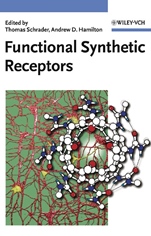
Functional Synthetic Receptors
ISBN 9783527306558
Autor: Thomas Schrader, Andrew D. Hamilton
Wydawca: Wiley
Dostępność: 3-6 tygodni
Cena: 1 179,15 zł
Przed złożeniem zamówienia prosimy o kontakt mailowy celem potwierdzenia ceny.
ISBN13: |
9783527306558 |
ISBN10: |
3527306552 |
Autor: |
Thomas Schrader, Andrew D. Hamilton |
Oprawa: |
Hardback |
Rok Wydania: |
2005-03-08 |
Ilość stron: |
440 |
Wymiary: |
253x178 |
Tematy: |
PN |
A timely overview of this rapidly–expanding topic, covering the most important classes of compounds and incorporating the latest literature. With its application–oriented approach, this book is the first to emphasize current and potential applications, extending to such fields as materials science, bioorganic chemistry, medicinal chemistry, and organic synthesis. In the biological context in particular, the book clarifies which receptor systems work well in water or better under physiological conditions.
From the contents:Amino Acid, Peptid and Protein ReceptorsCarbohydrate ReceptorsAmmonium, Amidinium and Guanidinium ReceptorsAnion ReceptorsMolecular Capsules and Self AssemblyDynamic Combinatorial Libraries based on Molecular RecognitionMolecular MachinesSelf–ReplicationAimed at graduate students and specialists in the field, this is also of interest to pharmaceutical companies involved in drug design, as well as chemical companies with a polymer or nanotechnology group. In addition, analytical companies working on the advanced equipment covered here will find stimulating new applications.
Spis treści:
Preface.
List of Contributors.
1 Artif icial (Pseudo)peptides for Molecular Recognition and Catalysis (L. J. Prins, P. Scrimin).
1.1 Introduction.
1.2 Recognition of Biological Targets by Pseudo–peptides.
1.3 Synthetic (Pseudo)peptide–based Supermolecules: From Structure to Function.
1.4 Combinatorial Selection of Functional (Pseudo)peptides.
1.5 Conclusions.
References.
2 Carbohydrate Receptors (A. P. Davis, T. D. James).
2.1 Introduction.
2.2 Carbohydrate Receptors Employing Noncovalent Interactions.
2.3 Receptors Employing B–O Bond Formation.
References.
3 Ammonium, Amidinium, Guanidinium, and Pyridinium Cations (T. Schrader, M. Maue).
3.1 Introduction.
3.2 Ammonium Cations.
3.3 Amidinium Cat
ions.
3.4 Guanidinium Cations.
3.5 Pyridinium Cations.
3.6 Conclusions and Outlook.
References.
4 Artif icial Pyrrole–based Anion Receptors (W.–S. Cho, J. L. Sessler).
4.1 Introduction.
4.2 Anions in Biological Systems.
4.3 Cationic Pyrrole–based Receptors.
4.4 Neutral Pyrrole–based Anion Receptors.
4.5 Anion Carriers in Transport Applications.
4.6 Anion Sensing.
4.7 Guanidinium–based Anion Receptors.
4.8 Amide–based Anion Receptors.
4.9 Urea–based Anion Receptors.
4.10 Conclusions.
Acknowledgment.
References.
5 Molecular Containers in Action (D. M. Rudkevich).
5.1 Introduction.
5.2 Variety of Molecular Containers.
5.3 Chemistry Inside Capsules.
5.4 Storage of Information Inside Capsules.
5.5 Materials and Sensors by Encapsulation.
5.6 Biologically Relevant Encapsulation.
5.7 Concluding Remarks.
Acknowledgment.
References.
6 Formation and Recognition Properties of Dynamic Combinatorial Libraries (A. D. Hamilton, D. M. Tagore, K. I. Sprinz).
6.1 Introduction.
6.2 Covalent Interactions Used in DCC Design.
6.3 Noncovalent Interactions Used in DCC Design.
6.4 Conformational/Configurational Isomerization.
6.5 Receptor–based Screening, Selection, and Amplification.
6.6 Conclusions.
Acknowledgment.
References.
7 Synthetic Molecular Machines (E. R. Kay, D. A. Leigh).
7.1 Introduction.
7.2 Controlling Conformational Changes.
7.3 Controlling Configurational Changes.
7.4 Controlling Motion in Supramolecular Systems.
7.5 Controlling Motion in Interlocked Systems.
7.6 From Laboratory to Technology: Toward Useful Molecular Machines.
7.7 Summary and Outlook.
References.
8 Replicable Nanoscaffolded Multifunctionality – A Chemical Perspective (W.–M. Pankau, S. Antsypovich, L. Eckardt, J. Stankiewicz, S. Mönninghoff, J. Zimmermann, M. Radeva, G. von
Kiedrowski).
Abstract.
8.1 Introduction.
8.2 A Manifesto for Nanorobot Implementation.
8.3 Conclusion.
Acknowledgment.
References.
Index.
Nota biograficzna:
Thomas Schrader is Professor of Organic Chemistry at the University of Marburg. He studied chemistry and obtained his PhD in 1988 under W. Steglich at the Friedrich–Wilhelms–University of Bonn. After a postdoctorate stay at Princeton University under E.C. Taylor on total synthesis of antitumor agents, he gained his lecturing qualification at the University of Düsseldorf. In 2000 he joined the University of Marburg as associate professor. His research focuses on bioorganic aspects of supramolecular systems, optimizing and multiplying new binding motifs for characteristic structural features in biomolecules – a concept that leads to artificial receptor molecules capable of specifically interfering with biological processes. Applications include biosensors, drugs countering protein misfolding and tweezers for protein assembly. Professor Schrader is the holder of the Bredereck–symposium prize in bioorganic chemistry (2001).
Andrew D. Hamilton received his PhD from Cambridge University in 1980, and the following year carried out his postdoc research at Université Louis Pasteur, Strasbourg. Between 1981 and 1988 he was Assistant Professor for Chemistry at Princeton University, thereafter Associate Professor until 1992, when he became Full Professor at the University of Pittsburgh, a post he held until 1997. Since 1997 he has been Irénée duPont Professor of Chemistry and, since 1998, Professor of Molecular Biophysics and Biochemistry at Yale University. Here he held the Chair of the Chemistry Department between 1999 and 2003, and has been Deputy Provost for Science and Technology since 2003. Professor Hamilton lectures at several universities in the USA.
Okładk
a tylna:
A timely overview of this rapidly–expanding topic, covering the most important classes of compounds and incorporating the latest literature. With its application–oriented approach, this book is the first to emphasize current and potential applications, extending to such fields as materials science, bioorganic chemistry, medicinal chemistry, and organic synthesis. In the biological context in particular, the book clarifies which receptor systems work well in water or better under physiological conditions.
From the contents:Amino Acid, Peptid and Protein ReceptorsCarbohydrate ReceptorsAmmonium, Amidinium and Guanidinium ReceptorsAnion ReceptorsMolecular Capsules and Self AssemblyDynamic Combinatorial Libraries based on Molecular RecognitionMolecular MachinesSelf–ReplicationAimed at graduate students and specialists in the field, this is also of interest to pharmaceutical companies involved in drug design, as well as chemical companies with a polymer or nanotechnology group. In addition, analytical companies working on the advanced equipment covered here will find stimulating new applications.
Koszyk
Książek w koszyku: 0 szt.
Wartość zakupów: 0,00 zł
Informacje


Kontakt
Gambit
Centrum Oprogramowania
i Szkoleń Sp. z o.o.
Al. Pokoju 29b/22-24
31-564 Kraków
Siedziba Księgarni
ul. Kordylewskiego 1
31-542 Kraków
+48 12 410 5991
+48 12 410 5987
+48 12 410 5989
Subskrypcje
Administratorem danych osobowych jest firma Gambit COiS Sp. z o.o. Na podany adres będzie wysyłany wyłącznie biuletyn informacyjny.
Autoryzacja płatności

Informacje na temat autoryzacji płatności poprzez PayU.

© Copyright 2012: GAMBIT COiS Sp. z o.o. Wszelkie prawa zastrzeżone.
Projekt i wykonanie: Alchemia Studio Reklamy