


Wydawcy
Katalog tematyczny
- Archeologia (109)
- Ekonomia, finanse, business (13704)
- Filozofia (1445)
- Historia (3040)
- Języki i językoznawstwo (2356)
- Lifestyle, hobby i rozrywka (475)
- Medycyna (9704)
- Nauki humanistyczne (4)
- Nauki o Ziemi i środowisku (2638)
- Nauki ścisłe (20412)
- Astronomia (294)
- Biologia (5119)
- Chemia (6540)
- Chemia analityczna (361)
- Chemia fizyczna (346)
- Chemia nieorganiczna (137)
- Chemia organiczna (535)
- Krystalografia (27)
- Minerologia (46)
- Fizyka (3309)
- Matematyka (4574)
- Nauki ścisłe, ogólnie (503)
- Nauki społeczne (8486)
- Nauki techniczne (13450)
- Prawo (1696)
- Publikacje informacyjne i interdyscyplinarne (1288)
- Religia i wierzenia (917)
- Technika komputerowa (4067)
- Zdrowie, relacje międzyludzkie i rozwój osobisty (657)





Informacje szczegółowe o książce
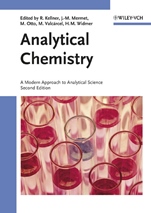
Analytical Chemistry: A Modern Approach to Analytical Science
ISBN 9783527305902
Autor: Robert Kellner, Jean–Michel Mermet, Matthias Otto, Miguel Valcárcel, H. M. Widmer
Wydawca: Wiley
Dostępność: 3-6 tygodni
Cena: 530,25 zł
Przed złożeniem zamówienia prosimy o kontakt mailowy celem potwierdzenia ceny.
ISBN13: |
9783527305902 |
ISBN10: |
3527305904 |
Autor: |
Robert Kellner, Jean–Michel Mermet, Matthias Otto, Miguel Valcárcel, H. M. Widmer |
Oprawa: |
Hardback |
Rok Wydania: |
2004-08-06 |
Numer Wydania: |
2nd Edition |
Ilość stron: |
1209 |
Wymiary: |
299x217 |
Tematy: |
PN |
Why settle for less when you can have the whole of Analytical Chemistry in a single book?
The successful all–in–one guide to modern Analytical Chemistry is now available in a new and updated edition. From the foundations of analytical science to state–of–the art techniques and instrumentation – all you will ever need to know is explained here. The text covers both general analytical chemistry and instrumental analysis and may be used for most analytical chemistry courses offered today.
Carefully chosen worked examples show how analytical problems can effectively be solved and how calculations should be performed. Study questions and recommended reading for further study are provided for each learning unit.
The second edition has been carefully revised to keep up–to–date with advances in the technology of analytical methods in the laboratory and in the workplace, including newly written chapters on multidimensional chromatography, sensors and screening systems.
With its broad scope, the text doubles as a reliable reference for virtually all analytical problems encountered during the course of study and beyond.
"Analytical Chemistry will serve as an excellent text as well as a valued reference following completion of the student′s course of study."
Journal of Medicinal Chemistry
"It is a book that should be on the shelves of all analytical chemistry and biochemistry professionals, including those who work in the areas of clinical chemistry, food chemistry and forensic chemistry."
Bulletin of the World Health Organisation
"The book is a must–have reference for anyone trying to understand what techniques and technologies are available for the analytical chemist today."
Chemtech
Spis treści:
Foreword.
Contributors.
Preface to the Second Edition.
Preface to the First Edition.
PART I: INTRODUCTION TO ANALYTICAL CHEMISTRY.
1. Analytical Chemistry as a (B
io)chemical Discipline.
2. Key References in Analytical Sciences.
3. Analytical Features.
4. The Analytical Process.
5. The Analytical Problem.
6. Analytical Quality Management.
PART II: BASIC STATISTICS AND CHEMOMETRICS.
7. Basic Statistics.
8. Advanced Chemometrics.
8.1 Calibration.
8.2 Signal Processing.
8.3 Optimizatio and Experimental Design.
8.4 Pattern Recognition and Classification.
8.5 Multivariate Modeling.
8.6 Computer Hard– and Software and Interfacing Analytical Instruments.
PART III: METHODS BASED ON CHEMICAL REACTIONS.
9. Introduction to Chemical Equilibria.
10. Acid–Base Equilibria and Titrations.
11. Complexes in Analytical Chemistry – Complexometric Titrations.
12. Redox Equilibria and Titrations.
13. Precipitation Methods and Thermoanalysis.
13.1 Precipitation Methods.
13.2 Thermal Analysis.
14. Liquid–Liquid Systems.
15. Liquid–Solid Equlibria.
16. Gas–Liquid and Gas–Solid Systems.
17. Kinetics and Catalysis.
PART IV: SEPARATION METHODS.
18. Electroanalysis.
PART V: SEPARATION METHODS.
19. Introduction to Separation Methods.
20. Sample Preparation.
21. Chromatography.
22. Electrophoresis.
23. Field–Flow Fractionation.
PART VI: ATOMIC AND MOLECULAR SPECTROSCOPY.
24. Elemental Analysis.
24.1 Introduction.
24.2 Atomic Emission Spectrometry.
24.3 Atomic Absorption Spectrometry.
24.4 X–ray Fluorescence Spectrometry.
24.5 Activation Analysis.
24.6 Inorganic Mass Spectrometry.
25. Compound and Molecule Specific Analysis.
25.1 UV–VIS Spectrometry, Emission and Luminiscence.
25.2 Infrared and Raman Spectrometry.
25.3 Nuclear Magnetic Resonace (NMR) Spectrometry.
25.4 Organic Mass Spectrometry.
26. Coupling of Chromatographic and Spectroscopic Techniques.
PART VII: SURFACE AND STRUCTURAL ANALYSIS.
27. Surface and Interface Analysis.
28. Structura
l Analysis.
PART VIII: AUTOMATION, MINIATURIZATION AND SIMPLIFICATION OF ANALYTICAL PROCESSES.
29. Introduction.
30. Laboratory Automation.
31. Flow Injection Analysis.
32.Miniaturized Analytical Systems.
33. Chemical Sensors.
34. Biosensors.
35. Screening Systems.
36. Process Analytical Chemistry.
Appendix.
Index.
Nota biograficzna:
Jean–Michel Mermet is Research Director at the National Center for Scientific Research (CNRS). In 1985, he was appointed Director of the Laboratory of Analytical Sciences at the University of Lyon. His research interests have been focused on spectrochemistry of plasmas and lasers from fundamental, analytical and instrumental aspects. He has published more than 200 papers, reviews and book chapters.
Matthias Otto is Professor of Analytical Chemistry at the TU Bergakademie Freiberg in Germany. He was born in Dresden (Germany) and did all his studies at the University of Leipzig. In 1984 he moved to Freiberg (Germany) as a reader and was appointed full Professor there in 1987. Since that time he has taught almost all aspects of Analytical Chemistry mainly within the curricula of chemistry, applied sciences and geoecology and organizes courses in basic and advanced chemometrics.
Miguel Valcarcel is Professor of Analytical Chemistry at the University of C ba (Spain) since 1976, member of the Spanish Royal Academy of Sciences and currently chairman of the Analytical Division of the Federation of European Chemical Societies (DAC–FECS). He is author or co–author of 630 research papers and six monographs in the frame of automation, simplification and quality of (bio)chemical measurement processes.
Okładka tylna:
Why settle for less when you can have the whole of Analytical Chemistry in a single book?
The successful all–in–one guide to modern Analytical Chemistry is now available in a new and updated edition.
From the foundations of analytical science to state–of–the art techniques and instrumentation – all you will ever need to know is explained here. The text covers both general analytical chemistry and instrumental analysis and may be used for most analytical chemistry courses offered today.
Carefully chosen worked examples show how analytical problems can effectively be solved and how calculations should be performed. Study questions and recommended reading for further study are provided for each learning unit.
The second edition has been carefully revised to keep up–to–date with advances in the technology of analytical methods in the laboratory and in the workplace, including newly written chapters on multidimensional chromatography, sensors and screening systems.
With its broad scope, the text doubles as a reliable reference for virtually all analytical problems encountered during the course of study and beyond.
"Analytical Chemistry will serve as an excellent text as well as a valued reference following completion of the student′s course of study."
Journal of Medicinal Chemistry
"It is a book that should be on the shelves of all analytical chemistry and biochemistry professionals, including those who work in the areas of clinical chemistry, food chemistry and forensic chemistry."
Bulletin of the World Health Organisation
"The book is a must–have reference for anyone trying to understand what techniques and technologies are available for the analytical chemist today."
Chemtech
Koszyk
Książek w koszyku: 0 szt.
Wartość zakupów: 0,00 zł
Informacje


Kontakt
Gambit
Centrum Oprogramowania
i Szkoleń Sp. z o.o.
Al. Pokoju 29b/22-24
31-564 Kraków
Siedziba Księgarni
ul. Kordylewskiego 1
31-542 Kraków
+48 12 410 5991
+48 12 410 5987
+48 12 410 5989
Subskrypcje
Administratorem danych osobowych jest firma Gambit COiS Sp. z o.o. Na podany adres będzie wysyłany wyłącznie biuletyn informacyjny.
Autoryzacja płatności

Informacje na temat autoryzacji płatności poprzez PayU.

© Copyright 2012: GAMBIT COiS Sp. z o.o. Wszelkie prawa zastrzeżone.
Projekt i wykonanie: Alchemia Studio Reklamy