


Wydawcy
Katalog tematyczny
- Archeologia (109)
- Ekonomia, finanse, business (13704)
- Filozofia (1445)
- Historia (3040)
- Języki i językoznawstwo (2356)
- Lifestyle, hobby i rozrywka (475)
- Medycyna (9704)
- Nauki humanistyczne (4)
- Nauki o Ziemi i środowisku (2638)
- Nauki ścisłe (20412)
- Nauki społeczne (8486)
- Nauki techniczne (13450)
- Budownictwo lądowe (1045)
- Budownictwo komunikacyjne (9)
- Hydraulika (33)
- Konstrukcje budowlane (95)
- Mechanika konstrukcji (182)
- Przemysł budowlany (7)
- Chemia przemysłowa (2258)
- Elektronika i telekomunikacja (3287)
- Energetyka (1122)
- Inne nauki stosowane (363)
- Inżynieria biochemiczna (507)
- Inżynieria transportu (232)
- Mechanika i materiały (3316)
- Nauka o środowisku (321)
- Rolnictwo (507)
- Technika, ogólnie (475)
- Prawo (1696)
- Publikacje informacyjne i interdyscyplinarne (1288)
- Religia i wierzenia (917)
- Technika komputerowa (4067)
- Zdrowie, relacje międzyludzkie i rozwój osobisty (657)





Informacje szczegółowe o książce
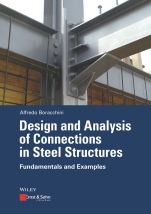
Design and Analysis of Connections in Steel Structures: Fundamentals and Examples
ISBN 9783433031223
Autor: Alfredo Boracchini
Wydawca: Wiley
Dostępność: 3-6 tygodni
Cena: 318,15 zł
Przed złożeniem zamówienia prosimy o kontakt mailowy celem potwierdzenia ceny.
ISBN13: |
9783433031223 |
ISBN10: |
3433031223 |
Autor: |
Alfredo Boracchini |
Oprawa: |
Paperback |
Rok Wydania: |
2018-08-01 |
Ilość stron: |
380 |
Wymiary: |
248x172 |
Tematy: |
TN |
The book introduces all the aspects needed for the safe and economic design and analysis of connections using bolted joints in steel structures. This is not treated according to any specific standard but making comparison among the different norms and methodologies used in the engineering practice, e.g. Eurocode, AISC, DIN, BS.
Several examples are solved and illustrated in detail, giving the reader all the tools necessary to tackle also complex connection design problems.
The book is introductory but also very helpful to advanced and specialist audiences because it covers a large variety of practice demands for connection design. Parts that are not taken to an advanced level are seismic design, welds, interaction with other materials (concrete, wood), and cold formed connections./p
Alfredo Boracchini, PE is a registered engineer in Italy and in some states of the USA. His professional experience is focused on steel structures, he has designed and engineered in various construction sectors worldwide. He's the owner of a professional engineering firm with branches in Europe, Asia and America as well as an active member in international associations. This allowed him to develop a broad international experience that he shares by means of this book with those interested in the design of bolted joints of steel structures.
Acknowledgments xxi
List of Abbreviations xxiii
1 Fundamental Concepts of Joints in Design of Steel Structures 1
1.1 Pin Connections and Moment Resisting Connections 1
1.1.1 Safety, Performance, and Costs 1
1.1.2 Lateral Load Resisting System 2
1.1.3 Pins and Fully Restrained Joints in the Analysis Model 7
1.2 Plastic Hinge 8
1.2.1 Base Plates 9
1.2.2 Trusses 11
References 12
2 Fundamental Concepts of the Behavior of Steel Connections 13
2.1 Joint Classifications 13
2.2 Forces in the Calculation Model and for the Connection 14
2.3 Actions Proportional to Stiffness 17
2.4 Ductility 18
2.5 Load Path 19
2.6 Ignorance of the Load Path 20
2.7 Additional Restraints 21
2.8 Methods to Define Ultimate Limit States in Joints 21
2.9 Bolt Resistance 22
2.10 Yield Line 22
2.11 Eccentric Joints 22
2.12 Economy, Repetitiveness, and Simplicity 22
2.13 Man-hours and MaterialWeight 23
2.14 Diffusion Angles 23
2.15 Bolt Pretensioning and Effects on Resistance 24
2.15.1 Is Resistance Affected by Pretensioning? 24
2.15.2 Is Pretensioning Necessary? 24
2.15.3 Which PretensioningMethod Should Be Used? 25
2.16 Transfer Forces 25
2.17 Behavior of a Bolted Shear Connection 25
2.18 Behavior of Bolted Joints Under Tension 27
References 29
3 Limit States for Connection Components 31
3.1 Deformation Capacity (Rotation) and Stiffness 31
3.1.1 Rotational Stiffness 32
3.2 Inelastic Deformation due to Bolt Hole Clearance 33
3.3 Bolt Shear Failure 34
3.3.1 Threads Inside the Shear Plane 35
3.3.2 Number of Shear Planes 37
3.3.3 Packing Plates 37
3.3.4 Long Joints 38
3.3.5 Anchor Bolts 39
3.3.6 Stiffness Coefficient 39
3.4 Bolt Tension Failure 40
3.4.1 Countersunk Bolts 41
3.4.2 Stiffness Coefficient 41
3.5 Bolt Failure in Combined Shear and Tension 42
3.6 Slip-Resistant Bolted Connections 42
3.6.1 Combined Shear and Tension 44
3.7 Bolt Bearing and Bolt Tearing 44
3.7.1 Countersunk Bolts 49
3.7.2 Stiffness Coefficients 49
3.8 Block Shear (or Block Tearing) 49
3.9 Failure ofWelds 52
3.9.1 Weld Calculation Procedures 54
3.9.1.1 DirectionalMethod 54
3.9.1.2 Simplified Method 57
3.9.2 TackWelding (Intermittent FilletWelds) 58
3.9.3 Eccentricity 58
3.9.4 FilletWeld Groups 58
3.9.5 Welding Methods 60
3.9.6 Inspections 60
3.9.6.1 Visual Testing 60
3.9.6.2 Penetrant Testing 60
3.9.6.3 Magnetic Particle Testing 60
3.9.6.4 Radiographic Testing 60
3.9.6.5 Ultrasonic Testing 61
3.10 T-stub, Prying Action 61
3.10.1 T-stub with Prying Action 62
3.10.2 Possible Simplified Approach According to AISC 64
3.10.3 Backing Plates 65
3.10.4 Length Limit for Prying Forces and T-stub without Prying 66
3.10.5 T-stub Design Procedure for Various “Components” According to Eurocode 67
3.10.5.1 Column Flange 67
3.10.5.2 End Plate 71
3.10.5.3 Angle Flange Cleat 71
3.10.6 T-stub Design Procedure for Various “Components” According to the “Green Book” 71
3.10.6.1
Koszyk
Książek w koszyku: 0 szt.
Wartość zakupów: 0,00 zł
Informacje


Kontakt
Gambit
Centrum Oprogramowania
i Szkoleń Sp. z o.o.
Al. Pokoju 29b/22-24
31-564 Kraków
Siedziba Księgarni
ul. Kordylewskiego 1
31-542 Kraków
+48 12 410 5991
+48 12 410 5987
+48 12 410 5989
Subskrypcje
Administratorem danych osobowych jest firma Gambit COiS Sp. z o.o. Na podany adres będzie wysyłany wyłącznie biuletyn informacyjny.
Autoryzacja płatności

Informacje na temat autoryzacji płatności poprzez PayU.

© Copyright 2012: GAMBIT COiS Sp. z o.o. Wszelkie prawa zastrzeżone.
Projekt i wykonanie: Alchemia Studio Reklamy