


Wydawcy
Katalog tematyczny
- Archeologia (109)
- Ekonomia, finanse, business (13704)
- Filozofia (1445)
- Historia (3040)
- Języki i językoznawstwo (2356)
- Lifestyle, hobby i rozrywka (475)
- Medycyna (9704)
- Nauki humanistyczne (4)
- Nauki o Ziemi i środowisku (2638)
- Nauki ścisłe (20412)
- Nauki społeczne (8486)
- Nauki techniczne (13450)
- Budownictwo lądowe (1045)
- Budownictwo komunikacyjne (9)
- Hydraulika (33)
- Konstrukcje budowlane (95)
- Mechanika konstrukcji (182)
- Przemysł budowlany (7)
- Chemia przemysłowa (2258)
- Elektronika i telekomunikacja (3287)
- Energetyka (1122)
- Inne nauki stosowane (363)
- Inżynieria biochemiczna (507)
- Inżynieria transportu (232)
- Mechanika i materiały (3316)
- Nauka o środowisku (321)
- Rolnictwo (507)
- Technika, ogólnie (475)
- Prawo (1696)
- Publikacje informacyjne i interdyscyplinarne (1288)
- Religia i wierzenia (917)
- Technika komputerowa (4067)
- Zdrowie, relacje międzyludzkie i rozwój osobisty (657)





Informacje szczegółowe o książce
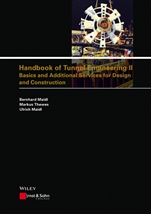
Handbook of Tunnel Engineering II: Basics and Additional Services for Design and Construction
ISBN 9783433030493
Autor: Bernhard Maidl, Markus Thewes, Ulrich Maidl
Wydawca: Wiley
Dostępność: 3-6 tygodni
Cena: 476,70 zł
Przed złożeniem zamówienia prosimy o kontakt mailowy celem potwierdzenia ceny.
ISBN13: |
9783433030493 |
ISBN10: |
3433030499 |
Autor: |
Bernhard Maidl, Markus Thewes, Ulrich Maidl |
Oprawa: |
Hardback |
Rok Wydania: |
2014-01-16 |
Ilość stron: |
458 |
Wymiary: |
244x174 |
Tematy: |
TN |
Tunnel engineering is one of the oldest, most interesting but also challenging engineering disciplines and demands not only theoretical knowledge but also practical experience in geology, geomechanics, structural design, concrete construction, machine technology, construction process technology and construction management. The two–volume “ Handbuch des Tunnel– und Stollenbaus ” has been the standard reference work for German–speaking tunnellers in theory and practice for 30 years. The new English edition is based on a revised and adapted version of the third German edition and reflects the latest state of knowledge. The book is published in two volumes, with the second volume covering both theoretical themes like design basics, geological engineering, structural design of tunnels and monitoring instrumentation, and also the practical side of work on the construction site such as dewatering, waterproofing and scheduling as well as questions of tendering, award and contracts, data management and process controlling. As with volume I, all chapters include practical examples.
Volume II: Basics and Additional Services for Design and Construction∗ The authors VII Foreword to the English edition IX Foreword to the 3rd German edition X Foreword to the 2nd German edition XI Foreword to the 1st German edition XII 1 General Principles for the Design of the Cross–section 1 1.1 General 1 1.2 Dependence on intended use 1 1.2.1 Road tunnels 1 1.2.2 Constructional measures for road safety in tunnels 5 1.2.3 Rail tunnels 7 1.2.4 Construction of rail tunnels 12 1.2.5 Underground railway and underground tram tunnels 13 1.2.6 Innovative transport systems 14 1.2.7 Monorail with magnetic levitation, Transrapid, Metrorapid 15 1.2.8 Other underground works 15 1.3 The influence of the ground 16 1.4 Dependency on construction process 19 2 Engineering geology aspects for design and classification 21 2.1 General 21 2.2 Origin, properties and categorisation of rocks 21 2.2.1 General basics 21 2.2.2 Categorisation of rocks 25 2.2.3 Categorisation of soils 25 2.3 Engineering geology and rock mechanics investigations 29 2.3.1 Engineering geology investigations 30 2.3.2 Rock mechanics investigations 33 2.4 The ground and its classification 38 2.4.1 Ground 38 2.4.2 Classification of the rock mass 41 2.4.2.1 General 41 2.4.2.2 Basic system of classification 41 2.4.2.3 Q System (Quality System) 42 2.4.2.4 RMR System (Rock Mass Rating System) 48 2.4.2.5 Relationship between Q and RMR systems 51 2.4.3 Standards, guidelines and recommendations 52 2.4.3.1 Classification in Germany 52 2.4.3.2 Classification in Switzerland (“Klassierung” according to the SIA standard) 57 2.4.3.3 Classification in Austria 61 2.4.4 Example of a project–related classification according to DIN 18312 for the shotcrete process 68 2.4.4.1 Procedure at the Oerlinghausen Tunnel 68 2.4.4.2 Description of the tunnelling classes for the Oerlinghausen Tunnel 70 2.5 Special features for tunnelling machines 74 2.5.1 General 74 2.5.2 Influences on the boring process 74 2.5.3 Influences on the machine bracing 76 2.5.4 Influences on the temporary support 79 2.5.5 Classification for excavation and support 80 2.5.5.1 General and objective for mechanised tunnelling 80 2.5.5.2 Classification systems and investigation of suitability for tunnel boring machines 80 2.5.6 Standards, guidelines and recommendations 84 2.5.6.1 Classification in Germany 84 2.5.6.2 Classification in Switzerland 88 2.5.6.3 Classification in Austria 92 2.5.7 New classification proposal 92 3 Structural design verifications, structural analysis of tunnels 95 3.1 General 95 3.2 Ground pressure theories 97 3.2.1 Historical development 97 3.2.2 Primary and secondary stress states in the rock mass 99 3.2.2.1 Primary stress state 99 3.2.2.2 Secondary stress state 100 3.3 General steps of model formation 100 3.4 Analytical processes and their modelling 103 3.4.1 Modelling of shallow tunnels in loose ground 103 3.4.2 Modelling deep tunnels in loose ground 103 3.4.3 Modelling tunnels in solid rock 104 3.4.4 Bedded beam models 105 3.5 Numerical methods 106 3.5.1 Finite Difference Method (FDM) 107 3.5.2 Finite Element Method (FEM) 107 3.5.3 Boundary Element Method (BEM) 107 3.5.4 Combination of finite element and boundary element methods 107 3.6 The application of the finite element method in tunnelling 109 3.6.1 “Step–by–Step” technique 109 3.6.2 Iteration process 109 3.6.3 Simulation of uncoupled partial excavations 112 3.7 Special applications of the FEM in tunnelling 114 3.7.1 Modelling of deformation slots 114 3.7.2 Determination of the loosening of the rock mass from blasting 115 3.8 Structural design 116 3.8.1 General principles 116 3.8.2 Design method for steel fibre concrete tunnel linings 118 3.8.3 Conventionally reinforced shotcrete versus steel fibre shotcrete 124 4 Measurement for monitoring, probing and recording evidence 129 4.1 General 129 4.2 Measurement programme 130 4.2.1 General 130 4.2.2 Measurements of construction states 131 4.2.2.1 Standard monitoring section 132 4.2.2.2 Principal monitoring sections 133 4.2.2.3 Surface measurements 134 4.2.2.4 Basic rules for implementation and evaluation 134 4.2.3 Measurement of the final state 135 4.2.3.1 Measurement programme 135 4.2.3.2 Evaluation 136 4.2.4 Special features of shield drives 136 4.2.4.1 Instrumentation 136 4.2.4.2 Recording and evaluation of machine data 138 4.2.5 IT systems for the recording and evaluation of geotechnical data 146 4.3 Measurement processes, instruments 147 4.3.1 Deformation measurement 148 4.3.1.1 Geodetic surveying 148 4.3.1.2 Convergence measurements 148 4.3.1.3 Optical surveying of displacement with electronic total station 150 4.3.1.4 Surface surveying 151 4.3.1.5 Extensometer measurements 152 4.3.1.6 Inclinometer / deflectometer measurements 156 4.3.1.7 Sliding micrometer measurements 158 4.3.1.8 Trivec measurements 159 4.3.2 Profile surveying 159 4.3.2.1 Photogrammetric scanner 159 4.3.3 Stress and strain measurements in the support layer 162 4.3.3.1 Radial and tangential stress measurement in concrete 162 4.3.3.2 Measurements in steel arches 165 4.3.4 Measurements of the loading and function of anchors 165 4.3.4.1 Checking of anchor forces in unbonded anchors 165 4.3.4.2 Checking of anchor forces with mechanical measurement anchors 167 4.4 Geophysical exploration ahead of the face 168 4.4.1 Seismology 169 4.4.2 Geoelectrical 169 4.4.3 Gravimetric 169 4.4.4 Geomagnetic 169 4.4.5 Geothermal 170 4.4.6 Examples and experience 170 4.4.6.1 Probing with SSP (Sonic Softground Probing) 170 4.4.6.2 Probing karst caves171 4.5 Monitoring and evidence–gathering measures for tunnelling beneath buildings and transport infrastructure 178 4.5.1 General 178 4.5.2 Monitoring and evidence–gathering measures 178 4.5.3 Noise and vibration protection 179 4.5.4 Permissible deformation of buildings 179 5 Dewatering, waterproofing and drainage 183 5.1 General 183 5.2 Dewatering during construction 183 5.2.1 Water quantity and difficulties 184 5.2.1.1 Water flow in the ground 184 5.2.1.2 Forms of underground water 187 5.2.1.3 Payment and quantity measurement 189 5.2.2 Measures to collect and drain groundwater 194 5.2.2.1 Measures to collect water 194 5.2.2.2 Measures to drain water, open dewatering 196 5.2.2.3 Drainage boreholes and drainage tunnels 196 5.2.3 Obstructions and reduced performance 199 5.2.3.1 General description 199 5.2.3.2 Influence of groundwater on the advance rate 199 5.2.3.3 Influence of groundwater on tunnelling costs 201 5.2.4 Environmental impact and cleaning 201 5.2.4.1 Effect on the groundwater system 202 5.2.4.2 Effects on groundwater quality 203 5.2.5 Sealing groundwater 205 5.2.5.1 Grouting process 206 5.2.5.2 Ground freezing 207 5.3 Tunnel waterproofing 208 5.3.1 Requirements 210 5.3.1.1 Required degree of water–tightness 210 5.3.1.2 Requirements resulting from geological and hydrological conditions 211 5.3.1.3 Material requirements 212 5.3.1.4 Requirements for the construction process 212 5.3.1.5 Requirements for design and detailing 213 5.3.1.6 Maintenance 214 5.3.1.7 Requirements of the users 214 5.3.1.8 Requirements of environmental and waterways protection 214 5.3.1.9 Requirements of cost–effectiveness 214 5.3.2 Waterproofing concepts 215 5.3.2.1 Categorisation 215 5.3.2.2 Preliminary waterproofing 215 5.3.2.3 Main waterproofing 215 5.3.2.4 Repair of waterproofing 216 5.3.3 Waterproofing elements and materials 217 5.3.3.1 Waterproof concrete 217 5.3.3.2 Water–resistant plaster, sealing mortar, resin concrete 221 5.3.3.3 Bituminous waterproofing 221 5.3.3.4 Plastic waterproofing membranes 223 5.3.3.5 Sprayed waterproofing 232 5.3.3.6 Metallic waterproofing materials 232 5.3.4 Testing of seams in waterproofing membranes 233 5.4 Tunnel drainage 233 5.4.1 The origin of sintering 234 5.4.2 Design of tunnel drainage for low sintering 236 5.4.3 Construction of tunnel drainage to reduce sintering 239 5.4.3.1 Camera surveys of the pipe runs between the manholes 240 5.4.3.2 Data processing and administration 240 5.4.3.3 Other quality assurance measures during the construction phase 241 5.4.4 Operation and maintenance of drainage systems to reduce sintering 242 5.4.4.1 Concepts to reduce maintenance through improvements to systems 242 5.4.4.2 Cleaning of drainage systems 243 6 New measurement and control technology in tunnelling 245 6.1 General 245 6.2 Measurement instruments 245 6.2.1 Gyroscopic devices 245 6.2.2 Lasers 249 6.2.3 Optical components for laser devices 251 6.2.4 Optical receiver devices 252 6.2.5 Hose levelling instruments 253 6.2.6 Inclinometer 254 6.3 Control in drill and blast tunnelling 254 6.3.1 Drilling jumbo navigation 254 6.3.2 Determining the position of a drilling boom 255 6.3.3 Hydraulic parallel holding of the feeds 256 6.3.4 Control of drill booms by microprocessors 256 6.3.5 Hydraulic drill booms 257 6.4 Control of roadheaders 257 6.4.1 Movement parameters determined by the control system 257 6.4.2 Roadheader control system from Voest Alpine 259 6.4.3 Roadheader control system from Eickhoff 264 6.4.4 Roadheader control system from ZED 266 6.5 Control of tunnel boring machines (TBM) 267 6.5.1 General 267 6.5.2 Steering with laser beam and active target 269 6.6 Steering of small diameter tunnels 270 6.6.1 General 270 6.6.2 Steering with a ship’s gyrocompass 271 6.6.3 Pipe jacking steering with laser beam and active target 272 6.6.4 Steering with travelling total station 273 7 Special features of scheduling tunnel works 277 7.1 General 277 7.2 Historical overview 277 7.3 General planning of tunnel drives 281 7.4 Planning tools 284 7.5 Control methods 285 7.5.1 Control of deadlines 285 7.5.2 Cost control 286 7.6 Examples of construction schedules 287 7.6.1 Construction schedule for the City Tunnel, Leipzig 287 7.6.2 Scheduling of rail tunnels through the example of the Landrücken Tunnel and the particular question of starting points 289 7.6.3 Scheduling of road tunnels through the example of the Arlberg Tunnel 290 7.6.4 Scheduling of inner–city tunnelling through the example of the Stadtbahn Dortmund 293 7.6.5 Scheduling of a shield tunnel through the example of Stadtbahn Essen 296 8 Safety and safety planning 299 8.1 General 299 8.2 International guidelines and national regulations 299 8.2.1 Directive 89/391/EEC 300 8.2.2 Directive 92/57/EEC 301 8.2.3 Directive 93/15/EEC 303 8.2.4 Directive 98/37/EC 303 8.2.5 Implementation into national regulations for blasting 305 8.3 Integrated safety plan 306 8.3.1 The safety plan as a management plan 306 8.3.2 Safety objectives 306 8.3.3 Danger scenarios and risk analyses 306 8.3.4 Measures plan 308 8.4 Transport, storage and handling of explosives 309 8.4.1 Transport to the site 309 8.4.2 Storage on the site 310 8.4.3 Transport on site 312 8.4.4 Handling 313 8.5 Training of skilled workers 316 8.6 The construction site regulations (BaustellV) 316 8.6.1 General 316 8.6.2 The tools of the construction site regulations 318 8.6.3 The health and safety plan (health and safety plan) 324 8.6.4 Working steps in the production of a health and safety plan 325 8.7 Example of a tender for health and safety protection 327 8.7.1 General 327 8.7.2 Health and safety concept 328 8.7.2.1 Hazard analyses 329 8.7.2.2 Fire protection, escape and rescue concept 329 8.7.2.3 Health protection concept 330 8.7.2.4 Site facilities plans 332 8.7.2.5 Concept for traffic control measures inside the site area 332 8.7.2.6 Documents with information for later works to the structure 332 8.7.2.7 Measures to prevent danger to third parties resulting from the duty to maintain road safety 333 9 Special features in tendering, award and contract 335 9.1 General 335 9.2 Examples of forms of contract 335 9.2.1 Procedure in Switzerland 335 9.2.2 Procedure in the Netherlands 340 9.2.3 Procedure in Germany 343 9.3 Design and geotechnical requirements for the tendering of mechanised tunnelling as an alternative proposal 343 9.3.1 General 343 9.3.2 Examples: Adler Tunnel, Sieberg Tunnel, Stuttgart Airport Tunnel, Rennsteig Tunnel, Lainzer Tunnel 344 9.3.3 Additional requirements for mechanised tunnelling in the tender documents 350 9.3.4 Costs as a decision criterion 352 9.3.5 Outlook 353 10 Process controlling and data management 355 10.1 Introduction 355 10.2 Procedure 355 10.3 Data management 356 10.4 Target–actual comparison 357 10.5 Target process structure 359 10.6 Analysis of the actual process 361 11 DAUB recommendations for the selection of tunnelling machines 363 11.1 Preliminary notes 363 11.2 Regulatory works 364 11.2.1 National regulations 364 11.2.2 International standards 365 11.2.3 Standards and other regulatory works 365 11.3 Definitions and abbreviations 366 11.3.1 Definitions 366 11.3.2 Abbreviations 368 11.4 Application and structure of the recommendations 368 11.5 Categorisation of tunnelling machines 370 11.5.1 Types of tunnelling machine (TVM) 370 11.5.2 Tunnel boring machines (TBM) 370 11.5.2.1 Tunnel boring machines without shield (Gripper TBM) 370 11.5.2.2 Enlargement tunnel boring machines (ETBM) 371 11.5.2.3 Tunnel boring machine with shield (TBM–S) 372 11.5.3 Double shield machines (DSM) 372 11.5.4 Shield machines (SM) 372 11.5.4.1 Shield machines for full–face excavation (SM–V) 372 11.5.4.2 Shield machines with partial face excavation (SM–T) 375 11.5.5 Adaptable shield machines with convertible process technology (KSM) 376 11.5.6 Special types 376 11.5.6.1 Blade shields 376 11.5.6.2 Shields with multiple circular cross–sections 376 11.5.6.3 Articulated shields 376 11.5.7 Support and lining 377 11.5.7.1 Tunnel boring machines (TBM) 377 11.5.7.2 Tunnel boring machines with shield (TBM–S), Shield machines (SM, DSM, KSM) 378 11.5.7.3 Advance support 379 11.5.7.4 Support next to the tunnelling machine 380 11.6 Ground and system behaviour 380 11.6.1 Preliminary remarks 380 11.6.2 Ground stability and face support 380 11.6.3 Excavation 381 11.6.3.1 Sticking 381 11.6.3.2 Wear 382 11.6.3.3 Soil conditioning 382 11.6.3.4 Soil separation 383 11.6.3.5 Soil transport and tipping 383 11.7 Environmental aspects 384 11.8 Other project conditions 386 11.9 Scope of application and selection criteria 387 11.9.1 General notes about the use of the tables 387 11.9.1.1 Core area of application 387 11.9.1.2 Possible areas of application 387 11.9.1.3 Critical areas of application 388 11.9.1.4 Classification in soft ground 388 11.9.1.5 Classification in rock 388 11.9.2 Notes about each type of tunnelling machine 388 11.9.2.1 TBM (Tunnel boring machine) 388 11.9.2.2 DSM (Double shield machines) 388 11.9.2.3 SM–V1 (full–face excavation, face without support) 389 11.9.2.4 SM–V2 (full–face excavation, face with mechanical support) 389 11.9.2.5 SM–V3 (Full–face excavation, face with compressed air application) 389 11.9.2.6 SM–V4 (full–face excavation, face with slurry support)389 11.9.2.7 SM–V5 (full–face excavation, face with earth pressure balance support) 389 11.9.2.8 SM–T1 (partial excavation, face without support) 390 11.9.2.9 SM–T2 (partial excavation, face with mechanical support) 390 11.9.2.10 SM–T3 (partial excavation, face with compressed air application) 390 11.9.2.11 SM–T4 (Partial excavation, face with slurry support) 390 11.9.2.12 KSM (Convertible shield machines) 390 11.10 Appendices 391 Bibliography 411 Index 423
o. Prof. em. Dr.–Ing. Dr. h. c. mult. Bernhard Maidl is the former Chair of Construction Technology, Tunnelling and Construction Management at the Ruhr University, Bochum. Prof. Maidl is currently partner of MTC – Maidl Tunnelconsultants GmbH & Co. KG, Munich and Duisburg. Dr. Ulrich Maidl is the managing director of MTC – Maidl Tunnelconsultants GmbH & Co. KG, Munich and Duisburg as well as an officially appointed and sworn expert in tunnelling and microtunnelling. Prof. Dr.–Ing. Markus Thewes holds the Chair of Tunneling and Construction Management at the Ruhr University, Bochum and is active in national and international associations.
Koszyk
Książek w koszyku: 0 szt.
Wartość zakupów: 0,00 zł
Informacje


Kontakt
Gambit
Centrum Oprogramowania
i Szkoleń Sp. z o.o.
Al. Pokoju 29b/22-24
31-564 Kraków
Siedziba Księgarni
ul. Kordylewskiego 1
31-542 Kraków
+48 12 410 5991
+48 12 410 5987
+48 12 410 5989
Subskrypcje
Administratorem danych osobowych jest firma Gambit COiS Sp. z o.o. Na podany adres będzie wysyłany wyłącznie biuletyn informacyjny.
Autoryzacja płatności

Informacje na temat autoryzacji płatności poprzez PayU.

© Copyright 2012: GAMBIT COiS Sp. z o.o. Wszelkie prawa zastrzeżone.
Projekt i wykonanie: Alchemia Studio Reklamy