


Wydawcy
Katalog tematyczny
- Archeologia (109)
- Ekonomia, finanse, business (13704)
- Filozofia (1445)
- Historia (3040)
- Języki i językoznawstwo (2356)
- Lifestyle, hobby i rozrywka (475)
- Medycyna (9704)
- Nauki humanistyczne (4)
- Nauki o Ziemi i środowisku (2638)
- Nauki ścisłe (20412)
- Nauki społeczne (8486)
- Nauki techniczne (13450)
- Budownictwo lądowe (1045)
- Budownictwo komunikacyjne (9)
- Hydraulika (33)
- Konstrukcje budowlane (95)
- Mechanika konstrukcji (182)
- Przemysł budowlany (7)
- Chemia przemysłowa (2258)
- Elektronika i telekomunikacja (3287)
- Energetyka (1122)
- Inne nauki stosowane (363)
- Inżynieria biochemiczna (507)
- Inżynieria transportu (232)
- Mechanika i materiały (3316)
- Nauka o środowisku (321)
- Rolnictwo (507)
- Technika, ogólnie (475)
- Prawo (1696)
- Publikacje informacyjne i interdyscyplinarne (1288)
- Religia i wierzenia (917)
- Technika komputerowa (4067)
- Zdrowie, relacje międzyludzkie i rozwój osobisty (657)





Informacje szczegółowe o książce
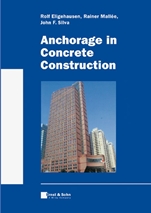
Anchorage in Concrete Construction
ISBN 9783433011430
Autor: Rolf Eligehausen, Rainer Mallée, John F. Silva
Wydawca: Wiley
Dostępność: 3-6 tygodni
Cena: 540,75 zł
Przed złożeniem zamówienia prosimy o kontakt mailowy celem potwierdzenia ceny.
ISBN13: |
9783433011430 |
ISBN10: |
3433011435 |
Autor: |
Rolf Eligehausen, Rainer Mallée, John F. Silva |
Oprawa: |
Hardback |
Rok Wydania: |
2006-03-03 |
Ilość stron: |
391 |
Wymiary: |
243x185 |
Tematy: |
TN |
A comprehensive treatment of current fastening technology using inserts (anchor channels, headed stud), anchors (metals expansion anchor, undercut anchor, bonded anchor, concrete screw and plastic anchor) as well as power actuated fasteners in concrete. It describes in detail the fastening elements as well as their effects and load–bearing capacities in cracked and non–cracked concrete. It further focuses on corrosion behaviour, fire resistance and characteristics with earthquakes and shocks. it finishes off with the design of fastenings according to the European Technical Approval Guideline (ETAG 001), the Final Draft of the CEN Technical Specification "Design of Fastenings for use in concrete" and the American Standards ACI 318–05, Appendix D and ACI 349–01, Appendix B.
Within the international field of construction, both German companies and experts play an important role in fastening technology. The authors represent both groups, first two have already published a successful German edition. This English–language edition has been revised and third author has joined the team.
Spis treści:
1 Introduction.
1.1 A historical review.
1.2 Requirements for fastenings.
1.3 Nature and direction of actions.
2 Fastening systems.
2.1 General.
2.2 Cast–in–place systems.
2.3 Drilled–in systems.
2.4 Direct installation.
3 Principles.
3.1 General.
3.2 Behaviour of concrete in tension.
3.3 Failure mechanisms of fastenings.
3.4 Cracked concrete.
3.5 Why anchors may use the tensile strength of concrete.
3.6 Prestressing of anchors.
3.7 Loads on anchors.
4 Behaviour of headed studs, undercut anchors and metal expansion anchors in non–cracked and cracked concrete.
4.1 Non–cracked concrete.
4.2 Cracked concrete.
5 Behaviour of cast–in anchor channels in non–cracked and cracked concrete.
5.1 No
n–cracked concrete.
5.2 Cracked concrete.
6 Behaviour of bonded anchors in non–cracked and cracked concrete.
6.1 Non–cracked concrete.
6.2 Cracked concrete.
6.3 Bonded undercut anchors and bonded expansion anchors.
7 Behaviour of plastic anchors in non–cracked and cracked concrete.
7.1 Non–cracked concrete.
7.2 Cracked concrete.
8 Behaviour of power actuated fasteners in non–cracked and cracked concrete.
8.1 Non–cracked concrete.
8.2 Cracked concrete.
9 Behaviour of screw anchors in non–cracked and cracked concrete.
9.1 Installation.
9.2 Non–cracked concrete.
9.3 Cracked concrete.
10 Behaviour of anchors under seismic loading.
10.1 Anchor applications.
10.2 Seismic actions.
10.3 Assumptions regarding the condition of the concrete.
10.4 Behaviour of anchors under seismic conditions.
11 Behaviour of anchors in fire.
12 Corrosion of anchors.
13 Influence of fastenings on the capacity of components in which they are installed.
14 Design of fastenings.
14.1 General.
14.2 Verifying the suitability of an anchor system.
14.3 Design of fastenings with post–installed metal expansion, undercut and bonded expansion anchors according to the EOTA Guideline.
14.4 Design of fastenings according to the CEN Technical Specification.
14.5 Design of fastenings with cast–in and post–installed metal anchors according to ACI 318–05 Appendix D.
References.
Subject Index.
Nota biograficzna:
Rolf Eligehausen, Prof. Dr.–Ing. studied structural engineering at the Technical University Brunswick and gained his doctorate from the University of Stuttgart. Following two years of research at the University of California Berkeley, he became professor for fastenings technology at Otto Graf Institute, University of Stuttgart in 1
984.
He is a member of numerous national and international expert commissions in the fields of steel–reinforced concrete and fastening technologies and the author of a large number of essays on these topics.
Rainer Mallée, Dr.–Ing. studied structural engineering at the Technical University Brunswick and gained his doctorate from the University of Stuttgart.
Between 1980 and 1987 he was head of Professor Rehm′s engineering company in Munich, before becoming head of development in fastening elements at fischer in Waldachtal. Since 1996 he has been head of research at the fischer group of companies.
John F. Silva, MS, SE gained his Master of Civil Engineering at the University of California at Berkeley and is a Structural Engineer. He worked for ca. 10 years in San Francisco at two renowned engineering firms concentrating on inter alia fastenings during earthquakes. He worked in the development centre at HILTI for four years and currently works in their San Francisco offices.
Okładka tylna:
A comprehensive treatment of current fastening technology using inserts (anchor channels, headed stud), anchors (metals expansion anchor, undercut anchor, bonded anchor, concrete screw and plastic anchor) as well as power actuated fasteners in concrete. It describes in detail the fastening elements as well as their effects and load–bearing capacities in cracked and non–cracked concrete. It further focuses on corrosion behaviour, fire resistance and characteristics with earthquakes and shocks. it finishes off with the design of fastenings according to the European Technical Approval Guideline (ETAG 001), the Final Draft of the CEN Technical Specification "Design of Fastenings for use in concrete" and the American Standards ACI 318–05, Appendix D and ACI 349–01, Appendix B.
Within the international field of construction, both German companies and experts play an important role
in fastening technology. The authors represent both groups, first two have already published a successful German edition. This English–language edition has been revised and third author has joined the team.
Koszyk
Książek w koszyku: 0 szt.
Wartość zakupów: 0,00 zł
Informacje


Kontakt
Gambit
Centrum Oprogramowania
i Szkoleń Sp. z o.o.
Al. Pokoju 29b/22-24
31-564 Kraków
Siedziba Księgarni
ul. Kordylewskiego 1
31-542 Kraków
+48 12 410 5991
+48 12 410 5987
+48 12 410 5989
Subskrypcje
Administratorem danych osobowych jest firma Gambit COiS Sp. z o.o. Na podany adres będzie wysyłany wyłącznie biuletyn informacyjny.
Autoryzacja płatności

Informacje na temat autoryzacji płatności poprzez PayU.

© Copyright 2012: GAMBIT COiS Sp. z o.o. Wszelkie prawa zastrzeżone.
Projekt i wykonanie: Alchemia Studio Reklamy