


Wydawcy
Katalog tematyczny
- Archeologia (109)
- Ekonomia, finanse, business (13704)
- Filozofia (1445)
- Historia (3040)
- Języki i językoznawstwo (2356)
- Lifestyle, hobby i rozrywka (475)
- Medycyna (9704)
- Nauki humanistyczne (4)
- Nauki o Ziemi i środowisku (2638)
- Nauki ścisłe (20412)
- Nauki społeczne (8486)
- Nauki techniczne (13450)
- Prawo (1696)
- Publikacje informacyjne i interdyscyplinarne (1288)
- Religia i wierzenia (917)
- Technika komputerowa (4067)
- Zdrowie, relacje międzyludzkie i rozwój osobisty (657)





Informacje szczegółowe o książce
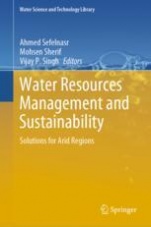
Water Resources Management and Sustainability
ISBN 9783031805196
Autor: Ahmed Sefelnasr
Wydawca: Springer
Dostępność: 3-6 tygodni
Cena: 801,15 zł
Przed złożeniem zamówienia prosimy o kontakt mailowy celem potwierdzenia ceny.
ISBN13: |
9783031805196 |
Autor: |
Ahmed Sefelnasr |
Oprawa: |
Hardback |
Rok Wydania: |
2025-03-04 |
Ilość stron: |
582 |
The first section deals with hydrological topics, problems, and principles. In this chapter, detailed studies related to hydrological monitoring are carried out. Overland flow velocity estimation, wireless sensor networks, and application of deep learning techniques are discussed. These topics are helpful to estimate overland flow velocities using tracer techniques based on the infrared thermography and fluorescent properties of quinine which can help in the visualization of shallow flows, evaluation of high-resolution rainfall measurement, and extracting water bodies from high-resolution drones and satellite imagery using an integrated deep learning method. The chapter critically discusses the advantage of thermal tracers, utilizing the wireless sensor networks for the accurate capture of spatially varied precipitation patterns, and evaluation and quality assessment of water extraction using deep learning techniques. It highlights recommendations and limitations that should be taken into account for hydrological monitoring. Moreover, this section discusses rainfall and floods and their related attributes in arid regions, including flood mitigation and risk assessment. Flood mapping and assessment, recent trends of floods and their impacts are comprehensively discussed. The outcomes are for useful hydrologic infrastructure design under changing climate. This part also highlights the importance of applying new methodologies, considering the statements and questions asked by scientists and researchers.
The second section addresses droughts and their analysis and assessment. Drought events are great challenges faced by nature in the wake of climate change. This part will help stakeholders gather useful information and develop a deep understanding of these salient features of climate change's impacts. It deals with the various studies conducted in the field of drought and flash drought. Flash drought is a composition of various factors leading to intense drought conditions. So, limitations and recommendations to mitigate drought events are discussed in detail.
The third section discusses groundwater as an important component in the water budget in arid regions. Threats, recharges, quality, and management options of this resource are also discussed. Beginning with a perspective on the management of this resource, the papers go on to discuss rational decision making, challenges, use of information technology, integrated management, and modeling for groundwater resources management.
Section four deals with water quality. This part discusses modern techniques for water quality assessment and treatment procedures. The industrial and commercial area generates a large amount of waste which is indiscriminately disposed of. leading to several environmental issues. This section provides a detailed analysis on water quality, hydrogeochemistry, impact and benefits of treating municipal wastewater to tertiary quality, groundwater table and quality deterioration. Recommendations for adequate planning, design, construction, and location of open dumpsites to ameliorate groundwater pollution, and the closing of trace metal boreholes to avoid possible health implications or outbreaks that are likely occurring or are expected to occur.
Section five discusses water resources management. This topic has been receiving a fair amount of attention in many arid countries of the world and more specifically in the Gulf region. This section addresses regulations for conservation, reuse, and security. The limited freshwater resources must be developed, managed, and used as efficiently as possible. Decision support systems for water resources planning, management, and water rights analyses and control have been discussed as well.
-
Analysis of Annual Maximum Discharge into Large Reservoir
- P. V. Timbadiya
Pages 3-13
-
- Sandipkumar Rajput, Prem Lal Patel
Pages 15-25
-
Flood Risk Management Evaluation and Climate Change Adaptation in Wadi Derna NE Libya
- Nawal Alfarrah, Van de Moortel Ivo, Kristine Walraevens
Pages 27-54
-
- Ľudovít Možiešik, Peter Šulek, Martin Orfánus
Pages 55-65
-
Water Resources, Geology and Urbanization Are in a Direct Discipline: The Case Study of Jordan
- Taleb Odeh, Alsharifa Hind Mohammad, Faten Alslaty, Tino Rödiger
Pages 67-84
-
- Mohamed Elkollaly, Tamer A. Gado, Ahmed Sefelnasr, Faisal Baig, Abdel Azim Ebraheem, Mohsen Sherif
Pages 85-110
-
Predictive Modeling of Water Levels Using Univariate and Multivariate Time Series Approaches
- Rehmana Younis, Aqib Rehman Pir Zada, Malik Muhammad Saad Missen, Muhammad Naeem Iqbal, Nadeem Iqbal Kajla, Mohamed Elkollaly et al.
Pages 111-129
-
Flood Risk Assessment in Fujairah Emirate Under Climate Change
- Ahmed Sefelnasr, Mohamed Abdel-Fattah, Mohamed Elkollaly, Mohsen Sherif, Dalal Alshamsi, Fouad Lamghari Ridouane et al.
Pages 131-146
-
Impacts of Drought in India and Preparedness for Drought Under Global Warming
- Jeongwoo Han, Vijay P. Singh
Pages 149-170
-
- Wael Almikaeel, Lea Čubanová, Alexandra Vidová
Pages 171-187
-
- Hany F. Abd-Elhamid, Mohsen Sherif, Martina Zeleňáková, Ahmed Sefelnasr, Tatiana Sol’áková, Mohamed Mahdy
Pages 189-200
-
Assessing the Suitability of SPI and SPEI in Steppe Hot and Arid Climatic Zones in India
- Siddhant Panigrahi, Vikas Kumar Vidyarthi
Pages 201-216
-
Managed Aquifer Recharge (MAR) on Rye Island, Slovakia
- Michaela Červeňanská, Jakub Mydla, Andrej Šoltész, Andrea Vranovská
Pages 219-234
-
Garonne River Behavior Under Climate Change and the Potential Adaptation Strategies
- Nazeer Asmael, Alain Dupuy, Sophie Leleu, Paul McLachlan, Francois Larroque, Michel Franceschi et al.
Pages 235-262
-
- Amjad Aliewi, Muhammad Al-Rashed, Khalid Hadi, Ahmed Abdulhadi, Fawzia Al-Ruwaih
Pages 263-284
-
- Nicholas Ellul, Jonathan Spiteri, Daniel Gravino
Pages 285-303
-
- Ibrahim H. Elsebaie, Atef Q. Kawara, Ali O. Alnahit
Pages 305-315
-
Risk Assessment Analysis Related to Managed Aquifer Recharge (Rye Island Pilot Area, Slovakia)
- Andrej Šoltész, Michaela Červeňanská, Dana Baroková, Andrea Vranovská, Jakub Mydla
Pages 317-329
-
Computation of Vertical Flows for Groundwater Modelling in Multi-aquifer Setup
- Hema Vanar, Pradeep Kumar Majumdar, Niraj Shah
Pages 331-347
-
Ceramic Membrane Filtration of Carwash Wastewater Sample from Al-Ain City, United Arab Emirates
- Hakim Saibi, Nouf Alblooshi, Amira Alnaqbi, Shamma Alzaabi, Rauda Almazrouei, Fidha Ismail et al.
Pages 351-360
-
Water Conservation in Jordan: Connecting the Dots for a Sustainable Future
- Majd Aideh, Wael Sheta
Pages 361-378
-
- Hui Yang, Manoj K. Shukla
Pages 379-393
-
- Mohamed Farig, Mohamed Dawoud, Waleed Hassan Abou El Hassan
Pages 397-412
-
- Kedrala Wabela, Ali Hammani, Sirak Tekleab, Abdelilah Taky
Pages 413-430
-
Analysis of Future Demand and Resources in Abu Dhabi: A VAR Model Approach
- Mahmoud E. Ahmed, Salem Issa, Mohamed A. Hamouda
Pages 431-448
-
The Challenges of Water Management in the Canary Islands (Spain)
- Juan C. Santamarta, Noelia Cruz-Pérez, Joselin S. Rodrígez-Alcántara, Jesica Rodríguez-Martín, Miguel Ángel Marazuela, Alejandro García-Gil
Pages 449-458
-
The Effect of Orifice Size and Retention Time of Local Tanks on Water Distribution Network
- Syed Rizvi, Rabee Rustum
Pages 459-472
-
- Husnain Haider
Pages 473-493
-
- Bilal Acar, Yasemin Demir Yurteri, Nadia Riaz, Nurcan Yavuz, Duran Yavuz
Pages 495-510
-
Reliable Short Term Water Demand Forecast Using Machine Learning—Part 1
- Waleed Eldamaty, Mohammed Abdallah, Khalid Al Zaabi
Pages 511-523
-
- José Manuel Murillo, Alberto Padilla
Pages 525-536
-
- Mubbashra Sultan, Salem Issa, Nazmi Saleous
Pages 537-554
-
Solar-Based Atmospheric Water Absorber: Design and Performance Analysis
- Anwur Alenezi, Abouelyazed Kuliab, Yousef Alabaiadly
Pages 555-563
-
- Kanika Bimrah, Izuru Saizen
Koszyk
Książek w koszyku: 0 szt.
Wartość zakupów: 0,00 zł
Informacje


Kontakt
Gambit
Centrum Oprogramowania
i Szkoleń Sp. z o.o.
Al. Pokoju 29b/22-24
31-564 Kraków
Siedziba Księgarni
ul. Kordylewskiego 1
31-542 Kraków
+48 12 410 5991
+48 12 410 5987
+48 12 410 5989
Subskrypcje
Administratorem danych osobowych jest firma Gambit COiS Sp. z o.o. Na podany adres będzie wysyłany wyłącznie biuletyn informacyjny.
Autoryzacja płatności

Informacje na temat autoryzacji płatności poprzez PayU.

© Copyright 2012: GAMBIT COiS Sp. z o.o. Wszelkie prawa zastrzeżone.
Projekt i wykonanie: Alchemia Studio Reklamy