


Wydawcy
Katalog tematyczny
- Archeologia (109)
- Ekonomia, finanse, business (13704)
- Filozofia (1445)
- Historia (3040)
- Języki i językoznawstwo (2356)
- Lifestyle, hobby i rozrywka (475)
- Medycyna (9704)
- Nauki humanistyczne (4)
- Nauki o Ziemi i środowisku (2638)
- Nauki ścisłe (20412)
- Astronomia (294)
- Biologia (5119)
- Chemia (6540)
- Fizyka (3309)
- Elektryczność i magnetyzm (90)
- Fizyka atomowa i molekularna (110)
- Fizyka cząstek elementarnych (36)
- Fizyka jądra atomowego (36)
- Fizyka kwantowa (210)
- Fizyka matematyczna (121)
- Fizyka relatywistyczna (36)
- Fizyka statystyczna (51)
- Fizyka stosowana (498)
- Mechanika klasyczna (186)
- Optyka i światło (133)
- Stany materii (202)
- Matematyka (4574)
- Nauki ścisłe, ogólnie (503)
- Nauki społeczne (8486)
- Nauki techniczne (13450)
- Prawo (1696)
- Publikacje informacyjne i interdyscyplinarne (1288)
- Religia i wierzenia (917)
- Technika komputerowa (4067)
- Zdrowie, relacje międzyludzkie i rozwój osobisty (657)





Informacje szczegółowe o książce
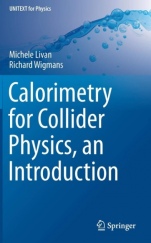
Calorimetry for Collider Physics, an Introduction
ISBN 9783030236526
Autor: Michele Livan
Wydawca: Springer
Dostępność: 3-6 tygodni
Cena: 400,05 zł
Przed złożeniem zamówienia prosimy o kontakt mailowy celem potwierdzenia ceny.
ISBN13: |
9783030236526 |
ISBN10: |
3030236528 |
Autor: |
Michele Livan |
Oprawa: |
Hardback |
Rok Wydania: |
2019-07-18 |
Ilość stron: |
269 |
This book is exceptional in offering a thorough but accessible introduction to calorimetry that will meet the needs of both students and researchers in the field of particle physics. It is designed to provide the sound knowledge of the basics of calorimetry and of calorimetric techniques and instrumentation that is mandatory for any physicist involved in the design and construction of large experiments or in data analysis. An important feature is the correction of a number of persistent common misconceptions. Among the topics covered are the physics and development of electromagnetic showers, electromagnetic calorimetry, the physics and development of hadron showers, hadron calorimetry, and calibration of a calorimeter. Two chapters are devoted to more promising calorimetric techniques for the next collider. Calorimetry for Collider Physics, an introduction will be of value for all who are seeking a reliable guide to calorimetry that occupies the middle ground between the brief chapter in a generic book on particle detection and the highly complex and lengthy reference book.
Author Biography: Michele Livan is Professor of Experimental Physics at the University of Pavia in Italy. He graduated in Physics from the same institution in 1974 and started his career in experimental particle physics by taking part in the first experiment to measure the gamma ray spectrum from the decay of the 'at SPEAR. He was a member of the UA2 Collaboration at CERN (discovery of the W and Z bosons) and spent two years at CERN as a Senior Fellow. In 1986 he started to participate in study groups for preparation of the Large Hadron Collider experiments and he has led the Pavia group in the ATLAS experiment for more than 20 years (discovery of the Higgs boson). In the ATLAS experiment he has for some time held the role of Muon System Deputy Project Leader and Member of the Executive Board. He met Dr. Wigmans in 1987 and started to collaborate on all his R&D projects (SPACAL, RD1, DREAM and RD52) on compensating and dual-readout calorimetry. He has been Deputy Spokesperson of the DREAM and RD52 projects at CERN. He is co-author with Dr. Wigmans of two major review papers on scintillating fiber and dual-readout calorimetry. Richard Wigmans holds the J. Fred Bucy and Odetta Greer Bucy Chair in Particle Physics in the Department of Physics and Astronomy at Texas Tech University (TTU) in the USA. A native of the Netherlands, he relocated to Texas in 1992, attracted by the prospect of the superconducting supercollider under construction near Waxahachie at that time and driven by the desire to work in a teaching environment after 20 years in full-time research. The experimental particle physics group that he initiated there is now actively involved in the CMS experiment at CERN's Large Hadron Collider and in generic calorimeter R&D. In this context, Dr. Wigmans initiated and led the DREAM and RD52 projects, in which dual-readout calorimetry was developed. Since 1995, this TTU research program has been continuously funded by the US Department of Energy. Before moving to TTU, Dr. Wigmans had worked at NIKHEF (the Dutch National Institute for Particle Physics; 1975-84), where he focused primarily on WA25, an experiment studying (anti)neutrino scattering in deuterium, and at CERN in Geneva (1984-92), where he increasingly engaged in both theoretical and experimental studies of the fundamental aspects of calorimetry.
Calorimetry - from thermodynamics to particle detection.- Interactions of particles with matter.- Shower development.- The calorimeter signals.- Containment and profiles.- The energy resolution of calorimeters.- The fundamental problems of hadron calorimetry.- Methods to improve hadronic calorimeter performance.- Calibrating a Calorimeter System.
Koszyk
Książek w koszyku: 0 szt.
Wartość zakupów: 0,00 zł
Informacje


Kontakt
Gambit
Centrum Oprogramowania
i Szkoleń Sp. z o.o.
Al. Pokoju 29b/22-24
31-564 Kraków
Siedziba Księgarni
ul. Kordylewskiego 1
31-542 Kraków
+48 12 410 5991
+48 12 410 5987
+48 12 410 5989
Subskrypcje
Administratorem danych osobowych jest firma Gambit COiS Sp. z o.o. Na podany adres będzie wysyłany wyłącznie biuletyn informacyjny.
Autoryzacja płatności

Informacje na temat autoryzacji płatności poprzez PayU.

© Copyright 2012: GAMBIT COiS Sp. z o.o. Wszelkie prawa zastrzeżone.
Projekt i wykonanie: Alchemia Studio Reklamy