


Wydawcy
Katalog tematyczny
- Archeologia (109)
- Ekonomia, finanse, business (13704)
- Filozofia (1445)
- Historia (3040)
- Języki i językoznawstwo (2356)
- Lifestyle, hobby i rozrywka (475)
- Medycyna (9704)
- Nauki humanistyczne (4)
- Nauki o Ziemi i środowisku (2638)
- Nauki ścisłe (20412)
- Nauki społeczne (8486)
- Edukacja (229)
- Kryminologia, opieka spełeczna (284)
- Obronność (10)
- Polityka (1389)
- Psychologia (777)
- Socjologia (410)
- Społeczeństwo i kultura (187)
- Nauki techniczne (13450)
- Prawo (1696)
- Publikacje informacyjne i interdyscyplinarne (1288)
- Religia i wierzenia (917)
- Technika komputerowa (4067)
- Zdrowie, relacje międzyludzkie i rozwój osobisty (657)





Informacje szczegółowe o książce
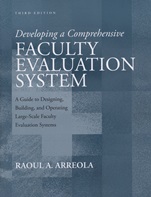
Developing a Comprehensive Faculty Evaluation System: A Guide to Designing, Building, and Operating Large–Scale Faculty Evaluation Systems
ISBN 9781933371115
Autor: Raoul A. Arreola
Wydawca: Wiley
Dostępność: 3-6 tygodni
Cena: 260,40 zł
Przed złożeniem zamówienia prosimy o kontakt mailowy celem potwierdzenia ceny.
ISBN13: |
9781933371115 |
ISBN10: |
1933371110 |
Autor: |
Raoul A. Arreola |
Oprawa: |
Paperback |
Rok Wydania: |
2007-07-24 |
Numer Wydania: |
3rd Edition |
Ilość stron: |
288 |
Wymiary: |
278x222 |
Tematy: |
JD |
This highly successful handbook provides practical, proven models for developing and using a comprehensive faculty evaluation system. Based on 36 years of research and experience building and operating large–scale faculty evaluation systems, as well as consulting experience to thousands of administrators and faculty from hundreds of colleges and universities of all types, this new edition includes more detailed information about the process of building and operating a comprehensive faculty evaluation system and a new model for conceptualizing the full complexity of faculty performance itself. The heart of the book remains the same reliable eight–step process that has worked so well for so many institutions. Each step, including the definitions of the various roles to be evaluated, has been expanded and enhanced based on the experiences of many institutions that have followed the procedure outlined in this book.
This third edition also includes a new introductory section; new research in the field; updated forms and procedures; a new, detailed case study of an institution that developed a web–enabled, computer–supported system based on the eight–step process; and a new body of work that defines the professoriate as a meta–profession, with a rubric for defining more than 20 faculty skill sets.
Contents include:Preliminary Issues in Planning of the Development of a Comprehensive Faculty Evaluation SystemStep 1: Determining the Faculty Role ModelStep 2: Determining Faculty Role Model Parameter ValuesStep 3: Defining Roles in the Faculty Role ModelStep 4: Determining Role Component WeightsStep 5: Determining Appropriate Sources of InformationStep 6: Determining the Source Impact WeightsStep 7: Determining How Information Should Be GatheredStep 8: Completing the System: Selecting or Designing Forms, Protocols, and Rating ScaleGenerating an Overall Composite Rating (OCR)Using
the OCR in Promotion, Tenure, Merit Pay, and Post–Tenure Review Decisions.Operating the Faculty Evaluation System: Peer Input and Review Issues.More Than 80 Years of Research on Student RatingIssues in Designing and Using Student rating FormsCatalog of Student Rating Items.Commercially Available Student Rating Forms.Case Studies and Sample Faculty Evaluation ManualsBibliography of more than 650 referencesSample forms, worksheets, and models
Spis treści:
About the Author.
Preface to the Third Edition.
Acknowledgments.
Introduction: Preliminary Issues in Planning of the Development of a Comprehensive Faculty Evaluation System.
The New Paradigm.
Faculty Evaluation: Fast, Fair, Cheap (Pick Any Two).
The Trap of Best Practices.
Systematic Faculty Involvement.
Fundamental Definitions and Assumptions.
College Teaching as Meta–Profession.
Linking Faculty Evaluation and Faculty Development.
Obstacles to Establishing Successful Programs.
Common Errors.
Guidelines for Overcoming Obstacles and Avoiding Errors.
Practical Considerations in Planning the Development of Your Faculty Evaluation System.
Data Storage and Confidentiality.
Using This Book.
References.
1. Step 1: Determining the Faculty Role Model.
References.
2. Step 2: Determining Faculty Role Model Parameter Values.
Establishing Parameter Values.
Determining College or Institutional Parameter Values.
Dealing With "Outliers".
3. Step 3: Defining Roles in the Faculty Role Model.
Defining the Teaching Role: Perspectives on the Definition of Teaching.
Defining Teaching for Faculty Evaluation and Development Systems.
Defining Other Roles.
Completing Step 3: Determining Role Definitions for Your Faculty Role Model.
References.
4. Step 4: Determining Role Component Weights.
Case 1: Component Weights Fixed.
Case 2: Required and
Optional Components With Fixed or Variable Weights.
Case 3: Mix of Required an Optional Components With Fixed or Variable Weights Gathering the Role Component Weight Information.
5. Step 5: Determining Appropriate Sources of Information.
6. Step 6: Determining the Source Impact Weights.
Determining the Source Weights .Determining the Source Impact.
7. Step 7: Determining How Information Should Be Gathered.
8. Step 8: Completing the System: Selecting or Designing Forms, Protocols, and Rating Scale.
Common Numerical Rating Scale.
Faculty Evaluation Tools and Procedures.
Timetable for Developing a Comprehensive Faculty Evaluation System.
9. Generating an Overall Composite Rating.
Computing the Composite Role Rating.
Individualizing the Evaluations: the Overall Composite Ratings (OCR).
Responding to Concerns in Using a Single Numerical Index (OCR).
10. Using the OCR in Promotion, Tenure, Merit Pay, and Post–Tenure Review Decisions.
Promotion Decisions.
Tenure Decisions.
Post–Tenure Review.
Using the OCR in Merit Pay Decisions.
Summary.
References.
11. Operating the Faculty Evaluation System: Peer Input and Review Issues.
Who Is a Peer?
What Information Can Peers Provide?
Gathering Peer Input.
Adapting Traditional Peer Review and Evaluation Systems.
Peer Observation of Classroom Performance.
Conclusion.
References.
12. Student Ratings: What More Than 80 Years of Research Tell Us.
What Is Validity?
What Does the Research Tell Us?
Summary.
References.
13. Operating the Faculty Evaluation System: Issues in Designing and Using Student rating Forms.
Legal Issues.
Designing a Valid and Reliable Student Rating Form.
Administering Student Rating Systems.
Options for Administering Ratings Forms in Class.
The Student Rating Report.
Format of the Student Rating Form Computerized Analysis
Output.
Interpreting and Using Student Rating Results.
Faculty Evaluation and Professional Enrichment.
Online Student Ratings.
References.
14. Catalog of Student Rating Items.
Contents.
Instructional Design.
Instructional Delivery.
Instructional Assessment.
Course Management.
Self–Reported Course Impact on the Student.
Alternate and Supplementary Teaching/Learning Environments.
15. Commercially Available Student Rating Forms.
Checklist for Identifying and Selecting Published Forms.
Review of Selected Published or Commercially Available Student Rating Forms.
Aleamoni Course/Instructor Evaluation Questionnaire (CIEQ).
IDEA Student Ratings of Instruction.
Student Instructional Report II (SIR II).
References.
16. Case Studies and Sample Faculty Evaluation Manuals.
Frostburg State University Case Study.
Frostburg State University Faculty Evaluation System.
Georgia Perimeter College Faculty Evaluation System.
Fairmont State University Case Study.
References.
Bibliography.
Index.
Nota biograficzna:
Raoul A. Arreola received his Ph.D. in educational psychology from Arizona State University in 1969, specializing in educational research and measurement. He has taught in the areas of statistics, educational psychology, personnel educational, and educational leadership, and has held a number of faculty and administrative positions involving assessment, strategic planning, faculty evaluation , and faculty development. These positions include director of the Office of Evaluation Services, associate director of the Learning Systems Institute, and associate professor of educational research and measurement at Florida State University, director of the Center for Instructional Services and research and professor of educational psychology at the University of Memphis; and professor and chair of the Department of Education, assistant dean for assessment a
Koszyk
Książek w koszyku: 0 szt.
Wartość zakupów: 0,00 zł
Informacje


Kontakt
Gambit
Centrum Oprogramowania
i Szkoleń Sp. z o.o.
Al. Pokoju 29b/22-24
31-564 Kraków
Siedziba Księgarni
ul. Kordylewskiego 1
31-542 Kraków
+48 12 410 5991
+48 12 410 5987
+48 12 410 5989
Subskrypcje
Administratorem danych osobowych jest firma Gambit COiS Sp. z o.o. Na podany adres będzie wysyłany wyłącznie biuletyn informacyjny.
Autoryzacja płatności

Informacje na temat autoryzacji płatności poprzez PayU.

© Copyright 2012: GAMBIT COiS Sp. z o.o. Wszelkie prawa zastrzeżone.
Projekt i wykonanie: Alchemia Studio Reklamy