


Wydawcy
Katalog tematyczny
- Archeologia (109)
- Ekonomia, finanse, business (13704)
- Filozofia (1445)
- Historia (3040)
- Języki i językoznawstwo (2356)
- Lifestyle, hobby i rozrywka (475)
- Medycyna (9704)
- Nauki humanistyczne (4)
- Nauki o Ziemi i środowisku (2638)
- Nauki ścisłe (20412)
- Nauki społeczne (8486)
- Edukacja (229)
- Kryminologia, opieka spełeczna (284)
- Obronność (10)
- Polityka (1389)
- Psychologia (777)
- Socjologia (410)
- Społeczeństwo i kultura (187)
- Nauki techniczne (13450)
- Prawo (1696)
- Publikacje informacyjne i interdyscyplinarne (1288)
- Religia i wierzenia (917)
- Technika komputerowa (4067)
- Zdrowie, relacje międzyludzkie i rozwój osobisty (657)





Informacje szczegółowe o książce
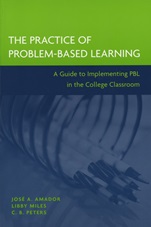
The Practice of Problem–Based Learning: A Guide to Implementing PBL in the College Classroom
ISBN 9781933371078
Autor: José A. Amador, Libby Miles, Calvin B. Peters
Wydawca: Wiley
Dostępność: 3-6 tygodni
Cena: 184,80 zł
Przed złożeniem zamówienia prosimy o kontakt mailowy celem potwierdzenia ceny.
ISBN13: |
9781933371078 |
ISBN10: |
1933371072 |
Autor: |
José A. Amador, Libby Miles, Calvin B. Peters |
Oprawa: |
Paperback |
Rok Wydania: |
2007-07-24 |
Ilość stron: |
160 |
Wymiary: |
228x161 |
Tematy: |
JD |
This book is a guide for the development and implementation of problem–based learning in college–level courses. Written with usefulness in mind, it provides practical advice from real professors to real professors, includes examples of PBL in action through every stage of problem development through implementation, and integrates cross–disciplinary experiences into the doing of PBL in the college classroom.
Its nuts–and–bolts approach makes it valuable to faculty, graduate teaching assistants, and faculty development professionals interested in learning how to do PBL, as well as to those already using PBL who would like to learn more about what other practitioners do in their classrooms.
Content include:Why (we) use PBLChanging the landscapeNo problem? No problemControlling chaos in PBLEvaluation, revision, and reflection
Spis treści:
About the Authors.
Foreword.
Preface.
1 Why (We) Use PBL.
Why We Switched.
What Is PBL?
Issues.
2 Changing the Landscape.
Changing Ourselves.
Changing Our Courses.
Changing Our Students.
3 No Problems? No Problem.
The Basics.
Sources for Problems.
Designing a Successful Problem.
4 Controlling Chaos in PBL: The Messy Middle.
Conducting Class.
Our Role.
Student Contribution.
5 What Now? Evaluation, Revision, and Reflection.
The Students.
What Worked—and What Didn’t.
The Sustainability of PBL.
Epilogue.
Bibliography.
Index.
Nota biograficzna:
Jose A. Amador is professor of soil science and microbial ecology at the University of Rhode Island. He received his B.S. degree (1982) in biochemistry, and M.S. (1986) and Ph.D. (1990) degrees in soil microbiology from Cornell University. Jose has been at the University of Rhode Island since 1992, where he teaches in the department of Natural Resources Sci
ence and the Honors Program. For the past six years, he has used the problem–based learning approach to teach courses in introductory soil science, soil microbiology, soil and water chemistry, and land use. His research focuses on the applications of soil ecology and microbiology to problems in nutrient cycling, wastewater disposal, bioremediation, and plant nutrition.
Libby Miles is associate professor in the College Writing Program at the University of Rhode Island. She received her B.A. degree in theatre from Williams College (1986), and M.A. (1995) and Ph.D. (1999) degrees in rhetoric and composition from Purdue University. Libby has been at the University of Rhode Island since 1998, where she has taught in the college writing program, the English department′s graduate program, and the honors program. She also directed the university′s writing center. She has used problem–based learning in several of her writing classes, from Honors Writing for First–Year Students, to Business Communications to a graduate seminar in Rhetoric and Institutional Critique. Her current research interests are the economic and institutional conditions of writing and writing instruction, rhetoric as an agent of social change, and interdisciplinary writing.
C.B. Peter is professor of sociology at the University of Rhode Island. He received his B.A. degree (1971) from Westmont College, and M.A. (1973) and Ph.D. (1977) degrees from the University of Kentucky. His scholarly expertise is in cultural sociology and the sociology of knowledge. In addition to his sociological books and articles, C.B. has published papers and presented workshops and seminars on teaching and instructional design. He has used problem–based learning units with first–year students in large enrollment sections of introductory sociology.
Okładka tylna:
This book is a guide for the development and implementation of problem–based l
earning in college–level courses. Written with usefulness in mind, it provides practical advice from real professors to real professors, includes examples of PBL in action through every stage of problem development through implementation, and integrates cross–disciplinary experiences into the doing of PBL in the college classroom.
Its nuts–and–bolts approach makes it valuable to faculty, graduate teaching assistants, and faculty development professionals interested in learning how to do PBL, as well as to those already using PBL who would like to learn more about what other practitioners do in their classrooms.
Content include:Why (we) use PBLChanging the landscapeNo problem? No problemControlling chaos in PBLEvaluation, revision, and reflection
Koszyk
Książek w koszyku: 0 szt.
Wartość zakupów: 0,00 zł
Informacje


Kontakt
Gambit
Centrum Oprogramowania
i Szkoleń Sp. z o.o.
Al. Pokoju 29b/22-24
31-564 Kraków
Siedziba Księgarni
ul. Kordylewskiego 1
31-542 Kraków
+48 12 410 5991
+48 12 410 5987
+48 12 410 5989
Subskrypcje
Administratorem danych osobowych jest firma Gambit COiS Sp. z o.o. Na podany adres będzie wysyłany wyłącznie biuletyn informacyjny.
Autoryzacja płatności

Informacje na temat autoryzacji płatności poprzez PayU.

© Copyright 2012: GAMBIT COiS Sp. z o.o. Wszelkie prawa zastrzeżone.
Projekt i wykonanie: Alchemia Studio Reklamy