


Wydawcy
Katalog tematyczny
- Archeologia (109)
- Ekonomia, finanse, business (13704)
- Filozofia (1445)
- Historia (3040)
- Języki i językoznawstwo (2356)
- Lifestyle, hobby i rozrywka (475)
- Medycyna (9704)
- Chirurgia (272)
- Inne gałęzie medycyny (1871)
- Medycyna kliniczna (4187)
- Medycyna niekonwencjonalna (14)
- Medycyna przedkliniczna (269)
- Medycyna, ogólnie (1740)
- Historia medycyny (3)
- Lekarze, sprawy zawodowe (8)
- Medycyna, aspekty prawne (10)
- Służba zdrowia (36)
- Wyposażenie medyczne (157)
- Zdrowie publiczne (460)
- Medyczne służby pomocnicze (745)
- Studia medyczne (16)
- Weterynaria (548)
- Nauki humanistyczne (4)
- Nauki o Ziemi i środowisku (2638)
- Nauki ścisłe (20412)
- Nauki społeczne (8486)
- Nauki techniczne (13450)
- Prawo (1696)
- Publikacje informacyjne i interdyscyplinarne (1288)
- Religia i wierzenia (917)
- Technika komputerowa (4067)
- Zdrowie, relacje międzyludzkie i rozwój osobisty (657)





Informacje szczegółowe o książce
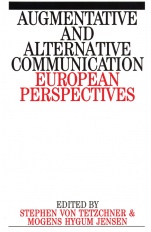
Augumentative and Alternative Communication: European Perspectives
ISBN 9781897635599
Autor: Stephen von Tetzchner, Mogens Jensen
Wydawca: Wiley
Dostępność: 3-6 tygodni
Cena: 473,55 zł
Przed złożeniem zamówienia prosimy o kontakt mailowy celem potwierdzenia ceny.
ISBN13: |
9781897635599 |
ISBN10: |
1897635591 |
Autor: |
Stephen von Tetzchner, Mogens Jensen |
Oprawa: |
Paperback |
Rok Wydania: |
1996-07-08 |
Wymiary: |
230x155 |
Tematy: |
MB |
Augmentative and alternative communication concerns the use of non–speech communication modes for people unable to use speech and for augmenting communication for people with limited spoken language. This book focuses on the use of manual and graphic communication systems for clinical populations with developmental disorders of speech and language, including children, adolescents and adults with autism, dysphsia, intellectual impairment and motor impairment.
Among the topics covered are: augmentative and alternative communication in Europe; joint attention and communication; implications for assessment and alternative language intervention in autism and related disorders; language input and attention strategies; communication functions in aided language use; being an interesting conversation partner; a neurolinguistic approach to graphic language intervention; augmented telecommunication for people with intellectual impairment; improving communication and language skills of children with cerebral palsy; the social world of non–speaking people; and the psychology and sociology of introducing augmentative and alternative communication in Hungary.
Spis treści:
Contributors.
Introduction.
Chapter 1 Preliminaries to a comprehensive model of augmentative and alternative communication, Stephen von Tetzchner, Nicola Grove, Filip Loncke, Sarah Barnett, Bencie Woll and John Clibbens.
Chapter 2 Situating augmentative and alternative communication interention, Harald Martinsen and Stephen von Tetzchner.
Chapter 3 Joint attention and alterantive language intervention in autism: Implications of theory for practice, Encarnacion Sarria, Juan Carlos and Javier Tamarit.
Chapter 4 Words and strategies: Conversations with young children who use aided language, Stephen von Tetzchner and Harald Martinsen.
Chapter 5 Referring expressions in conversations between aided and
natural speakers, Sarah Collins.
Chapter 6 The twopword stage in manual signs: Lanaguage development in signers with intellectual impairments, Nicola Grove, Julie Dockrell and Bencie Woll.
Chapter 7 The medium or the message: A study of speaking children using communication boards, Martine M. Smith.
Chapter 8 Sounds and silence: Interaction in aided language use, Erland Hjelmquist and Annika Dahlgren Sandberg.
Chapter 9 A psycholoinguistic approach to graphic language use, Erland Hjelmquist and Annika Dahlgren Sandberg.
Chapter 10 Being an interesting conversation partner, Norman Alm and Alan F. Newell.
Chapter 11 A Semiotic analysis of the possibilities and limitations of Blissymbols, Serenella Besio and Maria Grazia Chinato.
Chapter 12 Augmented telecommunication for people with intellectual impairment – a preview, Jane Brodin and Stephen von Tetzchner.
Chapter 13 Enhancing communication skills with children with Down syndrome: Early use of manual signs, Kaisa Launonen.
Chapter 14 Early development of symbolic communication and linguistic complexity through augmentative and alternative communication, Margriet J.M. Heim and Anne E. Baker–Mills.
Chapter 15 Allowing for developmental potential: A case study of intervention change, Susanne Moller and Stephen von Tetzchner.
Chapter 16 Supporting graphic language acquisition by a girl with multiple impairments, Carman Basil and Emili Soro–Camats.
Chapter 17 Cleaning lades an broken buses – A case study on the use of Blissymbols and traditional orthography, Manfred Gangkofer and Stephen von Tetzchner.
Chapter 18 Improving communication and language skills of children with developmental disorders: Family involvement in graphic language intervention, Lourdes Lourenco, Joaquim F
aias, Rosa Afonso, Ana Moreira and Jose M. Ferreira.
Chapter 19 Collaborative problem solving in communication intervention, Eva Bjorck–Akesson, Mats Granlund and Cecilia Olsson.
Chapter 20 From system to communications: Staff training for attitude change, Elisabete Mendes and Jorge Rato.
Chapter 21 Psychological and sociological aspects of introducing augmentative an alternative communication in Hungary: Tales, facts and numbers, Sophia L. Kalman and Andras Pajor.
References and citation index.
Subject index.
Okładka tylna:
Augmentative and alternative communication concerns the use of non–speech communication modes for people unable to use speech and for augmenting communication for people with limited spoken language. This book focuses on the use of manual and graphic communication systems for clinical populations with developmental disorders of speech and language, including children, adolescents and adults with autism, dysphsia, intellectual impairment and motor impairment.
Among the topics covered are: augmentative and alternative communication in Europe; joint attention and communication; implications for assessment and alternative language intervention in autism and related disorders; language input and attention strategies; communication functions in aided language use; being an interesting conversation partner; a neurolinguistic approach to graphic language intervention; augmented telecommunication for people with intellectual impairment; improving communication and language skills of children with cerebral palsy; the social world of non–speaking people; and the psychology and sociology of introducing augmentative and alternative communication in Hungary.
Koszyk
Książek w koszyku: 0 szt.
Wartość zakupów: 0,00 zł
Informacje


Kontakt
Gambit
Centrum Oprogramowania
i Szkoleń Sp. z o.o.
Al. Pokoju 29b/22-24
31-564 Kraków
Siedziba Księgarni
ul. Kordylewskiego 1
31-542 Kraków
+48 12 410 5991
+48 12 410 5987
+48 12 410 5989
Subskrypcje
Administratorem danych osobowych jest firma Gambit COiS Sp. z o.o. Na podany adres będzie wysyłany wyłącznie biuletyn informacyjny.
Autoryzacja płatności

Informacje na temat autoryzacji płatności poprzez PayU.

© Copyright 2012: GAMBIT COiS Sp. z o.o. Wszelkie prawa zastrzeżone.
Projekt i wykonanie: Alchemia Studio Reklamy