


Wydawcy
Katalog tematyczny
- Archeologia (109)
- Ekonomia, finanse, business (13704)
- Filozofia (1445)
- Historia (3040)
- Języki i językoznawstwo (2356)
- Lifestyle, hobby i rozrywka (475)
- Medycyna (9704)
- Nauki humanistyczne (4)
- Nauki o Ziemi i środowisku (2638)
- Nauki ścisłe (20412)
- Nauki społeczne (8486)
- Edukacja (229)
- Kryminologia, opieka spełeczna (284)
- Obronność (10)
- Polityka (1389)
- Psychologia (777)
- Socjologia (410)
- Społeczeństwo i kultura (187)
- Nauki techniczne (13450)
- Prawo (1696)
- Publikacje informacyjne i interdyscyplinarne (1288)
- Religia i wierzenia (917)
- Technika komputerowa (4067)
- Zdrowie, relacje międzyludzkie i rozwój osobisty (657)





Informacje szczegółowe o książce
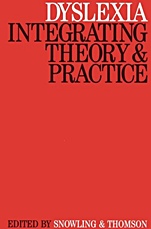
Dyslexia: Integrating Theory & Practice
ISBN 9781870332477
Autor: Margaret J. Snowling, Michael Thomson
Wydawca: Wiley
Dostępność: 3-6 tygodni
Cena: 394,80 zł
Przed złożeniem zamówienia prosimy o kontakt mailowy celem potwierdzenia ceny.
ISBN13: |
9781870332477 |
ISBN10: |
1870332474 |
Autor: |
Margaret J. Snowling, Michael Thomson |
Oprawa: |
Paperback |
Rok Wydania: |
1991-04-03 |
Ilość stron: |
352 |
Wymiary: |
232x155 |
Tematy: |
JD |
This work brings together the papers to be presented at the Second International Conference of the British Dyslexia Association. This conference is intended to examine a variety of aspects of dyslexia, within the following general themes – education, language, biological bases, cognition, development of literacy and numeracy and and social and behavioural elements. The contreibutors are specialists in their fields.
Spis treści:
Contributors.
Acknowledgements.
Editorial.
Part 1: Biological bases.
Chapter 1 Genetics and Dyslexia: an overview – John C.DeFries.
Chapter 2 Neurobiological issues in dyslexia – Drake D. Duane.
Chapter 3 Vision and language – John F. Stein.
Chapter 4 EEG topographical mapping and laterality measures in dyslexic children – Georgina Rippon.
Part II: The normal development of literacy.
Chapter 5 The development of reading and spelling in children: an overview – Linnea Ehri.
Chapter 6 Spelling and sound in learning to read – Nick Ellis.
Chapter 7 Metaphonological abilities and literacy – Jose Morais.
Chapter 8Recent work on reading and spelling development – Usha Goswami.
Part III: The definition, nature and prevalence of dyslexia.
Chapter 9 The theoretical and practical consquences of discrepancy definitions of dyslexia – Keith E. Stanovich.
Chapter 10 On determining the prevalence of dyslexia – Tim R. Miles.
Chapter 11 Phonological and visual segmentation problems in poor readers – Rhona Brown and Frances Watson.
Part IV: Intervention: theoretical and practical issues.
Chapter 13 Dyslexia: the obvious and hidden speech and language disorder – Joy Stackhouse and Bill Wells.
Chapter 14 Visual dyslexia/auditory dyslexia: is this a valuable distinction? – Elaine Miles.<
br>Chapter 15 Is medicinal treatment of dyslexia advisable – Colin Wilsher.
Part V: Intervention: empirical studies of teaching.
Chapter 16 The remediation of reading comprehension difficulties.
Chapter 17 The beneficial effect of accelerating reading rate: on dyslexic readers′ reading comprehension – Zvia Breznitz.
Chapter 18 The teaching of spelling using techniques of simultaneous oral spelling and visual inspection – Michael Thomson.
Part VI: Intervention: the practical skills of dyslexic teaching.
Chapter 19 Factors to consider when designing a test protocol in mathematics for dyslexics – Steve J Chinn.
Chapter 20 Mathematics and dyslexics – after basics what then? – Anne Henderson.
Chapter 21 Communication and study skills at primary level – Patience Thomson.
Chapter 22 Curriculum–based study skills – Virginia Kelly.
Chapter 23 The road to reading: basic skills to college allowances – Arlene W. Sonday.
Chapter 24 Setting up a learning programme for adult dyslexics – Cynthia Klein.
Chapter 25 The dyslexic child′s transfer of learning from the individual less to work in the classroom – Ann Cooke.
Chapter 26 The use of tape–recorders to develop speaking and listening skills – Jeanne Reilly.
Chapter 27 Pupil′s self–evaluation as an aid to teaching handwriting – Jane Taylor.
Chapter 28 A multisensory approach towards reading music – Margaret Hubicki.
Index.
Okładka tylna:
This work brings together the papers to be presented at the Second International Conference of the British Dyslexia Association. This conference is intended to examine a variety of aspects of dyslexia, within the following general themes – education, language, biological bases, cognition, devel
opment of literacy and numeracy and and social and behavioural elements. The contreibutors are specialists in their fields.
Koszyk
Książek w koszyku: 0 szt.
Wartość zakupów: 0,00 zł
Informacje


Kontakt
Gambit
Centrum Oprogramowania
i Szkoleń Sp. z o.o.
Al. Pokoju 29b/22-24
31-564 Kraków
Siedziba Księgarni
ul. Kordylewskiego 1
31-542 Kraków
+48 12 410 5991
+48 12 410 5987
+48 12 410 5989
Subskrypcje
Administratorem danych osobowych jest firma Gambit COiS Sp. z o.o. Na podany adres będzie wysyłany wyłącznie biuletyn informacyjny.
Autoryzacja płatności

Informacje na temat autoryzacji płatności poprzez PayU.

© Copyright 2012: GAMBIT COiS Sp. z o.o. Wszelkie prawa zastrzeżone.
Projekt i wykonanie: Alchemia Studio Reklamy