


Wydawcy
Katalog tematyczny
- Archeologia (109)
- Ekonomia, finanse, business (13704)
- Filozofia (1445)
- Historia (3040)
- Języki i językoznawstwo (2356)
- Lifestyle, hobby i rozrywka (475)
- Medycyna (9704)
- Nauki humanistyczne (4)
- Nauki o Ziemi i środowisku (2638)
- Nauki ścisłe (20412)
- Nauki społeczne (8486)
- Edukacja (229)
- Kryminologia, opieka spełeczna (284)
- Obronność (10)
- Polityka (1389)
- Psychologia (777)
- Socjologia (410)
- Społeczeństwo i kultura (187)
- Nauki techniczne (13450)
- Prawo (1696)
- Publikacje informacyjne i interdyscyplinarne (1288)
- Religia i wierzenia (917)
- Technika komputerowa (4067)
- Zdrowie, relacje międzyludzkie i rozwój osobisty (657)





Informacje szczegółowe o książce
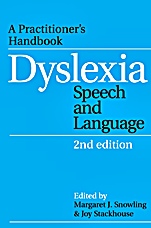
Dyslexia, Speech and Language: A Practitioners Handbook
ISBN 9781861564856
Autor: Margaret J. Snowling, Joy Stackhouse
Wydawca: Wiley
Dostępność: 3-6 tygodni
Cena: 249,90 zł
Przed złożeniem zamówienia prosimy o kontakt mailowy celem potwierdzenia ceny.
ISBN13: |
9781861564856 |
ISBN10: |
1861564856 |
Autor: |
Margaret J. Snowling, Joy Stackhouse |
Oprawa: |
Paperback |
Rok Wydania: |
2005-12-16 |
Numer Wydania: |
2nd Edition |
Ilość stron: |
378 |
Wymiary: |
229x152 |
Tematy: |
JD |
"About 10% of the population have some form of dyslexia. About 4% are severely dyslexic, including some 375,000 schoolchildren."
—The Dyslexia Institute, UK
The first edition of Dyslexia, Speech and Language explored the relationship between spoken and written language difficulties, and so provided useful educational and clinical perspectives on children’s reading and spelling problems. The second edition continues to link theory with practice and will be of great value to professionals in the fields of education, speech and language therapy and psychology. All the original chapters have been updated, and new authors have been included to cover current developments.
The first part of the book focuses on the nature of spoken and written language difficulties. It includes chapters on the dyslexic brain; speech, phonological awareness and spelling problems; and the predictors of literacy difficulties.
The second part moves on to the assessment of reading, spelling, speech and language difficulties. To manage these difficulties, the book covers new approaches to reading intervention, teaching spelling and handwriting skills, and techniques for training memory. Importantly, it also considers how to deal with the needs of people with dyslexia in a mainstream setting.
Finally, the book concludes with chapters on the psychosocial needs of children with language learning difficulties and on the interdisciplinary training of early years’ workers followed by a discussion of future directions for research and practice.
Spis treści:
Preface to the Second Edition.
Preface to the First Edition.
Contributors.
Chapter 1: Language skills and learning to read: the dyslexia spectrum (Margaret J. Snowling).
Chapter 2: Speech and spelling difficulties: what to look for (Joy Stackhouse).
Chapter 3: The dyslexic brain (W.A. Lishman).
Chapter 4: The prediction and screening of children’s read
ing difficulties (Valerie Muter).
Chapter 5: Assessing speech and language skills in the school–age child (Hilary Gardner).
Chapter 6: Assessing reading and spelling skills (Nata K. Goulandris).
Chapter 7: Assessing children’s reading comprehension (Kate Nation).
Chapter 8: Short–term memory: assessment and intervention (Maggie Vance and Jane E. Mitchell).
Chapter 9: Phonological awareness and reading intervention (Peter J. Hatcher).
Chapter 10: Spelling: challenges and strategies for the dyslexic learner and the teacher (Claire Jamieson and Sarah Simpson).
Chapter 11: Developing handwriting skills (Jane Taylor).
Chapter 12: Managing the needs of pupils with dyslexia in mainstream classrooms (Janet Hatcher).
Chapter 13: The assessment and management of psychosocial aspects of reading and language impairments (Poppy Nash).
Chapter 14: Supporting language and literacy in the early years: interdisciplinary training (Jannet A. Wright and Janet Wood).
Chapter 15: Current themes and future directions (Maggie Snowling and Joy Stackhouse).
References.
Author index.
Subject index.
Okładka tylna:
"About 10% of the population have some form of dyslexia. About 4% are severely dyslexic, including some 375,000 schoolchildren."
—The Dyslexia Institute, UK
The first edition of Dyslexia, Speech and Language explored the relationship between spoken and written language difficulties, and so provided useful educational and clinical perspectives on children’s reading and spelling problems. The second edition continues to link theory with practice and will be of great value to professionals in the fields of education, speech and language therapy and psychology. All the original chapters have been updated, and new authors have been included to cover current developments.
The first part of the book focuses on the nature of spoken and written language difficulties. It
includes chapters on the dyslexic brain; speech, phonological awareness and spelling problems; and the predictors of literacy difficulties.
The second part moves on to the assessment of reading, spelling, speech and language difficulties. To manage these difficulties, the book covers new approaches to reading intervention, teaching spelling and handwriting skills, and techniques for training memory. Importantly, it also considers how to deal with the needs of people with dyslexia in a mainstream setting.
Finally, the book concludes with chapters on the psychosocial needs of children with language learning difficulties and on the interdisciplinary training of early years’ workers followed by a discussion of future directions for research and practice.
Koszyk
Książek w koszyku: 0 szt.
Wartość zakupów: 0,00 zł
Informacje


Kontakt
Gambit
Centrum Oprogramowania
i Szkoleń Sp. z o.o.
Al. Pokoju 29b/22-24
31-564 Kraków
Siedziba Księgarni
ul. Kordylewskiego 1
31-542 Kraków
+48 12 410 5991
+48 12 410 5987
+48 12 410 5989
Subskrypcje
Administratorem danych osobowych jest firma Gambit COiS Sp. z o.o. Na podany adres będzie wysyłany wyłącznie biuletyn informacyjny.
Autoryzacja płatności

Informacje na temat autoryzacji płatności poprzez PayU.

© Copyright 2012: GAMBIT COiS Sp. z o.o. Wszelkie prawa zastrzeżone.
Projekt i wykonanie: Alchemia Studio Reklamy