


Wydawcy
Katalog tematyczny
- Archeologia (109)
- Ekonomia, finanse, business (13704)
- Filozofia (1445)
- Historia (3040)
- Języki i językoznawstwo (2356)
- Lifestyle, hobby i rozrywka (475)
- Medycyna (9704)
- Nauki humanistyczne (4)
- Nauki o Ziemi i środowisku (2638)
- Nauki ścisłe (20412)
- Nauki społeczne (8486)
- Edukacja (229)
- Kryminologia, opieka spełeczna (284)
- Obronność (10)
- Polityka (1389)
- Psychologia (777)
- Socjologia (410)
- Społeczeństwo i kultura (187)
- Nauki techniczne (13450)
- Prawo (1696)
- Publikacje informacyjne i interdyscyplinarne (1288)
- Religia i wierzenia (917)
- Technika komputerowa (4067)
- Zdrowie, relacje międzyludzkie i rozwój osobisty (657)





Informacje szczegółowe o książce
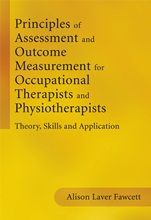
Principles of Assessment and Outcome Measurement for Occupational Therapists and Physiotherapists: Theory, Skills and Application
ISBN 9781861564801
Autor: Alison Laver Fawcett
Wydawca: Wiley
Dostępność: 3-6 tygodni
Cena: 448,35 zł
Przed złożeniem zamówienia prosimy o kontakt mailowy celem potwierdzenia ceny.
ISBN13: |
9781861564801 |
ISBN10: |
1861564805 |
Autor: |
Alison Laver Fawcett |
Oprawa: |
Paperback |
Rok Wydania: |
2007-03-09 |
Ilość stron: |
490 |
Wymiary: |
238x163 |
Tematy: |
JC |
Principles of Assessment for Occupational Therapists and Physiotherapists aims to provide a comprehensive text on assessment, evaluation and outcome measurement for occupational therapy and physiotherapy students, therapists, managers and educators. The purpose of this book is to enable students of occupational therapy and physiotherapy, as well as qualified physiotherapists and occupational therapists, to understand the complex art and science of assessment processes, to be familiar with psychometric terms and able to identify the properties of tests in order to select and confidently implement the use of appropriate standardised tests and outcome measures in their clinical practice and research.
Chapters focus on the following key features:
The importance of accurate assessmentMethods of assessment (informal versus standardised, self–report, proxy and observational)Purposes of assessment (descriptive, discriminative, predictive and evaluative) and timing assessments (initial, baseline, monitoring and outcome)Standardisation, definitions of psychometric terms and administering standardised testsLevels of measurement (nominal, ordinal, interval and ratio)How models for describing levels of function can help plan an assessment approachClinical reasoningTest critique, analysing your current assessment process and how to implement the optimum assessment approach
The book explores the core principles that underpin effective and efficient therapy assessment processes across a wide range of diagnoses, age groups and practice settings. Examples of standardised tests along with case vignettes and case histories are used to help the reader apply these principles to their practice.
Spis treści:
Introduction (Alison Laver Fawcett, PhD, DipCOT).
Occupational Therapy and Physiotherapy.
Labels used for providers and recipients of therapy services
.
The importance of the selection and application of terminology in practice.
Definitions of key terms.
Summary of definitions..
Chapter 1: The importance of accurate assessment and outcome measurement (Alison Laver Fawcett, PhD, DipCOT).
Chapter summary.
Assessment as a core part of the therapy process.
The impact of health and social care policy on assessment practice.
The demand for evidenced–based practice.
Implementation of evidence–based practice.
Levels of evidence and grades of recommendations.
The application of standardised assessments.
The use of standardised versus non–standardised assessments.
Benefits of applying standardised measures.
The requirement to demonstrate effectiveness.
A focus on client–centred practice.
The demand for robust clinical governance.
The use of standards, protocols, guidelines and care pathways.
The complexity of assessment.
The nature of therapeutic practice.
The nature of human occupation and occupational performance.
The nature of human function and the complexity of measuring functional outcomes.
The influence of the level of task demand.
The impact of familiarity on performance.
The influence of environment upon performance.
The constraints of the practice setting.
Conclusion.
The Big Question.
Chapter 2: Methods of assessment and sources of assessment data(Alison Laver Fawcett, PhD, DipCOT, Sally Payne, MSc, BSc, DipCOT and Claire Howell, BScOT (Hons)).
Chapter summary.
Methods of data collection.
Sources of Assessment Information.
Self–report.
Interviewing as a means of collecting self–report data.
Communication, insight and capacity issues.
Cultural issues and self–report data collection.
Examples of self–report assessments.
Proxy report.
Examples of assessments that use information from a proxy.
M
easures that assess the proxy (e.g. Care–giver and parent burden scales).
Observational assessment methods.
Examples of observational assessment.
Combining methods.
Examples of how therapists combine different assessment methods.
Documentation.
Confidentiality.
Further reading.
Case Study: Scott, by Sally Payne and Claire Howell.
Reflecting on the data collection methods you use in your practice.
Study questions.
Chapter 3: Purposes of assessment and measurement (Alison Laver Fawcett, PhD, DipCOT and Karen Innes, BSc OT, DMS, Cert Counselling).
Chapter summary.
Timing of assessment in the therapy process.
Referral.
Initial Assessment.
Information Gathering.
Initial Assessment.
Ongoing evaluative assessment.
Review.
Purposes of assessment.
Descriptive assessments.
Discriminative assessments.
Predictive assessments.
Evaluative assessment.
Assessment for particular purposes.
Capacity assessment.
Assessment for tribunals.
Risk assessment.
Needs assessment – considering wider populations.
Sharing your purpose.
Case vignette: Mr Smith.
Service Evaluation.
Service Structures.
Patterns.
Process.
Service outcomes.
Service inputs.
Beginning a service evaluation.
Case study: service evaluation – The Development and initial evaluation of a Memory Activity and Self Help (MASH) Group by Karen Innes and Alison Laver Fawcett.
Reflecting on purposes of assessment in your own practice.
Study questions.
Chapter 4: Levels of measurement (Alison Laver Fawcett, PhD, DipCOT).
Chapter summary.
What is measurement?
What is measurement theory?
The assignment of numbers for the purposes of assessment.
What are levels of measurement?
Nominal Scales.
Ordinal Scales.
Interval Scales.
Ratio Scales.
Application of different levels of measurement – issues to consider.
Guttman scaling.
Rasch analysis.
Applying concepts of levels of measurement to your own practice.
Study questions..
Chapter 5: Standardisation and test development (Alison Laver Fawcett, PhD, DipCOT).
Chapter summary.
Standardized assessments.
Why should therapists use standardised tests?
What is a standardised test?
What is an un–standardised assessment?
Standardisation.
Test construction decisions.
Criterion–referenced tests.
Norm–referenced tests.
Criteria for judging norms.
Obtained score.
Raw score.
Frequency distribution.
Mean.
Median.
Normal distribution.
Standard deviation.
Percentile Values.
Percentile rank.
Training and interpreting standardised test scores.
Psychometric properties.
Worksheets.
Study questions.
Chapter 6: Validity and clinical utility (Alison Laver Fawcett, PhD, DipCOT).
Chapter summary.
Definition of validity.
Content validity.
Construct Validity.
Factorial Validity.
Discriminative validity.
Criterion–related validity.
Concurrent validity.
Predictive validity.
Other types of validity.
Definition of Ecological validity.
Definition of External validity.
Establishing the overall validity of a test .
Face Validity.
Clinical utility.
Cost.
Time.
Energy and effort.
Portability.
Acceptability.
Examining validity and clinical utility issues: test examples.
Applying concepts of validity to your own practice.
Study questions.
Chapter 7: Reliability (Alison Laver Fawcett, PhD, DipCOT.)
Chapter summary.
Introducing the concept of reliability.
Defining reliability.
Reliability coefficients and standard error of measurement.
Level of significance.
Error of measurement.
Standard error of measurement (SEM).
Confidence interval.
Types of reliability.
Test–retest reliability.
Inter–rat
Koszyk
Książek w koszyku: 0 szt.
Wartość zakupów: 0,00 zł
Informacje


Kontakt
Gambit
Centrum Oprogramowania
i Szkoleń Sp. z o.o.
Al. Pokoju 29b/22-24
31-564 Kraków
Siedziba Księgarni
ul. Kordylewskiego 1
31-542 Kraków
+48 12 410 5991
+48 12 410 5987
+48 12 410 5989
Subskrypcje
Administratorem danych osobowych jest firma Gambit COiS Sp. z o.o. Na podany adres będzie wysyłany wyłącznie biuletyn informacyjny.
Autoryzacja płatności

Informacje na temat autoryzacji płatności poprzez PayU.

© Copyright 2012: GAMBIT COiS Sp. z o.o. Wszelkie prawa zastrzeżone.
Projekt i wykonanie: Alchemia Studio Reklamy