


Wydawcy
Katalog tematyczny
- Archeologia (109)
- Ekonomia, finanse, business (13704)
- Filozofia (1445)
- Historia (3040)
- Języki i językoznawstwo (2356)
- Lifestyle, hobby i rozrywka (475)
- Medycyna (9704)
- Chirurgia (272)
- Inne gałęzie medycyny (1871)
- Medycyna kliniczna (4187)
- Medycyna niekonwencjonalna (14)
- Medycyna przedkliniczna (269)
- Medycyna, ogólnie (1740)
- Historia medycyny (3)
- Lekarze, sprawy zawodowe (8)
- Medycyna, aspekty prawne (10)
- Służba zdrowia (36)
- Wyposażenie medyczne (157)
- Zdrowie publiczne (460)
- Medyczne służby pomocnicze (745)
- Studia medyczne (16)
- Weterynaria (548)
- Nauki humanistyczne (4)
- Nauki o Ziemi i środowisku (2638)
- Nauki ścisłe (20412)
- Nauki społeczne (8486)
- Nauki techniczne (13450)
- Prawo (1696)
- Publikacje informacyjne i interdyscyplinarne (1288)
- Religia i wierzenia (917)
- Technika komputerowa (4067)
- Zdrowie, relacje międzyludzkie i rozwój osobisty (657)





Informacje szczegółowe o książce
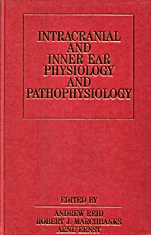
Intracranial and Inner Ear Physiology and Pathophysiology
ISBN 9781861560667
Autor: Andrew Reid, Robert Marshbanks, Arne Ernst
Wydawca: Wiley
Dostępność: 3-6 tygodni
Cena: 960,75 zł
Przed złożeniem zamówienia prosimy o kontakt mailowy celem potwierdzenia ceny.
ISBN13: |
9781861560667 |
ISBN10: |
1861560664 |
Autor: |
Andrew Reid, Robert Marshbanks, Arne Ernst |
Oprawa: |
Hardback |
Rok Wydania: |
1998-06-15 |
Ilość stron: |
332 |
Wymiary: |
245x164 |
Tematy: |
MB |
This book discusses the following topics: intracranial and inner fluid interactions the endolymph/perilymph/cerebrospinal fluid and associated disorders; non–invasive measurement of intracranial and inner fluid pressures; clinical aspects with particular reference to symptomatology, diagnosis and treatment; comparative fluid models.
Spis treści:
Foreword.
Preface.
Part 1 Intracranial Physiology.
Chapter 1 The anatomy and physiology of intracranial fluids – MB Segal.
Chapter 2 Hydromechanics of the intracranial and labyrinthine fluids – experimental study in cats – B Carlborg and KS Konradsson.
Chapter 3 Dynamics of inner ear pressure change caused by cerebrospinal fluid pressure manipulation in guinea pigs – EO Thalen, HP Wit, JM Segenhout and FWJ Albers.
Chapter 4 CSFand posture effects on transient evoked otocoustic emissions – pilot study – MA Ferguson, AC Davis and EA Lovell.
Part 2 Intracranial Pathophysiology.
Chapter 5 Pathophysiology of the cerebrospinal and cerebrovascular circulations – JD Pickard, S Piechnik, P Smielewski, PJ Kirkpatrick and M Czosnyka.
Chapter 6 Intraoperative neurophysiologic monitoring in skull base operations – AR Moller.
Chapter 7 Neurotolotgic manifestations of intracranial hypertension – A Sismanis.
Chapter 8 Idiopathic normal pressure hydrocephalus: primary disorder of CSF absorption or parenchymal cerebral disease: The relevance of vascular risk factors and cerebral white matter lesions – KR Krauss.
Chapter 9 Influence on the auditory system of cerebrospinal fluid loss: clinical and experimental results – A Walsted.
Chapter 10 OAE and TMD recordings in ICP changes – A Ernst, T Lernarz and K Weckbecker.
Chapter 11 A review of the management and current methods of investigating intracranial pressure in
shunted hydrocephalics and an introduction to the tympanic membrane displacemernt test – M Samuel, RJ Marchbanks and DM Burge.
Chapter 12 The application of the tympanic membrane displacement (TMD) test as part of the clinical service for hydrocephalus patients – S Flynn, RJ Marchbanks and D Burge.
Chapter 13 Quantitative assessment of intracranial pressure by the tympanic memberane displacemtn test in patients with shunted hydrocephalus – M Samuel, DM Burge and RJ Marchbanks.
Part 3 Inner Ear Physiology
Chapter 14 Physical processes underlying homeostasis of cochlear endolymph – AN Salt and JE DeMott.
Chapter 15 Cellular mechanisms of volume control in the labyrinth – P Wangemann.
Chapter 16 Non–invasive perilymphatic pressure measurements using the MMS–10 Tympanic Displacement Analyser in patients with Meniere′s disease – HJ Rosingh, HP Wit and FWJ Albers.
Chapter 17 Modelling labyrinthine fluid dynamics – JC Andrews, D Strelioff, M Bergsneider and D Becker.
Chapter 18 The effect of changes in cochlear fluid pressure on audiological measurements – AJ Phillips, GB Farrell and ARD Thornton.
Chapter 19 Ionic transports in the endolymphatic sac of the guinea pig – V Couloigner, M Teixeira, P Hulin, O Sterkers, G Planelles and E Ferrary.
Chapter 20 Beta–trace protein in human perilymph – G Bachmann, SE Baldus, M Nekic and O Mitchell.
Chapter 21 Characteristics of infrasonic otoacoustic emissions generated by the cardiovascular system – MP Hughes and RJ Marchbanks.
Chapter 22 Morphological effects of low extracellular calcium on stereociliary bundles in the guinea pig cochlea – BN Kumar, DN Furness and CM Hackney.
Chapter 23 Dynamics of inner–ear pressure release measured with a double–barrelled micropipette in the guinea pig –
HP Wit, EO Thalen, JM Segenhout and FWJ Albers.
Part 4 Iiner–ear Pathophysiology.
Chapter 24 Treatment of otolith disease concepts and new development of laser microsurgery – M Westhofen, U Mangold and W Wrollmer.
Chapter 25 Posturographic correlates of peripheral and central vestibulardisorders, as assessed by electronystagmography (ENG) and the Tetrax Interactive Balance System –R Kohen–Raz, A Sokolov, A Kohen–Rax, M Demmer and M Har–El.
Chapter 26 Vertigo and progressive sensori–neural hearing loss – peripheral cause or vascular compression of CN VIII? – MB Moller.
Chapter 27 Acetazolamide therapy of endolmphatic hydrops audiologically monitored by low–frequency masking: case report – EA Kabudwand, D Adler, G Scholx and D Mrowinski.
Chapter 28 Effects of middle ear pressure changesd on the inner ear function in Meniere′s disease: a review – B Densert, S Arlinger, O Densert, K Sass and L Odkvist.
Chapter 29 Tullio phenomenon: distrurbed inner ear homeostasis? – CF O′Mahoney and LM Luxon.
Chapter 30 Traumatic sudden sensorineural hearing loss in children – B Kou and R Macdonald.
Chapter 31 Fleeting hearing loss: reversible dysfunction of the cochlea during acute bacterial meningitis – MP Richardson, PT Rudd, A Reid and MJ Tarlow.
Chapter 32 Recurrent perilymphatic fistual in patients with possible patent cochlear aqueduct: a role for cochlear aqueduct blockade: report of five cases – DJ Weider and FE Musiek.
Chapter 33 Effects of the atrial natriuretic peptide (ANP) on hearing and tinnitus in patients suffering from Meniere′s disease – J Lamprecht.
Index.
Okładka tylna:
This book discusses the following topics: intracranial and inner fluid interactions the endolymph/perilymph/cerebrospinal fluid and associated dis
orders; non–invasive measurement of intracranial and inner fluid pressures; clinical aspects with particular reference to symptomatology, diagnosis and treatment; comparative fluid models.
Koszyk
Książek w koszyku: 0 szt.
Wartość zakupów: 0,00 zł
Informacje


Kontakt
Gambit
Centrum Oprogramowania
i Szkoleń Sp. z o.o.
Al. Pokoju 29b/22-24
31-564 Kraków
Siedziba Księgarni
ul. Kordylewskiego 1
31-542 Kraków
+48 12 410 5991
+48 12 410 5987
+48 12 410 5989
Subskrypcje
Administratorem danych osobowych jest firma Gambit COiS Sp. z o.o. Na podany adres będzie wysyłany wyłącznie biuletyn informacyjny.
Autoryzacja płatności

Informacje na temat autoryzacji płatności poprzez PayU.

© Copyright 2012: GAMBIT COiS Sp. z o.o. Wszelkie prawa zastrzeżone.
Projekt i wykonanie: Alchemia Studio Reklamy