


Wydawcy
Katalog tematyczny
- Archeologia (109)
- Ekonomia, finanse, business (13704)
- Filozofia (1445)
- Historia (3040)
- Języki i językoznawstwo (2356)
- Lifestyle, hobby i rozrywka (475)
- Medycyna (9704)
- Chirurgia (272)
- Inne gałęzie medycyny (1871)
- Medycyna kliniczna (4187)
- Medycyna niekonwencjonalna (14)
- Medycyna przedkliniczna (269)
- Medycyna, ogólnie (1740)
- Historia medycyny (3)
- Lekarze, sprawy zawodowe (8)
- Medycyna, aspekty prawne (10)
- Służba zdrowia (36)
- Wyposażenie medyczne (157)
- Zdrowie publiczne (460)
- Medyczne służby pomocnicze (745)
- Studia medyczne (16)
- Weterynaria (548)
- Nauki humanistyczne (4)
- Nauki o Ziemi i środowisku (2638)
- Nauki ścisłe (20412)
- Nauki społeczne (8486)
- Nauki techniczne (13450)
- Prawo (1696)
- Publikacje informacyjne i interdyscyplinarne (1288)
- Religia i wierzenia (917)
- Technika komputerowa (4067)
- Zdrowie, relacje międzyludzkie i rozwój osobisty (657)





Informacje szczegółowe o książce
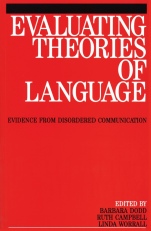
Evaluating Theories of Language: Evidence from Disordered Communication
ISBN 9781861560001
Autor: Karen Dodd, Ruth Campbell, Linda Worralk
Wydawca: Wiley
Dostępność: 3-6 tygodni
Cena: 357,00 zł
Przed złożeniem zamówienia prosimy o kontakt mailowy celem potwierdzenia ceny.
ISBN13: |
9781861560001 |
ISBN10: |
1861560001 |
Autor: |
Karen Dodd, Ruth Campbell, Linda Worralk |
Oprawa: |
Paperback |
Rok Wydania: |
1996-09-23 |
Ilość stron: |
218 |
Wymiary: |
232x154 |
Tematy: |
MB |
One approach to the study of language has been to describe people whose ability to communicate is impaired. Some researchers have argued that it is possible to identify the component mental processes that contribute to the ability to communicate by describing the ways in which language can break down. Other researchers have expressed doubts about the extent to which data from impairment reflects normal language function.
This volume reflects the problems of constructing theory of how the normal brain deals with language from data from impaired individuals from the perspective of a range of disciplines: psycholinguistics, linguistics, neurophysiology and speech–language pathology. The chapters include critiques of methodology; application of new technology; the study of bilingual people; and cross–linguistic studies. A range of language skills is discussed (phonology, prosody, syntax, semantics, reading and spelling) in the context of both developmental and acquired impairments (hearing loss, cerebellar dysarthria, sub–cortical aphasia, cortical aphasia, phonological disorder, and dyslexia).
This book icludes contributions from researchers and clinicians on both sides of the Atlantic as well as from Australia and Hong Kong.
Spis treści:
Preface.
Acknowledgements.
Contributors.
Introduction: Words and nature, Leonard L. La Pointe.
Chapter 1 Computational cognitive neuropsychology and acquired dyslexia, Max Coltheart, Robyn Langdon and Michael Haller.
Chapter 2 From snarks to boojums: why are prosodic disbilities so rare? Paul F. McCormack.
Chapter 3 Underlying representations in the acquisition of phonology: evidence from ′before and after′ speech, Andrew Butcher.
Chapter 4 Insights into language structure and function: some consequences of prelingual hearing loss, Ruth Campbell.
Chapter 5 Individual difference
s in cognititive function amount normal subjects and their implications for cognitive neuropsychology, Randi C. Martin.
Chapter 6 Symptoms of disorder without impairment: the written and spoken errors of bilinguals, Barbara J. Dodd, Lydia K.H. So and Li Wei.
Chapter 7 The role of subcortical structures in language: clinico–neuroradiological studies of brain–damaged subjects, Bruce E. Murdoch.
Chapter 8 Cognitive neuropsychology and aphasia: a critical analysis, Meredith Kennedy.
Chapter 9 Limitations of models of sentence production: evidence from Cantonese data of normal and aphasic speakers, Edwin M.–L. Yiu and Linda Worrall.
Synthesis.
Index.
Okładka tylna:
One approach to the study of language has been to describe people whose ability to communicate is impaired. Some researchers have argued that it is possible to identify the component mental processes that contribute to the ability to communicate by describing the ways in which language can break down. Other researchers have expressed doubts about the extent to which data from impairment reflects normal language function.
This volume reflects the problems of constructing theory of how the normal brain deals with language from data from impaired individuals from the perspective of a range of disciplines: psycholinguistics, linguistics, neurophysiology and speech–language pathology. The chapters include critiques of methodology; application of new technology; the study of bilingual people; and cross–linguistic studies. A range of language skills is discussed (phonology, prosody, syntax, semantics, reading and spelling) in the context of both developmental and acquired impairments (hearing loss, cerebellar dysarthria, sub–cortical aphasia, cortical aphasia, phonological disorder, and dyslexia).
This book icludes contributions from researchers and clinicians on both sides
of the Atlantic as well as from Australia and Hong Kong.
Koszyk
Książek w koszyku: 0 szt.
Wartość zakupów: 0,00 zł
Informacje


Kontakt
Gambit
Centrum Oprogramowania
i Szkoleń Sp. z o.o.
Al. Pokoju 29b/22-24
31-564 Kraków
Siedziba Księgarni
ul. Kordylewskiego 1
31-542 Kraków
+48 12 410 5991
+48 12 410 5987
+48 12 410 5989
Subskrypcje
Administratorem danych osobowych jest firma Gambit COiS Sp. z o.o. Na podany adres będzie wysyłany wyłącznie biuletyn informacyjny.
Autoryzacja płatności

Informacje na temat autoryzacji płatności poprzez PayU.

© Copyright 2012: GAMBIT COiS Sp. z o.o. Wszelkie prawa zastrzeżone.
Projekt i wykonanie: Alchemia Studio Reklamy