


Wydawcy
Katalog tematyczny
- Archeologia (109)
- Ekonomia, finanse, business (13704)
- Filozofia (1445)
- Historia (3040)
- Języki i językoznawstwo (2356)
- Lifestyle, hobby i rozrywka (475)
- Medycyna (9704)
- Nauki humanistyczne (4)
- Nauki o Ziemi i środowisku (2638)
- Nauki ścisłe (20412)
- Nauki społeczne (8486)
- Nauki techniczne (13450)
- Budownictwo lądowe (1045)
- Chemia przemysłowa (2258)
- Elektronika i telekomunikacja (3287)
- Energetyka (1122)
- Inne nauki stosowane (363)
- Inżynieria biochemiczna (507)
- Inżynieria transportu (232)
- Mechanika i materiały (3316)
- Nauka o środowisku (321)
- Rolnictwo (507)
- Technika, ogólnie (475)
- Prawo (1696)
- Publikacje informacyjne i interdyscyplinarne (1288)
- Religia i wierzenia (917)
- Technika komputerowa (4067)
- Zdrowie, relacje międzyludzkie i rozwój osobisty (657)





Informacje szczegółowe o książce
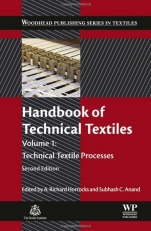
Handbook of Technical Textiles: Technical Textile Processes
ISBN 9781782424581
Autor: Horrocks, A RAnand, Subhash C.
Wydawca: Elsevier
Dostępność: 3-6 tygodni
Cena: 825,30 zł
Przed złożeniem zamówienia prosimy o kontakt mailowy celem potwierdzenia ceny.
ISBN13: |
9781782424581 |
Autor: |
Horrocks, A RAnand, Subhash C. |
Oprawa: |
Hardback |
Rok Wydania: |
2015-11-26 |
Tematy: |
TDCP |
The second edition of Handbook of Technical Textiles, Volume 1: Technical Textile Processes provides readers with a comprehensive understanding of the latest advancements in technical textiles. With revised and updated coverage, including several new chapters, this volume reviews recent developments and technologies in the field, beginning with an overview of the technical textiles industry that includes coverage of technical fibers and yarns, weaving, spinning, knitting, and nonwoven production. Subsequent sections include discussions on finishing, coating, and the coloration of technical textiles.
Provides a comprehensive handbook for all aspects of technical textilesPresents updated, detailed coverage of processes, fabric structure, and applicationsAn ideal resource for those interested in high-performance textiles, textile processes, textile processing, and textile applicationsContains contributions from many of the original, recognized experts from the first edition who update their respective chapters
- Preface
- 1: An overview of the technical textiles sector
- Abstract
- 1.1 Introduction
- 1.2 Definition of technical textiles
- 1.3 Emergence and milestones
- 1.4 Textile processes
- 1.5 Applications and end-use sectors
- 1.6 The impact of globalisation
- 1.7 The future
- 2: Technical fibres: Recent advances
- Abstract
- 2.1 Introduction
- 2.2 Nanofibres
- 2.3 Auxetic fibres
- 2.4 Piezoelectric fibres
- 2.5 Photovoltaic fibres
- 2.6 Shape memory fibres
- 2.7 Animal- and plant-based fibres for medical and technical applications
- 2.8 Synthetic- (or chemical-) based fibres for medical and environmental applications
- 2.9 Degradable and nondegradable synthetics
- 2.10 Conclusion and future prospects
- Bibliography
- 3: Technical yarns
- Abstract
- 3.1 Introduction
- 3.2 Staple fibre yarns
- 3.3 Filament yarns
- 4: Technical fabric structures - 1. Woven fabrics
- Abstract
- 4.1 Introduction
- 4.2 Weave structures
- 4.3 Selvedge
- 4.4 Fabric specifications and fabric geometry
- 4.5 Warp preparation
- 5: Technical fabric structures - 2. Knitted fabrics
- Abstract
- Acknowledgements
- 5.1 Terms and definitions
- 5.2 Weft knitting machines
- 5.3 Weft knitted structures
- 5.4 Process control in weft knitting
- 5.5 End-use applications of weft knitted fabrics
- 5.6 Warp knitting machines
- 5.7 Warp knitted structures
- 5.8 Recent advances in warp and weft knitting
- 6: Technical fabric structures - 3. Nonwoven fabrics
- Abstract
- 6.1 Introduction
- 6.2 Carded
- 6.3 Airlaid
- 6.4 Wetlaid
- 6.5 Spunbond
- 6.6 Meltblown
- 6.7 Composite spunmelts
- 6.8 Flash spinning
- 6.9 Electrospun webs
- 6.10 Centrifugally spun webs
- 6.11 Extruded split or fibrillated films
- 6.12 Chemical bonding
- 6.13 Thermal bonding
- 6.14 Solvent bonding
- 6.15 Needlepunching
- 6.16 Stitchbonding
- 6.17 Hydroentanglement
- 7: Technical textile finishing
- Abstract
- 7.1 Introduction
- 7.2 Pre-treatment of fabrics for finishing
- 7.3 Mechanical finishing processes
- 7.4 Chemical finishing processes
- 7.5 Finishing for the future
- 8: Coating of textiles
- Abstract
- 8.1 Introduction
- 8.2 History of coating
- 8.3 Coating materials
- 8.4 Coating techniques
- 8.5 Direct coating versus transfer coating
- 8.6 Blade coating
- 8.7 Reverse roll coating
- 8.8 Roller coating
- 8.9 Rotary screen coating
- 8.10 Lick roll coating
- 8.11 Gravure roll coating
- 8.12 Extrusion coating
- 8.13 Powder coating
- 8.14 Spray coating
- 8.15 Foam coating
- 8.16 The future of textile coating
- 9: Coloration of technical textiles
- Abstract
- 9.1 Introduction
- 9.2 Objectives of coloration
- 9.3 Coloration of technical textiles
- 9.4 Dye classes and pigments
- 9.5 Mass coloration of manufactured fibres
- 9.6 Conventional dyeing and printing of technical textiles
- 9.7 Total colour management systems
- 9.8 Dyeing machinery
- 9.9 Printing
- 9.10 Colour fastness of technical textiles
- 9.11 Dyes and pigments for special effects in technical textiles
- 10: Three-dimensional fabric structures. Part 1 - An overview on fabrication of three-dimensional woven textile preforms for composites
- Abstract
- 10.1 Introduction
- 10.2 Classifications of textile assemblies
- 10.3 3-D solid woven preforms
- 10.4 3-D hollow woven preforms
- 10.5 3-D shell-woven fabrics
- 10.6 3-D nodal woven fabrics
- 10.7 3-D woven architecture from specially made devices
- 10.8 Conclusions
- 10: Three-dimensional fabric structures. Part 2 - Three-dimensional knitted structures for technical textiles applications
- Abstract
- 10.9 Introduction
- 10.10 Knitted spacer fabrics
- 10.11 Warp knitted spacer fabrics
- 10.12 Knitting constructions
- 10.13 Fabric properties/product applications
- 10.14 Knitting equipment
- 10.15 Weft knitted spacer fabrics
- 10.16 Knitting constructions
- 10.17 Knitting equipment
- 10.18 Comparison of properties of warp and weft knitted spacer fabrics
- 10.19 Research in spacer structures
- 10.20 Knitting of 3-D spacer piezoelectric fabric
- 10.21 Conclusions
- Acknowledgements
- Appendix
- 10: Three-dimensional fabric structures. Part 3 - Three-dimensional nonwoven fabrics and their applications
- Abstract
- 10.22 Introduction
- 10.23 Definition
- 10.24 Classification of nonwovens
- 10.25 Fibre trends
- 10.26 Three-dimensional nonwovens
- 10.27 Summary
- Acknowledgements
- 11: One-dimensional textiles: rope, cord, twine, webbing, and nets
- Abstract
- 11.1 Introduction
- 11.2 Materials
- 11.3 Ropes
- 11.4 Cordage
- 11.5 Webbings, strappings, belts, and tapes
- 11.6 Nets
- 11.7 Cordage properties
- 11.8 Conclusion
- Index
Koszyk
Książek w koszyku: 0 szt.
Wartość zakupów: 0,00 zł
Informacje


Kontakt
Gambit
Centrum Oprogramowania
i Szkoleń Sp. z o.o.
Al. Pokoju 29b/22-24
31-564 Kraków
Siedziba Księgarni
ul. Kordylewskiego 1
31-542 Kraków
+48 12 410 5991
+48 12 410 5987
+48 12 410 5989
Subskrypcje
Administratorem danych osobowych jest firma Gambit COiS Sp. z o.o. Na podany adres będzie wysyłany wyłącznie biuletyn informacyjny.
Autoryzacja płatności

Informacje na temat autoryzacji płatności poprzez PayU.

© Copyright 2012: GAMBIT COiS Sp. z o.o. Wszelkie prawa zastrzeżone.
Projekt i wykonanie: Alchemia Studio Reklamy