


Wydawcy
Katalog tematyczny
- Archeologia (109)
- Ekonomia, finanse, business (13704)
- Filozofia (1445)
- Historia (3040)
- Języki i językoznawstwo (2356)
- Lifestyle, hobby i rozrywka (475)
- Medycyna (9704)
- Nauki humanistyczne (4)
- Nauki o Ziemi i środowisku (2638)
- Nauki ścisłe (20412)
- Nauki społeczne (8486)
- Nauki techniczne (13450)
- Budownictwo lądowe (1045)
- Budownictwo komunikacyjne (9)
- Hydraulika (33)
- Konstrukcje budowlane (95)
- Mechanika konstrukcji (182)
- Przemysł budowlany (7)
- Chemia przemysłowa (2258)
- Elektronika i telekomunikacja (3287)
- Energetyka (1122)
- Inne nauki stosowane (363)
- Inżynieria biochemiczna (507)
- Inżynieria transportu (232)
- Mechanika i materiały (3316)
- Nauka o środowisku (321)
- Rolnictwo (507)
- Technika, ogólnie (475)
- Prawo (1696)
- Publikacje informacyjne i interdyscyplinarne (1288)
- Religia i wierzenia (917)
- Technika komputerowa (4067)
- Zdrowie, relacje międzyludzkie i rozwój osobisty (657)





Informacje szczegółowe o książce
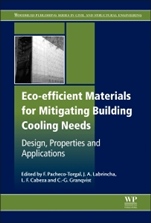
Eco-efficient Materials for Mitigating Building Cooling Needs: Design, Properties and Applications
ISBN 9781782423805
Autor: Pacheco-Torgal, FernandoLabrincha, JoãoCabeza, LuisaGranqvist, Claes Goeran
Wydawca: Elsevier
Dostępność: 3-6 tygodni
Cena: 967,05 zł
Przed złożeniem zamówienia prosimy o kontakt mailowy celem potwierdzenia ceny.
ISBN13: |
9781782423805 |
Autor: |
Pacheco-Torgal, FernandoLabrincha, JoãoCabeza, LuisaGranqvist, Claes Goeran |
Oprawa: |
Hardback |
Rok Wydania: |
2015-02-23 |
Tematy: |
TN |
Climate change is one of the most important environmental problems faced by Planet Earth. The majority of CO2 emissions come from burning fossil fuels for energy production and improvements in energy efficiency shows the greatest potential for any single strategy to abate global greenhouse gas (GHG) emissions from the energy sector. Energy related emissions account for almost 80% of the EU's total greenhouse gas emissions. The building sector is the largest energy user responsible for about 40% of the EU’s total final energy consumption. In Europe the number of installed air conditioning systems has increased 500% over the last 20 years, but in that same period energy cooling needs have increased more than 20 times. The increase in energy cooling needs relates to the current higher living and working standards. In urban environments with low outdoor air quality (the general case) this means that in summer-time one cannot count on natural ventilation to reduce cooling needs. Do not forget the synergistic effect between heat waves and air pollution which means that outdoor air quality is worse in the summer aggravating cooling needs. Over the next few years this phenomenon will become much worse because more people will live in cities, more than 2 billion by 2050 and global warming will aggravate cooling needs.
An overview of materials to lessen the impact of urban heat islandsExcellent coverage of building materials to reduce air condtioning needsInnovative products discussed such as Thermo and Electrochromic materials
Ch 1- Introduction F. Pacheco-Torgal, University of Minho, Portugal
PART I. PAVEMENTS FOR MITIGATING URBAN HEAT ISLAND EFFECTS
Ch 2 – Coating materials to increase pavement's surface reflectance N Xie, Harbin Institute of Technology, China Ch 3 – Pavements made of concrete with high solar reflectance Farhad Reza, University of California, USA Ch. 4 – Comparison of the performance of concrete and asphalt materials H. Li, University of California, USA
PART II. FACADE MATERIALS FOR REDUCING COOLING NEEDS
Ch. 5 – Green facades and living walls: vertical vegetation as a construction material Irina Susorovo, Illinois Institute of Technology, USA Ch. 6 – Comparing the performance of different facade materials N Alchapar, INCIHUSA, Argentina Ch. 7 – Lotus ceramics for counteracting urban heat island effects Kiyoshi Okada, Tokyo Institute of Technology, Japan Ch. 8 – Innovative evaporative cooling walls Alessandro Carbonari, Università Politecnica delle Marche, Italy
PART III. ROOFING MATERIALS FOR REDUCING COOLING NEEDS
Ch. 9 – High albedo roof coatings for reducing cooling needs Anna Laura Pisello, University of Perugia, Italy Ch 10 – Solar cooling with hydrophilic porous materials for reducing cooling needs D. Karamanis, University of Ioannina, Greece Ch 11 - Cool green roofs for reducing cooling needs Yann-Jou Lin, National Taiwan University, Taiwan Ch 12 – Influence of damaged vegetation on the reduction of cooling needs A. F. Speak, The University of Manchester, UK Ch 13 - Technical and economic analysis of green roofs to reduce cooling needs Fabrizio Ascione, University of Naples, Italy
PART IV. PCMS AND CHROMOGENIC SMART MATERIALS FOR REDUCING COOLING NEEDS
Ch. 14 – PCMs for reducing cooling needs Luisa F. Cabeza, University of Lleida, Spain Ch. 15 - Nanomaterials embedded PCMs for reducing building cooling needs S.Kalaiselvam, Anna University, India Ch. 16 – Thermocromic materials for reducing cooling needs Claes Granqvist, Uppsala University, Sweden Ch. 17 – Electrochromic walls for reducing cooling needs Marco Pittaluga, Cagliari University, Italy Ch. 18 – Electrochromic windows impact in the energy performance of buildings in Mediterranean climates: A case study P.Tavares, INESC Coimbra, Portugal
Koszyk
Książek w koszyku: 0 szt.
Wartość zakupów: 0,00 zł
Informacje


Kontakt
Gambit
Centrum Oprogramowania
i Szkoleń Sp. z o.o.
Al. Pokoju 29b/22-24
31-564 Kraków
Siedziba Księgarni
ul. Kordylewskiego 1
31-542 Kraków
+48 12 410 5991
+48 12 410 5987
+48 12 410 5989
Subskrypcje
Administratorem danych osobowych jest firma Gambit COiS Sp. z o.o. Na podany adres będzie wysyłany wyłącznie biuletyn informacyjny.
Autoryzacja płatności

Informacje na temat autoryzacji płatności poprzez PayU.

© Copyright 2012: GAMBIT COiS Sp. z o.o. Wszelkie prawa zastrzeżone.
Projekt i wykonanie: Alchemia Studio Reklamy