


Wydawcy
Katalog tematyczny
- Archeologia (109)
- Ekonomia, finanse, business (13704)
- Filozofia (1445)
- Historia (3040)
- Języki i językoznawstwo (2356)
- Lifestyle, hobby i rozrywka (475)
- Medycyna (9704)
- Nauki humanistyczne (4)
- Nauki o Ziemi i środowisku (2638)
- Nauki ścisłe (20412)
- Nauki społeczne (8486)
- Nauki techniczne (13450)
- Prawo (1696)
- Publikacje informacyjne i interdyscyplinarne (1288)
- Religia i wierzenia (917)
- Technika komputerowa (4067)
- Zdrowie, relacje międzyludzkie i rozwój osobisty (657)





Informacje szczegółowe o książce
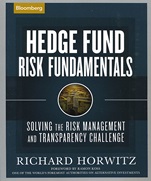
Hedge Fund Risk Fundamentals: Solving the Risk Management and Transparency Challenge
ISBN 9781576602577
Autor: Richard Horwitz, Ramon Koss
Wydawca: Wiley
Dostępność: 3-6 tygodni
Cena: 248,85 zł
Przed złożeniem zamówienia prosimy o kontakt mailowy celem potwierdzenia ceny.
ISBN13: |
9781576602577 |
ISBN10: |
1576602575 |
Autor: |
Richard Horwitz, Ramon Koss |
Oprawa: |
Paperback |
Rok Wydania: |
2007-07-01 |
Ilość stron: |
312 |
Wymiary: |
233x191 |
Tematy: |
KF |
In the constantly evolving hedge fund marketplace, nothing is more central––but in many ways, more amorphous and elusive––than risk. Yet there remains no standard for analyzing and measuring risk within this highly secretive, largely unregulated field, leaving the thousands of hedge funds––and the tens of thousands of hedge fund investors––in dangerously dim light. The industry has not solved the "transparency" challenge––communicating risk to investors without disclosing proprietary information.
Hedge Fund Risk Fundamentals is the first book to bring these issues to the forefront. With clarity, concision, and minimal math, Richard Horwitz lays out the key components and the cutting–edge processes in the field of hedge fund risk management today. Against that backdrop, he presents a groundbreaking utility destined to set the standard for transparency and risk management within the hedge fund universe.
You’ll learn why, when it comes to risk management, 1 + 1 = 1.41. For all of those perplexed by the difficulties of assessing risk in hedge fund investing, Horwitz’s concepts make for an invaluable road map and a demystifying resource that hedge funds and investors at all levels will find indispensable.
Spis treści:
Foreword (Ramon Koss).
Preface.
Introduction.
Part One: The Components of Risk.
1 Volatility.
Risks in Hedge Funds versus Traditional Investments.
The Distribution of Hedge Fund Returns.
Value at Risk (VAR).
2 Diversification.
The Power of Diversification.
Systematic Biases.
Overdiversification.
3 Leverage.
Financing Leverage.
Borrowing Leverage.
Notional Leverage.
Unlevered Risk.
Instrument Risk.
Construction Leverage.
What Is the Right Amount of Leverage?
4 Illiquidity.
Planning in Case of Crisis.
The Size Factor.
Elements in an Escap
e Plan.
The Cost of Illiquid Redemption Policies.
Choosing among Alternatives.
Calculating the Opportunity Cost of Illiquidity.
Part Two: Market Risk Management.
5 Measuring Risk.
Sell–Side Heritage.
Normal Market Behavior.
Will History Repeat?
Risk Measures Based on Actual Fund Returns.
Risk Measures Based on Simulated Fund Returns.
Crisis Market Behavior.
6 Understanding the Source of Risk.
Slicing and Dicing or Bucketing.
Index–Based Benchmarks.
Value at Risk (VaR).
Risk–Factor Framework.
Marginal Risk Measures.
7 Risk Visualization and Articulation.
Comparative Statistics.
Risk Visualization Techniques.
Communicating Risk in "Hedge–Speak".
8 Risk Culture.
Integrating Risk Management into All Hedge Fund Processes.
Style Drift versus Nimbleness.
Personality Risks.
Status Issues.
Environment Issues.
Part Three: Other Risk Processes.
9 Non–Market Risk Management.
Systems and Procedures.
Organizational Issues.
Disciplined Processes.
10 Constructing a Fund.
Value Creation Levers.
Shorting.
Hedging.
Overvalued Positions.
Relative Misvaluations
Illiquid Securities.
Leverage.
Convexity.
Nimbleness.
Establishing a Basis in which to View the Construction.
Balancing Risk and Return.
11 Performance Attribution.
Assessing Primary Sources of Returns.
Other Factors in Performance Attribution.
12 Risk Budgeting.
Risk Budgeting Self–Assessment.
Definition of Risk Budgeting.
Formal Risk Budgeting.
A Management Process, Not a Back–Office Tool.
A Common Language.
Managing Complex Causal Relationships.
A Comprehensive and Integrated Approach.
Integrated Systems Support the Process.
How Formal Should Your Risk Management Be?
Part Four: Risk from the Investor′s Viewpoint.
13 NAV/Return
Reporting.
Lack of Documentation.
Inefficiencies.
Incomplete Reporting.
Lack of Precision.
Misleading Measures.
Masking Risk.
Dressing Up Returns.
14 Constructing a Portfolio of Funds.
Integrating Asset Allocation, Manager Selection, and Portfolio Construction.
Understand Manager Risks.
Understand Your Objective.
Adopt a Prospective Outlook.
Focus on Marginal Risk and Return Measures.
Construct the Portfolio Incrementally.
Minimize Exposure to the Underlying Market.
Manage Secondary Risk Exposures.
Maximize Idiosyncratic Risks.
Limit Offsetting Exposures.
Diversify the Portfolio.
Plan for the Worst.
Consider Using Optimizers.
15 Risk Due Diligence.
Analyzing Previous Portfolios.
Determining Transparency and Risk Culture.
16 Transparency.
Changing Investor Requirements.
The Political Environment.
The Pros and Cons of Position Disclosure.
Current Practices.
Part Five: The Solution.
17 Industry Standard Solution.
Reporting Standards—A Common Language.
The Case for Standardization.
18 The Risk Fundamentals Solution.
Overview of the Service.
NAV/Return Reporting.
The Risk Fundamentals System.
The Risk Fundamentals Statistics.
Distributed Solution.
Standardization with Flexibility.
Risk Budgeting Support.
Effective Risk Communication.
Interpreting Risk Management Reporting.
Concentrations.
Leverage.
Liquidity.
Risk Factors.
Historical Simulation.
Stress Tests.
Convexity.
Risk–Return Analyses.
Constructing a Fund.
Constructing a Portfolio of Funds.
Performance Attribution.
19 Summary.
Appendix.
Glossary.
Index.
Nota biograficzna:
Richard Horwitz is managing director of manager assessment and risk management of Merrill Lynch′s Hedge Fund Development and Management Group (HFDMG). He has implemented Risk Funda
mentals, a proprietary risk transparency and management system. The system is risk factor based, permitting underlying funds to provide structural risk transparency without requiring position disclosure and for this transparency to be used to provide a fundamental understanding of each underlying fund and to construct risk–efficient portfolios of funds. Previously, Horwitz was senior vice president and director of risk management and investment analytics at Kenmar Global Investment Management Inc., a $2 billion fund of funds. He gained his fundamental knowledge of hedge funds as a principal at Capital Market Risk Advisors, Inc., the boutique risk management consulting firm. Horwitz had previously been a buy–side senior equity analyst at Sanford C. Bernstein & Co. and a consultant in financial services at Booz Allen Hamilton Inc. He earned an MS in management (Sloan School) and a BS in electrical engineering from the Massachusetts Institute of Technology. Horwitz has also written numerous articles on hedge funds.
Koszyk
Książek w koszyku: 0 szt.
Wartość zakupów: 0,00 zł
Informacje


Kontakt
Gambit
Centrum Oprogramowania
i Szkoleń Sp. z o.o.
Al. Pokoju 29b/22-24
31-564 Kraków
Siedziba Księgarni
ul. Kordylewskiego 1
31-542 Kraków
+48 12 410 5991
+48 12 410 5987
+48 12 410 5989
Subskrypcje
Administratorem danych osobowych jest firma Gambit COiS Sp. z o.o. Na podany adres będzie wysyłany wyłącznie biuletyn informacyjny.
Autoryzacja płatności

Informacje na temat autoryzacji płatności poprzez PayU.

© Copyright 2012: GAMBIT COiS Sp. z o.o. Wszelkie prawa zastrzeżone.
Projekt i wykonanie: Alchemia Studio Reklamy