


Wydawcy
Katalog tematyczny
- Archeologia (109)
- Ekonomia, finanse, business (13704)
- Filozofia (1445)
- Historia (3040)
- Języki i językoznawstwo (2356)
- Lifestyle, hobby i rozrywka (475)
- Medycyna (9704)
- Nauki humanistyczne (4)
- Nauki o Ziemi i środowisku (2638)
- Nauki ścisłe (20412)
- Nauki społeczne (8486)
- Nauki techniczne (13450)
- Prawo (1696)
- Publikacje informacyjne i interdyscyplinarne (1288)
- Religia i wierzenia (917)
- Technika komputerowa (4067)
- Zdrowie, relacje międzyludzkie i rozwój osobisty (657)





Informacje szczegółowe o książce
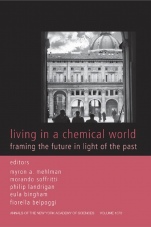
Living in a Chemical World: Framing the Future in Light of the Past, Volume 1076
ISBN 9781573316538
Autor: Myron Mehlman, Morando Soffritti, Philip Landrigan, Eula Bingham, Fiorella Belpoggi
Wydawca: Wiley
Dostępność: 3-6 tygodni
Cena: 662,55 zł
Przed złożeniem zamówienia prosimy o kontakt mailowy celem potwierdzenia ceny.
ISBN13: |
9781573316538 |
ISBN10: |
1573316539 |
Autor: |
Myron Mehlman, Morando Soffritti, Philip Landrigan, Eula Bingham, Fiorella Belpoggi |
Oprawa: |
Paperback |
Rok Wydania: |
2006-12-11 |
Ilość stron: |
500 |
Wymiary: |
227x152 |
Tematy: |
AT |
The modern world holds many hazards. Even as some of the hazards of living are reduced by technological advances in medicine and other areas, many nevertheless remain and new hazards are continually introduced.
Held by the Collegium Ramazzini, an international academy of scientists who are experts in the fields of occupational and environmental health, this conference will consider in particular the carcinogenic risks present in the general and occupational environment.
Many risks are still present in the workplace and the general environment in spite of our long awareness of them. This meeting will serve to update our knowledge of these risks in order to define the scientific bases for more stringent regulations and more effective prevention.
The results of studies on hazardous agents and situations brought about by recent technological innovations and new life styles will be presented. New strategies for prevention will be suggested for protection from those risks.
Data on the diffusion of carcinogenic hazards from the industrially developed to the developing nations will be evaluated.
Scientific tools now available for prevention will be reviewed, and, where necessary, the strategies for protection from risk will be determined.
Hazardous waste, the risks of nanoparticles, endocrine disrupters, prenatal environmental exposures and developmental outcomes, human exposure to environmental hazards in the World Trade Center aftermath, and the social and economic perspectives on environmental and occupational diseases will be discussed.
NOTE: Annals volumes are available for sale as individual books or as a journal. For information on institutional journal subscriptions, please visit www.blackwellpublishing.com/nyas.
ACADEMY MEMBERS: Please contact the New York Academy of Sciences directly to place your order (www.nyas.org). Members of the New York Academy of Science receive full–text access to the Annals on
line and discounts on print volumes. Please visit www.nyas.org/membership/main.asp for more information about becoming a member.
Spis treści:
Ramazzini Award and Lecture:.
The Identification of Carcinogenic Agents and the Primary Prevention of Cancer: Lorenzo Tomatis.
Keynote Addresses:.
Identifying and Preventing Hazards in the Environment and at Work.
The Relationship Between Prenatal Environmental Exposures and Developmental Outcomes, Cancer Risk and Respiratory Health in a Prospective Cohort Study: Frederica Perera.
Tools and Strategies to Reduce Risk: Applying Science to Achieve Prevention.
Interpreting Cancer Trends: Elizabeth M. Ward, Michael J. Thun, Lindsay M. Hannan, Ahmedin Jemal.
Reducing and Managing Risk in High Hazard Sectors.
The Anatomy of the Exposures That Occurred Around the World Trade Center Site: 9–11 and Beyond: Paul J. Lioy.
I. Identifying and Preventing Hazards in the Environment and at Work:.
A. Benzene and Other Gasoline Constituents/Additives:.
1. The Health Watch Case–Control Study of Leukaemia and Benzene, the Story So Far: Deborah C. Glass, Christopher N. Gray, Damien J. Jolley, Carl Gibbons, Malcolm R. Sim.
2. Benzene Exposure and Multiple Myeloma: A Detailed Meta–Analysis of Benzene Cohort Studies: Peter F. Infante.
3. Dangerous and Cancer–Causing Properties of Products and Chemicals in the Oil Refining and Petrochemical Industries. Part XXX: Causal Relationship Between Chronic Myelogenous Leukemia and Benzene–Containing Solvents: Myron A. Mehlman.
4. Dangerous and Cancer–Causing Properties of Products and Chemicals in the Oil Refineries and Petrochemical Industries. Part XXXI: Causal Relationship Between Non–Hodgkin′s Lymphoma and Exposure to Benzene and Benzene–Containing Solvents: Myron A. Mehlman.
5. Genetic Polymorphism of Toxicant–Metabolizing Enzymes and Prognosis of Chinese
Workers With Chronic Benzene Poisoning: J–X Wan, Z–B Zhang, J–R Guan, D–Z Cao, R Ye, X–P Jin, Z–L Xia.
B. Use and Misuse of Mechanistic Data in Risk Assessment:.
6. Gene–Environment Interactions in Cancer: Do They Exist?: Kari Hemminki, Asta Försti, Justo Lorenzo Bermejo.
7. Manufactured Uncertainty: Protecting Public Health in the Age of Contested Science and Product Defense: David Michaels.
8. Misuse of Genetic Data in Environmental Epidemiology: Paolo Vineis.
9. Collision of Basic and Applied Approaches to Risk Assessment of Thyroid Toxicants: R. Thomas Zoeller.
C. Chlorinated Solvents:.
10. Science and Policy in Risk Assessments of Chlorinated Ethenes: Christina Rudén.
11. Potential Health Effects of Occupational Chlorinated Solvent Exposure: Avima M. Ruder.
D. Endocrine Disruptors:.
12. Endocrine Disruptors: Challenges for Environmental Research in the 21st Century: Mary S. Wolff.
13. Risk Assessment of Endocrine Disrupters: the Role of Toxicological Studies: Alberto Mantovani.
E. Air Pollution and Non–Fibrous Particles:.
14. Diesel Exhaust and Coal Mine Dust: Lung Cancer Risk in Occupational Settings: Barbara Hoffmann & Karl–Heinz Jöckel.
15. Lung Tumour Risk Estimates from Rat Studies With Not Specifically Toxic Granular Dusts: Markus Roller & Friedrich Pott.
F. Asbestos and Man–Made Mineral Fibers:.
16. Measurements of Asbestos Burden in Tissues: Ronald F. Dodson and Mark A. L. Atkinson.
17. Asbestos Ban in India: Challenges Ahead: T. K. Joshi, Uttpal B. Bhuva, Riyanka Katoch.
G. Radiation:.
18. Ionizing Radiation and Cardiovascular Disease: David G. Hoel.
19. Power–Frequency Electric and Magnetic Fields in the Light of Draper Et Al 2005: John Swanson, Tim Vincent, Mary Kroll, Gerald Draper.
H. Nanotechnology and Emerging Industries:.
20. Getting it
Right the First Time: Developing Nanotechnology While Protecting Workers, Public Health and the Environment: John M. Balbus, Karen Florini, Richard A. Denison, Scott A. Walsh.
II. Reducing and Managing Risk in High Hazard Sectors:.
A. Agriculture:.
21. Pesticides and Adult Respiratory Outcomes in the Agricultural Health Study: Jane A. Hoppin, David M. Umbach, Stephanie J. London, Charles F. Lynch, Michael C.R. Alavanja, Dale P. Sandler.
22. The Assessment of Occupational Exposure to Diazinon in Nicaraguan Plantation Workers Using Saliva Biomonitoring: Chensheng Lu, Teresa Rodríguez, Aura Funez, Rene S. Irish, Richard A. Fenske.
23. Cancer and Pesticides: an Overview and Some Results of the Italian Multicenter Case–Control Study on Hematolymphopoietic Malignancies: Lucia Migli, Adele Seniori Costantinia, Angela Veraldia, Alessandra Benvenutia, Will, Paolo Vineis.
24. Geographic Model and Biomarker Derived Measures of Pesticide Exposure and Parkinson Disease: Beate Ritz & Sadie Costello.
B. Construction:.
25. The Construction Industry: Knut Ringen and Anders Englund.
26. Frequency and Quality of Radiation Monitoring of Construction Workers at Two Gaseous Diffusion Plants: Eula Bingham, Knut Ringen, John Dement, Wilfrid Cameron, William McGowan, Laura Welch, Patricia Quinn.
27. Evaluation of Exposure to Pahs in Asphalt Workers by Environmental and Biological Monitoring: Laura Campo, Marina Buratti, Silvia Fustinoni, Piero E. Cirla, Irene Martinotti, Omar Longhi, Domenico Cavallo, Vito Foa.
28. Carcinogens in the Construction Industry: Bengt Järvholm.
29. Epoxy Resins in the Construction Industry: Ton Spee, Cor Van Duivenbooden, Jeroen Terwoert.
C. Hazardous Waste:.
30. Health Effects of Hazardous Waste: Steve M. Dearwent, Moiz Mumtaz, Gail Godfrey, Thomas Sinks, Henry Falk.
31. Cancer Mortality in an Area of Campania (Italy) Characterized by Multiple Toxic Dumping Sites: P. Comb
Koszyk
Książek w koszyku: 0 szt.
Wartość zakupów: 0,00 zł
Informacje


Kontakt
Gambit
Centrum Oprogramowania
i Szkoleń Sp. z o.o.
Al. Pokoju 29b/22-24
31-564 Kraków
Siedziba Księgarni
ul. Kordylewskiego 1
31-542 Kraków
+48 12 410 5991
+48 12 410 5987
+48 12 410 5989
Subskrypcje
Administratorem danych osobowych jest firma Gambit COiS Sp. z o.o. Na podany adres będzie wysyłany wyłącznie biuletyn informacyjny.
Autoryzacja płatności

Informacje na temat autoryzacji płatności poprzez PayU.

© Copyright 2012: GAMBIT COiS Sp. z o.o. Wszelkie prawa zastrzeżone.
Projekt i wykonanie: Alchemia Studio Reklamy