


Wydawcy
Katalog tematyczny
- Archeologia (109)
- Ekonomia, finanse, business (13704)
- Filozofia (1445)
- Historia (3040)
- Języki i językoznawstwo (2356)
- Lifestyle, hobby i rozrywka (475)
- Medycyna (9704)
- Nauki humanistyczne (4)
- Nauki o Ziemi i środowisku (2638)
- Nauki ścisłe (20412)
- Astronomia (294)
- Biologia (5119)
- Chemia (6540)
- Chemia analityczna (361)
- Chemia fizyczna (346)
- Chemia nieorganiczna (137)
- Chemia organiczna (535)
- Krystalografia (27)
- Minerologia (46)
- Fizyka (3309)
- Matematyka (4574)
- Nauki ścisłe, ogólnie (503)
- Nauki społeczne (8486)
- Nauki techniczne (13450)
- Prawo (1696)
- Publikacje informacyjne i interdyscyplinarne (1288)
- Religia i wierzenia (917)
- Technika komputerowa (4067)
- Zdrowie, relacje międzyludzkie i rozwój osobisty (657)





Informacje szczegółowe o książce
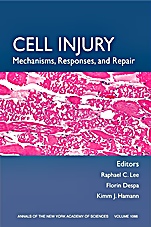
Cell Injury: Mechanisms, Responses, and Therapeutics, Volume 1066
ISBN 9781573316170
Autor: Raphael C. Lee, Kimm J. Hamann, Florin Despa
Wydawca: Wiley
Dostępność: 3-6 tygodni
Cena: 622,65 zł
Przed złożeniem zamówienia prosimy o kontakt mailowy celem potwierdzenia ceny.
ISBN13: |
9781573316170 |
ISBN10: |
1573316172 |
Autor: |
Raphael C. Lee, Kimm J. Hamann, Florin Despa |
Oprawa: |
Paperback |
Rok Wydania: |
2008-03-03 |
Ilość stron: |
340 |
Wymiary: |
231x147 |
Tematy: |
PN |
When cells are damaged, as often occurs during trauma and metabolic stress, a highly evolved cell healing process follows that was designed to enhance cell survival or remove irreparably injured cells. Following injury, cells attempt to seal breaks in their membranes, chaperone removal or refolding of altered proteins, repair damaged DNA, or if necessary commit to programmed cell death.
When cell injury is too extensive to permit reparative responses, acute cellular necrosis or apoptosis can result. Understanding injury at the subcellular organelle and molecular levels is essential for development of new therapeutic strategies and for optimal management of injured victims.
In this volume, various modes of injury that can occur are described, as well as the basic molecular healing responses and pathways of metabolic survival or death. The approach taken here is to look at these processes at the cellular and subcellular levels, rather than at the tissue level, and this volume will be a valuable resource to anyone interested in wound healing, biological stress responses, molecular chaperones, radiobiology, biomechanics, and biomedical engineering, as well as trauma and critical care medicine.
NOTE: Annals volumes are available for sale as individual books or as a journal. For information on institutional journal subscriptions, please visit www.blackwellpublishing.com/nyas.
ACADEMY MEMBERS: Please contact the New York Academy of Sciences directly to place your order (www.nyas.org). Members of the New York Academy of Science receive full–text access to the Annals online and discounts on print volumes. Please visit www.nyas.org/membership/main.asp for more information about becoming a member.
Spis treści:
Foreword: Thomas K. Hunt.
Introduction: Raphael C. Lee, Florin Despa, and Kimm J. Hamann.
.
Part I: Cell Structure and Integrity:.
1. Biological Water: Its Vital Role
in Macromolecular Structure and Function: Florin Despa.
2. Thermal Stability of Proteins: John C. Bischof and Xiaoming He.
3. The Physics of the Interactions Governing Folding and Association of Proteins: Weihua Guo, Joan–Emma Shea, and R Stephen Berry.
4. Molecular Crowding Effects on Protein Stability: Florin Despa, Dennis P. Orgill, and Raphael C. Lee.
Part II: Modes of Cell Injury:.
5. Mechanical Cell Injury: Kenneth A. Barbee.
6. Cell Injury by Electric Forces: Raphael C. Lee.
7. Electroconformational Denaturation of Membrane Proteins: Wei Chen.
8. Heat Injury to Cells in Perfused Systems: Dennis P. Orgill, Stacy A. Porter, and Helena O. Taylor.
9. Cryo–Injury and Biopreservation: Alex Fowler and Mehmet Toner.
10. Oxidative Reactive Species in Cell Injury: Mechanisms in Diabetes Mellitus and Therapeutic Approaches: Leonid E. Fridlyand and Louis H. Philipson.
Part III: Cellular Responses to Injury:.
11. The Mechanisms of Cell Membrane Repair: A Tutorial Guide to Key Experiments: Richard A. Steinhardt.
12. The Role of Ca2+ in Muscle Cell Damage: Hanne Gissel.
13. Protein Denaturation and Aggregation: Cellular Responses to Denatured and Aggregated Proteins: Stephen C. Meredith.
14. Thermally Induced Injury and Heat–Shock Protein Expression in Cells and Tissues: Marissa Nichole Rylander, Yusheng Feng, Jon Bass, and Kenneth R. Diller.
15. Cellular Response to DNA Damage: Johnny Kao, Barry S. Rosenstein, Sheila Peters, Michael T. Milano, and Stephen J. Kron.
16. Autophagy: Ameeta Kelekar.
17. Magnetic Resonance Imaging of Changes in Muscle Tissues after Membrane Trauma: Hanne Gissel, Florin Despa, John Collins, Devkumar Mustafi, Katherine Rojahn, Greg Karczmar, and Raphael Lee.
Part IV: Therapeutics for Cell Injury:.
18. Na+–K+ Pump Stimulation Improves Contractility in Damaged Muscle Fibers: Torben Clausen.
19. Multimodal Strategies for Resuscitating Injured
Cells: Jayant Agarwal, Alexandra Walsh, and Raphael C. Lee.
20. Membrane Sealing by Polymers: Stacey A. Maskarinec, Guohui Wu, and Ka Yee C. Lee.
21. A Surfactant Copolymer Facilitates Functional Recovery of Heat–Denatured Lysozyme: Alexandra M. Walsh, Devkumar Mustafi, Marvin W. Makinen, and Raphael C. Lee.
Index of Contributors
Okładka tylna:
When cells are damaged, as often occurs during trauma and metabolic stress, a highly evolved cell healing process follows that was designed to enhance cell survival or remove irreparably injured cells. Following injury, cells attempt to seal breaks in their membranes, chaperone removal or refolding of altered proteins, repair damaged DNA, or if necessary commit to programmed cell death.
When cell injury is too extensive to permit reparative responses, acute cellular necrosis or apoptosis can result. Understanding injury at the subcellular organelle and molecular levels is essential for development of new therapeutic strategies and for optimal management of injured victims.
In this volume, various modes of injury that can occur are described, as well as the basic molecular healing responses and pathways of metabolic survival or death. The approach taken here is to look at these processes at the cellular and subcellular levels, rather than at the tissue level, and this volume will be a valuable resource to anyone interested in wound healing, biological stress responses, molecular chaperones, radiobiology, biomechanics, and biomedical engineering, as well as trauma and critical care medicine.
NOTE: Annals volumes are available for sale as individual books or as a journal. For information on institutional journal subscriptions, please visit www.blackwellpublishing.com/nyas.
ACADEMY MEMBERS: Please contact the New York Academy of Sciences directly to place your order (www.nyas.org). Members of the New York Academy of Science receive full–text acces
s to the Annals online and discounts on print volumes. Please visit www.nyas.org/membership/main.asp for more information about becoming a member.
Koszyk
Książek w koszyku: 0 szt.
Wartość zakupów: 0,00 zł
Informacje


Kontakt
Gambit
Centrum Oprogramowania
i Szkoleń Sp. z o.o.
Al. Pokoju 29b/22-24
31-564 Kraków
Siedziba Księgarni
ul. Kordylewskiego 1
31-542 Kraków
+48 12 410 5991
+48 12 410 5987
+48 12 410 5989
Subskrypcje
Administratorem danych osobowych jest firma Gambit COiS Sp. z o.o. Na podany adres będzie wysyłany wyłącznie biuletyn informacyjny.
Autoryzacja płatności

Informacje na temat autoryzacji płatności poprzez PayU.

© Copyright 2012: GAMBIT COiS Sp. z o.o. Wszelkie prawa zastrzeżone.
Projekt i wykonanie: Alchemia Studio Reklamy