


Wydawcy
Katalog tematyczny
- Archeologia (109)
- Ekonomia, finanse, business (13704)
- Filozofia (1445)
- Historia (3040)
- Języki i językoznawstwo (2356)
- Lifestyle, hobby i rozrywka (475)
- Medycyna (9704)
- Nauki humanistyczne (4)
- Nauki o Ziemi i środowisku (2638)
- Nauki ścisłe (20412)
- Nauki społeczne (8486)
- Edukacja (229)
- Kryminologia, opieka spełeczna (284)
- Obronność (10)
- Polityka (1389)
- Psychologia (777)
- Socjologia (410)
- Społeczeństwo i kultura (187)
- Nauki techniczne (13450)
- Prawo (1696)
- Publikacje informacyjne i interdyscyplinarne (1288)
- Religia i wierzenia (917)
- Technika komputerowa (4067)
- Zdrowie, relacje międzyludzkie i rozwój osobisty (657)





Informacje szczegółowe o książce
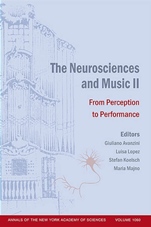
The Neurosciences and Music II: From Perception to Performance, Volume 1060
ISBN 9781573316118
Autor: Giuliano Avanzini, Luisa Lopez, Stefan Koelsch, Maria Majno
Wydawca: Wiley
Dostępność: 3-6 tygodni
Cena: 631,05 zł
Przed złożeniem zamówienia prosimy o kontakt mailowy celem potwierdzenia ceny.
ISBN13: |
9781573316118 |
ISBN10: |
1573316113 |
Autor: |
Giuliano Avanzini, Luisa Lopez, Stefan Koelsch, Maria Majno |
Oprawa: |
Paperback |
Rok Wydania: |
2006-11-23 |
Ilość stron: |
504 |
Wymiary: |
227x152 |
Tematy: |
JC |
The intricate relationships between music and human neurological makeup, as well as the ways in which music can influence neurological development, are explored in this volume, which is a continuation and expansion of two symposia that have preceded it, both of which have been published as Annals volumes.
Researchers in the fields of neurophysiology, neuroimaging, mind–brain studies, and psychology present findings on the evaluation of neurological disorders and music, the relationship of music to development and language, and musical perception. The use and impact of music therapy is discussed in a roundtable format.
Do animals have music? How is music similar to language? How is music represented mentally? This volume addresses these questions and others surrounding this exciting and growing field—a field that generates interest far beyond the boundaries of the neuroscientific world, encompassing education, performance, and the appreciation of music by all peoples.
The book also offers articles written from the perspective of the fields of ethology and evolution, as well as papers on vocal learning, auditory perception, performance, and emotional response to music.
NOTE: Annals volumes are available for sale as individual books or as a journal. For information on institutional journal subscriptions, please visit www.blackwellpublishing.com/nyas.
ACADEMY MEMBERS: Please contact the New York Academy of Sciences directly to place your order (www.nyas.org). Members of the New York Academy of Science receive full–text access to the Annals online and discounts on print volumes. Please visit www.nyas.org/membership/main.asp for more information about becoming a member.
Spis treści:
NOTE: The table of contents presented here is preliminary and based on the original program of the conference from which the volume derives or on information provided by the editors. It is likely to be
modified before appearing in its final form in the published volume.
Preface: Giuliano Avanzini, Luisa Lopez, Stefan Koelsch, and Maria Majno.
Part I: Ethology/Evolution: Do Animals Have Music or Something Else?:.
1. Introduction: Krumhansl and Cross.
2. Probing the Evolutionary Origins of Music Perception: Josh McDermott.
3. Between Perception and Performance: Vocal Learning as Key Constraint on the Path to Music and Language: Bjorn Merker.
4. The Biology and Evolution of Music: a Comparative Perspective: W. Tecumseh Fitch.
Part II: Music and Language:.
5. Introduction: Besson and Friederici.
6. Empirical Comparisons of Music and Language: Prosody and Syntax: Aniruddh D. Patel.
7. Music and Linguistic Processing in Singing: Daniele Schön.
Part III: Mental Representations:.
8. Introduction: Avanzini and Schröger.
9. Implicit Investigations of Tonal Knowledge in Non–Musician Listeners: Barbara Tillmann.
10. Cortical Networks That Track Musical Structure: Petr Janata.
11. Anticipatory Musical Imagery and Its Neural Basis: Josef P. Rauschecker.
12. The Neural Substrates of Semantic and Episodic Memory of Music: Hervé Platel.
13. Representation of Pitch in Auditory Cortex: Lesion Effects and Neural Coding: Mark J. Tramo.
14. Aspects of Multisensory Perception: The Integration of Visual and Auditory Information Processing in Musical Experiences: Donald A. Hodges.
Part IV: Developmental Aspects and Impact of Music on Education:.
15. Introduction: Lopez and Trehub.
16. Music Listening, Music Lessons and Cognitive Abilities: Glenn Schellenberg.
17. The Neural Basis of Rhythm and Melody Processing in Young Children, Pre and Post Music Training: Katie Overy.
18. Brain and Cognitive Effects of Learning a Musical Instrument: Gottfried Schlaug.
19. Influences of Musical Training on Neurophysiological Correlates of Music and Speech Perception in Childr
en: Sebastian Jentschke.
20. Temporal Entrainment of Cognitive Functions in Music: Neural Dynamics and Brain Plasticity: Michael H. Thaut.
21. Quantifying Tone Deafness in the General Population: John A. Sloboda and Karen Wise.
Round Table: Music Therapy: the Long Way to Evidence–Based Methods: Pending Issues and Perspectives:.
22. Introduction: Lopez.
23. Scientific Perspectives of Music Therapy: Thomas Hillecke.
24. Outcome Research in Music Therapy: A Step on the Long Road to an Evidence–Based Treatment: Anne K. Nickel.
25. Music Therapy Research in Ibero–American Countries: An Overview Focus on Assessment and Clinical Evaluation: Patricia L. Sabbatella.
26. The Future of Music in Therapy and Medicine: Michael Thaut.
Part V: Neurological Disorders and Music:.
27. Introduction: Griffiths and Altenmueller.
28. Central Auditory Processing in Tune Deaf Subjects: Dennis Drayna.
29. Neuropsychological Assessment of Musical Difficulties: Lola L. Cuddy.
30. Musical Behavior in a Neurogenetic Developmental Disorder: Evidence from Williams Syndrome: Daniel J. Levitin.
31. Perceptual Asymmetries and Cortical Changes after Sensory Motor Retuning in Musicians Suffering from Focal Hand Dystonia: Victor Candia.
Part VI: Music Performance:.
32. Introduction: Minciacchi and McAdams.
33. Sensory–Motor Integration and Disintegration in Music Performance: Eckart Altenmueller.
34. Memory and Movement Preparation in Music Performance: Caroline Palmer.
35. Neural Control of Rhythmic Sequences: Fredrick Ullén.
36. Tuning the Musical Brain: Lauren Stewart.
37. Structural, Functional and Perceptual Differences in the Auditory Cortex of Musicians and Non–Musicians Predict Musical Instrument Preference: Peter Schneider.
Part VII: Emotion in Music:.
38. Introduction: Peretz and Sloboda.
39. Investigating Emotion with Music: and fMRI Study: Stefan Koelsch.
40. Neuropsychological Studies on Music Memory and Musical Preference: Séverine Samson.
41. The Time Course of Emotional Response to Music: Emmanuel Bigand
Okładka tylna:
The intricate relationships between music and human neurological makeup, as well as the ways in which music can influence neurological development, are explored in this volume, which is a continuation and expansion of two symposia that have preceded it, both of which have been published as Annals volumes.
Researchers in the fields of neurophysiology, neuroimaging, mind–brain studies, and psychology present findings on the evaluation of neurological disorders and music, the relationship of music to development and language, and musical perception. The use and impact of music therapy is discussed in a roundtable format.
Do animals have music? How is music similar to language? How is music represented mentally? This volume addresses these questions and others surrounding this exciting and growing field—a field that generates interest far beyond the boundaries of the neuroscientific world, encompassing education, performance, and the appreciation of music by all peoples.
The book also offers articles written from the perspective of the fields of ethology and evolution, as well as papers on vocal learning, auditory perception, performance, and emotional response to music.
NOTE: Annals volumes are available for sale as individual books or as a journal. For information on institutional journal subscriptions, please visit www.blackwellpublishing.com/nyas.
ACADEMY MEMBERS: Please contact the New York Academy of Sciences directly to place your order (www.nyas.org). Members of the New York Academy of Science receive full–text access to the Annals online and discounts on print volumes. Please visit www.nyas.org/membership/main.asp for more information about becoming a member.
Koszyk
Książek w koszyku: 0 szt.
Wartość zakupów: 0,00 zł
Informacje


Kontakt
Gambit
Centrum Oprogramowania
i Szkoleń Sp. z o.o.
Al. Pokoju 29b/22-24
31-564 Kraków
Siedziba Księgarni
ul. Kordylewskiego 1
31-542 Kraków
+48 12 410 5991
+48 12 410 5987
+48 12 410 5989
Subskrypcje
Administratorem danych osobowych jest firma Gambit COiS Sp. z o.o. Na podany adres będzie wysyłany wyłącznie biuletyn informacyjny.
Autoryzacja płatności

Informacje na temat autoryzacji płatności poprzez PayU.

© Copyright 2012: GAMBIT COiS Sp. z o.o. Wszelkie prawa zastrzeżone.
Projekt i wykonanie: Alchemia Studio Reklamy