


Wydawcy
Katalog tematyczny
- Archeologia (109)
- Ekonomia, finanse, business (13704)
- Filozofia (1445)
- Historia (3040)
- Języki i językoznawstwo (2356)
- Lifestyle, hobby i rozrywka (475)
- Medycyna (9704)
- Nauki humanistyczne (4)
- Nauki o Ziemi i środowisku (2638)
- Nauki ścisłe (20412)
- Astronomia (294)
- Biologia (5119)
- Biochemia (575)
- Biologia człowieka (14)
- Biologia komórkowa (377)
- Biologia molekularna (398)
- Biologia rozwoju (130)
- Biologia, ogólnie (1277)
- Botanika (280)
- Hydrobiologia (92)
- Mikrobiologia (363)
- Mykologia (22)
- Zoologia (303)
- Chemia (6540)
- Fizyka (3309)
- Matematyka (4574)
- Nauki ścisłe, ogólnie (503)
- Nauki społeczne (8486)
- Nauki techniczne (13450)
- Prawo (1696)
- Publikacje informacyjne i interdyscyplinarne (1288)
- Religia i wierzenia (917)
- Technika komputerowa (4067)
- Zdrowie, relacje międzyludzkie i rozwój osobisty (657)





Informacje szczegółowe o książce
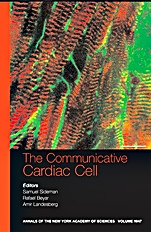
The Communicative Cardiac Cell
ISBN 9781573315487
Autor: Samuel Sideman, Rafael Beyar, Amir Landesberg
Wydawca: Wiley
Dostępność: 3-6 tygodni
Cena: 672,00 zł
Przed złożeniem zamówienia prosimy o kontakt mailowy celem potwierdzenia ceny.
ISBN13: |
9781573315487 |
ISBN10: |
1573315486 |
Autor: |
Samuel Sideman, Rafael Beyar, Amir Landesberg |
Oprawa: |
Paperback |
Rok Wydania: |
2006-07-26 |
Ilość stron: |
452 |
Wymiary: |
228x160 |
Tematy: |
PS |
The basic phenomena of intra– and intercellular communication and the transport signals within and between the cells controlling cardiac function are described and discussed in this volume. The amazing synchronization of millions of cells and billions of nanoscale molecular motors, ion gates, and ion pumps assure normal cardiac function; whereas disharmony and local transport and signal disruptions are the forecasters, and eventual causes, of pathologic conditions and heart failure.
Although this volume concentrates on basic phenomena, strong emphasis is given to the related clinical and pharmaceutical manifestations, and chapters have been contributed by molecular biologists, pharmaceutical experts, and cardiac scientists.
This volume will promote better understanding and, consequently, better clinical and pharmaceutical handling of the various aspects of cardiac pathophysiologies associated with electrical, mechanical, and metabolic and circulatory disorders in the cardiovascular system.
NOTE: Annals volumes are available for sale as individual books or as a journal. For information on institutional journal subscriptions, please visit www.blackwellpublishing.com/nyas.
ACADEMY MEMBERS: Please contact the New York Academy of Sciences directly to place your order (www.nyas.org). Members of the New York Academy of Science receive full–text access to the Annals online and discounts on print volumes. Please visit www.nyas.org/membership/main.asp for more information about becoming a member.
Spis treści:
Preface: The Cellular Communications Maze: Samuel Sideman.
.
Part I: Prologue:.
1. From Organ to Molecules: Steps and Consequences: Rafael Beyar.
.
Part II: Cardiac Cell Development:.
2. Evolution of the Heart from Bacteria to Man: Nanette H. Bishopric.
3. The Miscommunicative Cardiac Cell: When Good Proteins Go Bad: Aldrin V. Gomes, Gayathri Venkatram
an, and James D. Potter.
4. Multiple Stem Cell Populations Contribute to the Formation of the Myocardium: Leonard M. Eisenberg, Ricardo Moreno, and Roger R. Markwald.
5. Differentiation Pathways in Human Embryonic Stem Cell–Derived Cardiomyocytes: Sophie Lev, Izhak Kehat, and Lior Gepstein.
6. Functional Properties of Human Embryonic Stem Cell–Derived Cardiomyocytes: Katya Dolnikov, Mark Shilkrut, Naama Zeevi–Levin, Asaf Danon, Sharon Gerecht–Nir, Joseph Itskovitz–Eldor, and Ofer Binah.
.
Part III: Calcium Signaling:.
7. The Assembly of Calcium Release Units in Cardiac Muscle: Clara Franzini–Armstrong, Feliciano Protasi, and Pierre Tijskens.
8. Calcium Signaling in Cardiac Ventricular Myocytes: Donald M. Bers and Tao Guo.
9. Calcium Biology of the Transverse Tubules in Heart: Long–Sheng Song, Silvia Guatimosim, Leticia Gómez–Viquez, Eric A. Sobie, andrew Ziman, Hali Hartmann, and W. J. Lederer.
10. Multimodality of Ca2+ Signaling in Rat Atrial Myocytes: Martin Morad, Ashkan Javaheri, Tim Risius, and Steve Belmonte.
11. Effects of Na+–Ca2+ Exchange Expression on Excitation–Contraction Coupling in Genetically Modified Mice: Joshua I. Goldhaber, Scott A. Henderson, Hannes Reuter, Christian Pott, and Kenneth D. Philipson.
12. Mitochondrial Calcium Signaling and Energy Metabolism: My–Hanh T. Nguyen and M. Saleet Jafri.
13. Rhythmic Ca2+ Oscillations Drive Sinoatrial Nodal Cell Pacemaker Function to Make the Heart Tick: Tatiana M. Vinogradova, Victor A. Maltsev, Konstantin Y. Bogdanov, Alexey E. Lyashkov, and Edward G. Lakatta.
.
Part IV: Intracellular Signaling:.
14. Modification of Cellular Communication by Gene Transfer: J. Kevin Donahue, Alexander Bauer, Kan Kikuchi, and Tetsuo Sasano.
15. Caveolae and Lipid Rafts: G Protein–Coupled Receptor Signaling Microdomains in Cardiac Myocytes: Paul A. Insel, Brian P. Head, Rennolds S. Ostr
om, Hemal H. Patel, James S. Swaney, Chih–Min Tang, and David M. Roth.
16. Nitric Oxide and the Heart: Update on New Paradigms: C. Belge, Paul B. Massion, M. Pelat, and J. L. Balligand.
17. Cardiac Neurobiology of Nitric Oxide Synthases: Edward J. Danson and David J. Paterson.
18. The Murine Cardiac 26S Proteasome: An Organelle Awaiting Exploration: Aldrin V. Gomes, Chenggong Zong, Ricky D. Edmondson, Beniam T. Berhane, Guang–Wu Wang, Steven Le, Glen Young, Jun Zhang, Thomas M. Vondriska, Julian P. Whitelegge, Richard C. Jones, Irving G. Joshua, Sheeno Thyparambil, Dawn Pantaleon, Joe Qiao, Joseph Loo, and Peipei Ping.
.
Part V: Energetics and Transport:.
19. Metabolic Energetics and Genetics in the Heart: Heinrich Taegtmeyer, Christopher R. Wilson, Peter Razeghi, and Saumya Sharma.
20. The Sarcomeric Control of Energy Conversion: Carmit Levy, Henk E.D.J. Ter Keurs, Yael Yaniv, and Amir Landesberg.
21. Structure–Function Relation of the Myosin Motor in Striated Muscle: Massimo Reconditi, Marco Linari, Leonardo Lucii, Alex Stewart, Yin–Biao Sun, Theyencheri Narayanan, Tom Irving, Gabriella Piazzesi, Malcolm Irving, and Vincenzo Lombardi.
22. Mitochondria and Ischemia/Reperfusion Injury: Henry M. Honda, Paavo Korge, and James N. Weiss.
23. Regulation of Cardiac Energetics: Role of Redox State and Cellular Compartmentation during Ischemia: Marco E. Cabrera, Lufang Zhou, William C. Stanley, and Gerald M. Saidel.
24. Spatial Regulation of Intracellular pH in the Ventricular Myocyte: Pawel Swietach and Richard D. Vaughan–Jones.
.
Part VI: Electromechanical Interactions and Modeling:.
25. Cardiac Systems Biology: Andrew D. McCulloch and Giovanni Paternostro.
26. Measuring and Mapping Cardiac Fiber and Laminar Architecture Using Diffusion Tensor MR Imaging: Patrick Helm, Mirza Faisal Beg, Michael I. Miller, and Raimond L. Winslow.
27. Electrotonic Cell–Cell Interactions in Car
diac Tissue: Effects on Action Potential Propagation and Repolarization: Yoram Rudy.
28. Modulation of Transmural Repolarization: Charles Antzelevitch.
29. Species– and Preparation–Dependence of Stretch Effects on Sino–Atrial Node Pacemaking: Patricia J. Cooper and Peter Kohl.
30. Dependence of Electrical Coupling on Mechanical Coupling in Cardiac Myocytes: Insights Gained from Cardiomyopathies Caused by Defects in Cell–Cell Connections: Jeffrey E. Saffitz.
31. Spatial Nonuniformity of Contraction Causes Arrhythmogenic Ca2+ Waves in Rat Cardiac Muscle: Henk E.D.J. Ter Keurs, Yuji Wakayama, Masahito Miura, Bruno D. Stuyvers, Penelope A. Boyden, and Amir Landesberg.
.
Part VII: Novel Therapeutics for the Failing and Arrhythmogenic Cardiac Cell:.
32. Ryanodine Receptor–Targeted Anti–Arrhythmic Therapy: Xander H.T. Wehrens, Stephan E. Lehnart, and Andrew R. Marks.
33. Stem Cells for Cardiomyocyte Regeneration: State of the Art: Cesare Peschle and Gianluigi Condorelli.
34. Extracellular Stimulation in Tissue Engineering: Dror Seliktar.
.
Part VIII: Epilogue: A View into the Future:.
35. Multiscale Modeling of Cardiac Cellular Energetics: James B. Bassingthwaighte, Howard J. Chizeck, Les E. Atlas, and Hong Qian
Nota biograficzna:
Samuel Sideman, Rafael Beyar, Amir Landesberg
All of the Israel Institute of Technology, Haifa, Israel
Okładka tylna:
The basic phenomena of intra– and intercellular communication and the transport signals within and between the cells controlling cardiac function are described and discussed in this volume. The amazing synchronization of millions of cells and billions of nanoscale molecular motors, ion gates, and ion pumps assure normal cardiac function; whereas disharmony and local transport and signal disruptions are the forecasters, and eventual causes, of pathologic conditions and heart failure.
Although th
Koszyk
Książek w koszyku: 0 szt.
Wartość zakupów: 0,00 zł
Informacje


Kontakt
Gambit
Centrum Oprogramowania
i Szkoleń Sp. z o.o.
Al. Pokoju 29b/22-24
31-564 Kraków
Siedziba Księgarni
ul. Kordylewskiego 1
31-542 Kraków
+48 12 410 5991
+48 12 410 5987
+48 12 410 5989
Subskrypcje
Administratorem danych osobowych jest firma Gambit COiS Sp. z o.o. Na podany adres będzie wysyłany wyłącznie biuletyn informacyjny.
Autoryzacja płatności

Informacje na temat autoryzacji płatności poprzez PayU.

© Copyright 2012: GAMBIT COiS Sp. z o.o. Wszelkie prawa zastrzeżone.
Projekt i wykonanie: Alchemia Studio Reklamy