


Wydawcy
Katalog tematyczny
- Archeologia (109)
- Ekonomia, finanse, business (13704)
- Filozofia (1445)
- Historia (3040)
- Języki i językoznawstwo (2356)
- Lifestyle, hobby i rozrywka (475)
- Medycyna (9704)
- Nauki humanistyczne (4)
- Nauki o Ziemi i środowisku (2638)
- Nauki ścisłe (20412)
- Nauki społeczne (8486)
- Edukacja (229)
- Kryminologia, opieka spełeczna (284)
- Obronność (10)
- Polityka (1389)
- Psychologia (777)
- Socjologia (410)
- Społeczeństwo i kultura (187)
- Nauki techniczne (13450)
- Prawo (1696)
- Publikacje informacyjne i interdyscyplinarne (1288)
- Religia i wierzenia (917)
- Technika komputerowa (4067)
- Zdrowie, relacje międzyludzkie i rozwój osobisty (657)





Informacje szczegółowe o książce
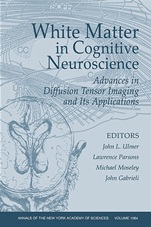
White Matter in Cognitive Neuroscience: Advances in Diffusion Tensor Imaging and Its Applications, Volume 1064
ISBN 9781573315463
Autor: John L. Ulmer, Lawrence Parsons, Michael Moseley, John Gabrieli
Wydawca: Wiley
Dostępność: 3-6 tygodni
Cena: 648,90 zł
Przed złożeniem zamówienia prosimy o kontakt mailowy celem potwierdzenia ceny.
ISBN13: |
9781573315463 |
ISBN10: |
157331546X |
Autor: |
John L. Ulmer, Lawrence Parsons, Michael Moseley, John Gabrieli |
Oprawa: |
Paperback |
Rok Wydania: |
2006-07-26 |
Ilość stron: |
276 |
Wymiary: |
229x152 |
Tematy: |
JC |
Researchers from diverse research communities in cognitive neuroscience, clinical neuroscience, MR–diffusion tensor imaging, and algorithm development have contributed articles that explore the potential for diffusion tensor imaging (DTI) to measure and model white matter tracts in the human brain.
The most advanced uses of diffusion tensor–weighted magnetic resonance imaging for modeling white matter neural connectivity and tractography are assessed; in addition, the authors discuss (1) methods for integrating DTI of white matter into cognitive and clinical neuroscience data and models, (2) how to promote new advances in DTI techniques for applications relevant to cognitive and clinical neuroscience, and (3) how to implement new advances in DTI in readily accessible software that can be distributed to the cognitive and clinical neuroscience communities.
These reports represent the interdisciplinary approach taken at the workshop to the refinement of emerging MR DTI techniques specifically for the purposes of analyzing white matter networks noninvasively. It is hoped that this volume will encourage collaborations that will enhance the capacity for greater applications, developments, and impact of DTI, thus extending the reach of the workshop that preceded it.
NOTE: Annals volumes are available for sale as individual books or as a journal. For information on institutional journal subscriptions, please visit www.blackwellpublishing.com/nyas.
ACADEMY MEMBERS: Please contact the New York Academy of Sciences directly to place your order (www.nyas.org). Members of the New York Academy of Science receive full–text access to the Annals online and discounts on print volumes. Please visit www.nyas.org/membership/main.asp for more information about becoming a member.
Spis treści:
Preface: Leighton P. Mark and John L. Ulmer.
1. Combining Functional and Diffusion Tensor MRI: Dae–
Shik Kim and Mina Kim.
2. Investigating the Functional Role of Callosal Connections with Dynamic Causal Models: Klaas E. Stephan, Will D. Penny, John C. Marshall, Gereon R. Fink, and Karl J. Friston.
3. Age–Related Changes in Prefrontal White Matter Measured by Diffusion Tensor Imaging: D H Salat, D S Tuch, N D Hevelone, B Fischl, S Corkin, H D Rosas, and A M Dale.
4. Diffusion Tensor Imaging of the Spinal Cord: Stephan E. Maier and Hatsuho Mamata.
5. Amyotrophic Lateral Sclerosis and Primary Lateral Sclerosis: The Role of Diffusion Tensor Imaging and Other Advanced MR–Based Techniques as Objective Upper Motor Neuron Markers: Sumei Wang and Elias R. Melhem.
6. White Matter Tractography by Means of Turboprop Diffusion Tensor Imaging: Konstantinos Arfanakis, Minzhi Gui, and Mariana Lazar.
7. Diffusion Tensor Tractography of the Motor White Matter Tracts in Man: Current Controversies and Future Directions: Andrei I. Holodny, Richard Watts, Valeri N. Korneinko, Igor N. Pronin, Mikhail E. Zhukovskiy, Devang M. Gor, and Aziz Ulug.
8. Occipital–Callosal Pathways in Children: Validation and Atlas Development: Robert F. Dougherty, Michal Ben–Shachar, Gayle Deutsch, Polina Potanina, Roland Bammer, and Brian A. Wandell.
9. Multiple–Fiber Reconstruction Algorithms for Diffusion MRI: Daniel C. Alexander.
10. The Application of DTI to Investigate White Matter Abnormalities in Schizophrenia: Marek Kubicki, Carl–Fredrik Westin, Robert W. Mccarley, and Martha E. Shenton.
11. Brain/Language Relationships Identified with Diffusion and Perfusion MRI: Clinical Applications in Neurology and Neurosurgery: Argye E. Hillis.
12. White Matter and Behavioral Neurology: Christopher M. Filley.
13. Adolescents with Disruptive Behavior Disorder Investigated Using an Optimized MR Diffusion Tensor Imaging Protocol: Tie–Qiang Li, Vincent P. Mathews, Yang Wang, David Dunn, and William Kronenberger.
14. Principal Diffusio
n Direction in Peritumoral Fiber Tracts: Color Map Patterns and Directional Statistics: Aaron S. Field, Yu–Chien Wu, and Andrew L. Alexander.
15. Applications of Diffusion Tensor MR Imaging in Multiple Sclerosis: Yulin Ge, Meng Law, and Robert I. Grossman.
16. Quantitative Analysis of Diffusion Tensor Imaging Data in Serial Assessment of Krabbe Disease: James M. Provenzale, Maria Escolar, and Joanne Kurtzberg Index of Contributors
Okładka tylna:
Researchers from diverse research communities in cognitive neuroscience, clinical neuroscience, MR–diffusion tensor imaging, and algorithm development have contributed articles that explore the potential for diffusion tensor imaging (DTI) to measure and model white matter tracts in the human brain.
The most advanced uses of diffusion tensor–weighted magnetic resonance imaging for modeling white matter neural connectivity and tractography are assessed; in addition, the authors discuss (1) methods for integrating DTI of white matter into cognitive and clinical neuroscience data and models, (2) how to promote new advances in DTI techniques for applications relevant to cognitive and clinical neuroscience, and (3) how to implement new advances in DTI in readily accessible software that can be distributed to the cognitive and clinical neuroscience communities.
These reports represent the interdisciplinary approach taken at the workshop to the refinement of emerging MR DTI techniques specifically for the purposes of analyzing white matter networks noninvasively. It is hoped that this volume will encourage collaborations that will enhance the capacity for greater applications, developments, and impact of DTI, thus extending the reach of the workshop that preceded it.
NOTE: Annals volumes are available for sale as individual books or as a journal. For information on institutional journal subscriptions, please visit www.blackwellpublishing.com/nyas.
ACA
DEMY MEMBERS: Please contact the New York Academy of Sciences directly to place your order (www.nyas.org). Members of the New York Academy of Science receive full–text access to the Annals online and discounts on print volumes. Please visit www.nyas.org/membership/main.asp for more information about becoming a member.
Koszyk
Książek w koszyku: 0 szt.
Wartość zakupów: 0,00 zł
Informacje


Kontakt
Gambit
Centrum Oprogramowania
i Szkoleń Sp. z o.o.
Al. Pokoju 29b/22-24
31-564 Kraków
Siedziba Księgarni
ul. Kordylewskiego 1
31-542 Kraków
+48 12 410 5991
+48 12 410 5987
+48 12 410 5989
Subskrypcje
Administratorem danych osobowych jest firma Gambit COiS Sp. z o.o. Na podany adres będzie wysyłany wyłącznie biuletyn informacyjny.
Autoryzacja płatności

Informacje na temat autoryzacji płatności poprzez PayU.

© Copyright 2012: GAMBIT COiS Sp. z o.o. Wszelkie prawa zastrzeżone.
Projekt i wykonanie: Alchemia Studio Reklamy