


Wydawcy
Katalog tematyczny
- Archeologia (109)
- Ekonomia, finanse, business (13704)
- Filozofia (1445)
- Historia (3040)
- Języki i językoznawstwo (2356)
- Lifestyle, hobby i rozrywka (475)
- Medycyna (9704)
- Nauki humanistyczne (4)
- Nauki o Ziemi i środowisku (2638)
- Nauki ścisłe (20412)
- Nauki społeczne (8486)
- Nauki techniczne (13450)
- Prawo (1696)
- Publikacje informacyjne i interdyscyplinarne (1288)
- Religia i wierzenia (917)
- Technika komputerowa (4067)
- Zdrowie, relacje międzyludzkie i rozwój osobisty (657)





Informacje szczegółowe o książce
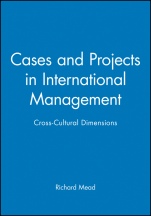
Cases and Projects in International Management: Cross–Cultural Dimensions
ISBN 9781557868497
Autor: Richard Mead
Wydawca: Wiley
Dostępność: 3-6 tygodni
Cena: 205,80 zł
Przed złożeniem zamówienia prosimy o kontakt mailowy celem potwierdzenia ceny.
ISBN13: |
9781557868497 |
ISBN10: |
1557868492 |
Autor: |
Richard Mead |
Oprawa: |
Paperback |
Rok Wydania: |
2000-05-18 |
Ilość stron: |
168 |
Wymiary: |
244x170 |
Tematy: |
KM |
Culture may not be the only factor to affect organizational structure. Size, strategic location, the industrial climate, the complexity of the task in hand and the kind of technology used all exert an influence and profoundly affect the relations between members of an organization. Managers therefore have to contend with weighing culture against other variables when trying to implement organizational structure.If culture is but one among a range of factors, then why are cross–cultural management skills so important? Mead crisply answers this question at the outset and his views may be summarized as follows. Today′s business world is global and therefore firms are forced to establish branches and subsidiaries outside their national boundaries. Managers have to deal with people from other cultures, and it is imperative that they develop the ability to interact with individuals who have different cultural priorities.
Effective cross–cultural management increasingly means working with people from different cultures and learning to tolerate differences when devising shared priorities.In today′s economic climate, market forces appear to have an increasingly anthropological dimension. The ethnocentric manager, for example, who is unable or unwilling to deal with members of other cultures has fewer career opportunities. To accommodate these changes management schools are giving increasing priority to teaching cross–cultural management skills. International Management combines theory and practice, and includes a variety of exercises to enable students to apply general concepts to specific situations.Mead acknowledges the difficulty in providing a single definition of culture, but does not duck the issue. Instead he provides a succinct account of the sociological and anthropological positions before moving on to the management literature.
This publication deserves a warm welcome because it acknowledges the contribution made by anthropolo
gists to the understanding of culture. As Richard Mead demonstrates, there is clearly a great deal of scope for making more use of anthropological insights in clarifying the role of culture in international management. The book is aimed at students and has been written with admirable clarity, and should be of value to anyone involved in teaching applied social sciences.
Spis treści:
Introduction.
Case 1. Introduction to Culture.
Case 2. The Professor′s Shoes.
Case 3. The New Delhi Tea Company.
Case 4. How Much Structure?.
Case 5. The Pascale Automobile Company.
Case 6. The European Union University Support Agency.
Case 7. Asia South/Research.
Case 8. Honesty and Ethics.
Case 9. The Swiss–Thai Joint Venture.
Case 10. Consulair.
Case 11. An American Family Company.
Case 12. Voxykoll.
Case 13. The Korean Hotel.
Case 14. The Australian Expatriate.
Case 15. Job Rotation in Japan.
Case 16. The Anglo–Zambian Research and Development Project.
Case 17. Applying American Systems in Thailand.
Case 18. Repatriation.
Case 19. The Filipino who was Loyal to His Friend.
Case 20. Afolayan Supplies.
Case 21. When to Keep Quiet.
Project 1. Comparing Cultures.
Project 2. Designing a Management Study Skills Course.
Project 3. Making Real Change.
Project 4. Spending Money.
Project 5. Transplanting a Management System.
Project 6. The Ruritanian Electronics Negotiation.
Project 7. Workplace Communication: Needs Analysis.
Appendix: Hofstede′s Model.
Bibliography.
Index.
Nota biograficzna:
Richard Mead is Director of Asian Business Studies at the School of Oriental and African Studies, University of London. He has over 25 years′ experience of teaching, researching and consulting in communications and management, including periods in the USA, Malaysia, Thailand, Libya, Saudi Arabia, Iran, Brazil and Sierra Leone.
Ok
ładka tylna:
Culture may not be the only factor to affect organizational structure. Size, strategic location, the industrial climate, the complexity of the task in hand and the kind of technology used all exert an influence and profoundly affect the relations between members of an organization. Managers therefore have to contend with weighing culture against other variables when trying to implement organizational structure.If culture is but one among a range of factors, then why are cross–cultural management skills so important? Mead crisply answers this question at the outset and his views may be summarized as follows. Today′s business world is global and therefore firms are forced to establish branches and subsidiaries outside their national boundaries. Managers have to deal with people from other cultures, and it is imperative that they develop the ability to interact with individuals who have different cultural priorities.
Effective cross–cultural management increasingly means working with people from different cultures and learning to tolerate differences when devising shared priorities.In today′s economic climate, market forces appear to have an increasingly anthropological dimension. The ethnocentric manager, for example, who is unable or unwilling to deal with members of other cultures has fewer career opportunities. To accommodate these changes management schools are giving increasing priority to teaching cross–cultural management skills. International Management combines theory and practice, and includes a variety of exercises to enable students to apply general concepts to specific situations.Mead acknowledges the difficulty in providing a single definition of culture, but does not duck the issue. Instead he provides a succinct account of the sociological and anthropological positions before moving on to the management literature.
This publication deserves a warm welcome because it acknowledges the contri
bution made by anthropologists to the understanding of culture. As Richard Mead demonstrates, there is clearly a great deal of scope for making more use of anthropological insights in clarifying the role of culture in international management. The book is aimed at students and has been written with admirable clarity, and should be of value to anyone involved in teaching applied social sciences.
Koszyk
Książek w koszyku: 0 szt.
Wartość zakupów: 0,00 zł
Informacje


Kontakt
Gambit
Centrum Oprogramowania
i Szkoleń Sp. z o.o.
Al. Pokoju 29b/22-24
31-564 Kraków
Siedziba Księgarni
ul. Kordylewskiego 1
31-542 Kraków
+48 12 410 5991
+48 12 410 5987
+48 12 410 5989
Subskrypcje
Administratorem danych osobowych jest firma Gambit COiS Sp. z o.o. Na podany adres będzie wysyłany wyłącznie biuletyn informacyjny.
Autoryzacja płatności

Informacje na temat autoryzacji płatności poprzez PayU.

© Copyright 2012: GAMBIT COiS Sp. z o.o. Wszelkie prawa zastrzeżone.
Projekt i wykonanie: Alchemia Studio Reklamy