


Wydawcy
Katalog tematyczny
- Archeologia (109)
- Ekonomia, finanse, business (13704)
- Filozofia (1445)
- Historia (3040)
- Języki i językoznawstwo (2356)
- Lifestyle, hobby i rozrywka (475)
- Medycyna (9704)
- Nauki humanistyczne (4)
- Nauki o Ziemi i środowisku (2638)
- Nauki ścisłe (20412)
- Nauki społeczne (8486)
- Edukacja (229)
- Kryminologia, opieka spełeczna (284)
- Obronność (10)
- Polityka (1389)
- Psychologia (777)
- Socjologia (410)
- Społeczeństwo i kultura (187)
- Nauki techniczne (13450)
- Prawo (1696)
- Publikacje informacyjne i interdyscyplinarne (1288)
- Religia i wierzenia (917)
- Technika komputerowa (4067)
- Zdrowie, relacje międzyludzkie i rozwój osobisty (657)





Informacje szczegółowe o książce
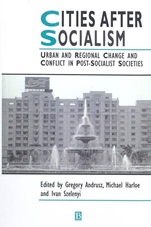
Cities After Socialism: Urban and Regional Change and Conflict in Post–Socialist Societies
ISBN 9781557861641
Autor: Gregory Andrusz, Michael Harloe, Ivan Szelenyi
Wydawca: Wiley
Dostępność: 3-6 tygodni
Cena: 387,45 zł
Przed złożeniem zamówienia prosimy o kontakt mailowy celem potwierdzenia ceny.
ISBN13: |
9781557861641 |
ISBN10: |
1557861641 |
Autor: |
Gregory Andrusz, Michael Harloe, Ivan Szelenyi |
Oprawa: |
Hardback |
Rok Wydania: |
1996-08-16 |
Ilość stron: |
356 |
Wymiary: |
239x166 |
Tematy: |
JB |
The dramatic collapse of state socialism in Eastern Europe and the Soviet Union and the emergence of new political, social and economic structures has had a profound impact on every aspect of these societies. This volume – the first significant analysis of its kind – brings together leading European and American commentators who examine the impact of this social revolution of cities and urban life. And because cities and the process of urbanization play central roles in shaping the wider processes of change now occurring, this book will be essential reading for all those who claim more than a passing interest in the transition from state socialism to capitalism and the far–reaching implications of this process.
At the heart of this book lie several crucial questions: What were socialist cities and what is succeeding them? What is the legacy of the old system for the new one? What are the dynamics of this transition? Are these remade cities similar in most respects to those in the "advanced" capitalist world? Or are they more like the peripheral capitalist cities of the Third World, or some hybrid or new form? How diverse are the processes of transition in the different national urban systems? Is urbanization best understood as a functional consequence of advanced industrial societies, rather than of capitalism or socialism? What role are the doctrines of neo–liberalism, imported from the West, playing in the remaking of urban societies and policies and what are the consequences of this policy "recipe"? These are some of the fascinating and pressing questions addressed in Cities after Socialism.
Spis treści:
List of Contributors.
Preface.
1. Cities in the Transition: Michael Harloe.
2. Structural Change and Boundary Instability: Gregory Andrusz.
3. The Socialist City: David Smith.
4. Urbanisation under Socialism: Georgy Enyedi.
5. Privatisation and its Discontents: Property Rights in Land and
Housing in the transition in Eastern Europe: Peter Marcuse.
6. Housing Privatisation in the Former Soviet Bloc to 1995: Raymond J. Struyk.
7. From the Socialist to the Capitalist City – Experiences from Germany: Hartmut Haussermann.
8. Environmental and Housing Movements in Cities after Socialism: The Cases of Budapest and Moscow: Chris Pickvance.
9. A New Movement in an Ideological Vacuum: Nationalism in Eastern Europe: Klaus von Beyme.
10. Cities Under Socialism: and After: Ivan Szelenyi.
Bibliography.
Index.
Nota biograficzna:
Gregory Andrusz,is Reader in Sociology at Middlesex University.
Michael Harloeis Pro–Vice Chancellor (Academic & Research, Professor of Sociology at Essex University.
Ivan Szelenyi is Professor of Sociology at UCLA.
Okładka tylna:
The dramatic collapse of state socialism in Eastern Europe and the Soviet Union and the emergence of new political, social and economic structures has had a profound impact on every aspect of these societies. This volume – the first significant analysis of its kind – brings together leading European and American commentators who examine the impact of this social revolution of cities and urban life. And because cities and the process of urbanization play central roles in shaping the wider processes of change now occurring, this book will be essential reading for all those who claim more than a passing interest in the transition from state socialism to capitalism and the far–reaching implications of this process.
At the heart of this book lie several crucial questions: What were socialist cities and what is succeeding them? What is the legacy of the old system for the new one? What are the dynamics of this transition? Are these remade cities similar in most respects to those in the "advanced" capitalist world? Or are they more like the peripheral capitalist cities of the Third World,
or some hybrid or new form? How diverse are the processes of transition in the different national urban systems? Is urbanization best understood as a functional consequence of advanced industrial societies, rather than of capitalism or socialism? What role are the doctrines of neo–liberalism, imported from the West, playing in the remaking of urban societies and policies and what are the consequences of this policy "recipe"? These are some of the fascinating and pressing questions addressed in Cities after Socialism.
Koszyk
Książek w koszyku: 0 szt.
Wartość zakupów: 0,00 zł
Informacje


Kontakt
Gambit
Centrum Oprogramowania
i Szkoleń Sp. z o.o.
Al. Pokoju 29b/22-24
31-564 Kraków
Siedziba Księgarni
ul. Kordylewskiego 1
31-542 Kraków
+48 12 410 5991
+48 12 410 5987
+48 12 410 5989
Subskrypcje
Administratorem danych osobowych jest firma Gambit COiS Sp. z o.o. Na podany adres będzie wysyłany wyłącznie biuletyn informacyjny.
Autoryzacja płatności

Informacje na temat autoryzacji płatności poprzez PayU.

© Copyright 2012: GAMBIT COiS Sp. z o.o. Wszelkie prawa zastrzeżone.
Projekt i wykonanie: Alchemia Studio Reklamy