


Wydawcy
Katalog tematyczny
- Archeologia (109)
- Ekonomia, finanse, business (13704)
- Filozofia (1445)
- Historia (3040)
- Języki i językoznawstwo (2356)
- Lifestyle, hobby i rozrywka (475)
- Medycyna (9704)
- Nauki humanistyczne (4)
- Nauki o Ziemi i środowisku (2638)
- Nauki ścisłe (20412)
- Nauki społeczne (8486)
- Nauki techniczne (13450)
- Budownictwo lądowe (1045)
- Budownictwo komunikacyjne (9)
- Hydraulika (33)
- Konstrukcje budowlane (95)
- Mechanika konstrukcji (182)
- Przemysł budowlany (7)
- Chemia przemysłowa (2258)
- Elektronika i telekomunikacja (3287)
- Energetyka (1122)
- Inne nauki stosowane (363)
- Inżynieria biochemiczna (507)
- Inżynieria transportu (232)
- Mechanika i materiały (3316)
- Nauka o środowisku (321)
- Rolnictwo (507)
- Technika, ogólnie (475)
- Prawo (1696)
- Publikacje informacyjne i interdyscyplinarne (1288)
- Religia i wierzenia (917)
- Technika komputerowa (4067)
- Zdrowie, relacje międzyludzkie i rozwój osobisty (657)





Informacje szczegółowe o książce
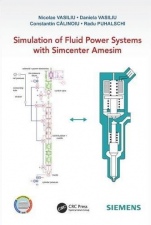
Simulation of Fluid Power Systems with Simcenter Amesim
ISBN 9781482253559
Autor: Nicolae Vasiliu
Wydawca: CRC Press
Dostępność: 3-6 tygodni
Cena: 827,40 zł
Przed złożeniem zamówienia prosimy o kontakt mailowy celem potwierdzenia ceny.
ISBN13: |
9781482253559 |
ISBN10: |
1482253550 |
Autor: |
Nicolae Vasiliu |
Oprawa: |
Hardback |
Rok Wydania: |
2018-03-07 |
Ilość stron: |
607 |
This book illustrates numerical simulation of fluid power systems by LMS Amesim Platform covering hydrostatic transmissions, electro hydraulic servo valves, hydraulic servomechanisms for aerospace engineering, speed governors for power machines, fuel injection systems, and automotive servo systems It includes hydrostatic transmissions, automotive fuel injection, hydropower speed units governor, aerospace servo systems along with case studies of specified companies Aids in predicting and optimizing the static and dynamic performances related to the systems under study
Author Biography: Nicolae Vasiliu (born in 1946) graduated in Hydropower Engineering from University POLITEHNICA of Bucharest in 1969. He became Ph.D. in Fluid Mechanics after a research stage in Grand State University and Von Karman Institute from Bruxelles. He became state professor in 1994, leading the Fluid Control Laboratory from U.P.B. He worked always for the industry, as project manager or scientific advisor. In 1980, he joined the Hydraulic Control Team from the Romanian Aerospace Institute. He is working mainly in modeling, simulation, dynamic identification, remote control, and virtual instrumentation of the electro hydraulic control systems. Some highlights of his career include: manager, from 1996, of the ENERGY & ENVIRONMENT RESEARCH CENTRE from U.P.B.; Director of the ROMANIAN INNOVATION FINANCING AGENCY (2006-201). In the FLUID POWER NET, Prof. Vasiliu currently serves as Romanian Chairman. He has received many awards for achievements in education and leadership. Some of his patents gained international awards in Geneva, Bruxelles, Moscow and Warsaw, and were successfully applied. He is a member of the ROMANIAN TECHNICAL SCIENCES ACADEMY from 2012. Daniela Vasiliu (born in 1958) graduated in 1981 in Mechanical Engineering, Hydraulic & Pneumatic Machines from University POLITEHNICA of Bucharest. She became a Ph.D. in Fluid Power Systems in 1997, after a long series of research stages in INSA TOULOUSE, IMAGINE FRANCE, LMS BELGIUM, and FESTO AUSTRIA. After graduation and a stage in the Hydraulic Machinery Laboratory of the PLOPENI MECHANICAL COMPANY, she worked as research engineer in the POWER EQUIPMENT RESEARCH INSTITUTE, Electro Hydraulic Speed Governor Laboratory. In 1985, she joined as researcher the Hydraulics and Hydraulic Machinery Chair and the Automotive Chair from U.P.B. In 1990, she became lecturer in the same chair. Full professor from 2001, she developed the CAD/CAE laboratory directed to the modeling, simulation and experimental identification of the electro hydraulic servo pumps, servomotors and automotive servomechanisms with high level software like AMESIM and LabVIEW. She developed the research platforms e-AHP and ENERGY & ENVIRONMENT SCADA, with LMS INTL, ANSYS, PTC, ESRI, NI and other top-level engineering companies. Prof. Vasiliu D. is the director of the FLUID POWER LABORATORY from U.P.B., member of FLUID POWER NET, ASME, EUROSIS, SIA, SIAR, AGIR, and FLUIDAS. Constantin CALINOIU graduated in Power Engineering from University POLITEHNICA of Bucharest in 1975, and in Mathematics at the Bucharest University in 1981. After his studies, he became scientific researcher in the Hydraulics Laboratory of the Romanian Aerospace Institute. In 1998, he defended his PhD thesis, and became associated professor in the Fluid Power Laboratory from U.P.B. He is working mainly in modeling, simulation, and identification of the hydraulic and electrohydraulic control systems. Radu PUHALSCHI graduated in Applied Computer Science from University POLITEHNICA of Bucharest in 2009, and then a Master in Advanced Hydraulic and Pneumatic Systems in 2011. After a stage of web designer at HP Germany, he elaborated a PhD thesis on Real-Time Simulation of hydraulic systems at the Fluid Power Laboratory from the Power Engineering Department of the University POLITEHNICA of Bucharest. Currently, he is working as control engineer in HONEYWELL CORPORATION subsidiary of Romania.
1. Overview on the numerical engineering simulation software 1.1. Introduction 1.2. Free software capabilities 1.3. Proprietary software capabilities 2. Capabilities of LMS Imagine.Lab AMESIM platform for solving engineering problems 2.1. Platform overview 2.2. AMESIM platform capabilities 2.3. LMS Imagine.Lab Solutions 3. Numerical simulation of the basic hydraulic components 3.1. Flow through orifices 3.2. Three-way flow valves 3.3. Four-way flow valves 3.4. Hydraulic single stage pressure relief valves dynamics 3.5. Simulation of a pressure relief valve by AMESIM 3.6. Simulation of the two stages pressure relief valves Chapter 4. Numerical simulation and experimental identification of the electrohydraulic servovalves 4.1. Simulating the behavior of the electrohydraulic servovalves with additional electric feedback 4.2. Simulation with AMESIM as a tool for dynamic identification of the electrohydraulic servovalves 4.3. Simulation and experimental validation of the overlap influence on the flow servovalves performance 4.4. Designing the controller of a servovalve by simulation Chapter 5. Numerical simulation and experimental identification of the hydraulic servomechanisms 5.1. Signal port approach versus multiport approach in simulating hydraulic servomechanisms 5.2. Dynamics of the electrohydraulic servomechanisms used in variable valve trains of the diesel engines 5.3. Modeling and simulation of a hybrid electrohydraulic flight control servomechanism 5.4. Increasing the stability of an electrohydraulic flight control servomechanisms by a hydraulic damper 5.5. Dynamics of the hydromechanical servomechanisms supplied at constant pressure 5.6. Improving the accuracy of the electrohydraulic servomechanisms by additional feedbacks 5.7. Modeling, simulation and experimental validation of the sinchronized electrohydraulic servomechanisms Chapter 6. Numerical simulation of the automotive hydraulic steering systems 6.1. Numerical simulation and experimental identification of the car hydraulic steering systems 6.2. Modeling and simulation of the hydraulic power steering systems with AMESIM 6.3. Researches on the electrohydraulic steering systems of the articulated vehicles Chapter 7. Modeling, simulation, and identification of the hydrostatic pumps and motors 7.1. Numerical simulation of a single stage pressure compensator 7.2. Dynamics of a two stages pressure compensator for swash plate pumps 7.3. Open circuits electrohydraulic servopumps dynamics 7.4. Numerical simulation of the mechanical feedback servopumps by AMESIM 7.5. Numerical simulation of the dynamics of the electrohydraulic bent axis force feedback servomotors Chapter 8. Numerical simulation of the hydrostatic transmissions 8.1. Design problems of the hydrostatic transmissions 8.2. Dinamics of the hydrostatic transmissions for mobile equipments Chapter 9. Design of the speed governors for hydraulic turbines by AMESIM 9.1. Modeling and simulation of the high head Francis turbines 9.2. Example of sizing and tuning the speed governors for Kaplan turbines by AMESIM Chapter 10. Numerical simulation of the fuel injection systems 10.1. Numerical simulation of common rail injection systems with solenoid injectors 10.2. Dynamics of the piezoceramic actuated fuel injectors 10.3. Applications of AMESIM in the optimisation of the common rail agrofuel injection systems Chapter 11. Numerical simulation and experimental validation of ABS systems for automotive systems 11.1. Development and validation of abs/esp models for braking system components 11.2. Brake system model reduction and integration in a hil environment 11.3. Validation of the real time global model by comparison with the experimental data Chapter 12. Numerical simulation and experimental tuning of the electrohydraulic servosystems for mobile equipments 12.1. Structure of the electrohydraulic servosystems with laser feedback used for ground leveling equipments 12.2. Test bench for simulation of the real operational conditions of the laser module on the equipment 12.3. Numerical simulation and experimental identification of the laser controlled modular systems for leveling machine in horizontal plane 12.4. Experimental identification 12.5. Conclusions Chapter 13. Using AMESIM for solving multiphysics problems 13.1. Real-time systems and HIL testing 13.2. Objectives of the hil simulation of the road vehicles electrical powertrain 13.3. Specific tools used in the development of a test bench for electric powertrain 13.4. AMESIM simulation environment features used for HIL 13.5. Vehicle modeling in amesim 13.6. Connecting the real electrical motor to the virtual model 13.7. Modelling aerodynamic parameters 13.8. Determinig the vehicle speed 13.9. Results obtained using a model with an ideal power source 13.10. Results obtained using a model with a non-ideal power source 13.11. Simulation results for the complete vehicle model in amesim 13.12. Preparing the amesim models for real-time simulation 13.13. Hardware in the loop test stand hardware structure 13.14. Hardware in the loop test stand software structure 13.15. The graphical interface 13.16. Simulation results 13.17. Conclusions
Koszyk
Książek w koszyku: 0 szt.
Wartość zakupów: 0,00 zł
Informacje


Kontakt
Gambit
Centrum Oprogramowania
i Szkoleń Sp. z o.o.
Al. Pokoju 29b/22-24
31-564 Kraków
Siedziba Księgarni
ul. Kordylewskiego 1
31-542 Kraków
+48 12 410 5991
+48 12 410 5987
+48 12 410 5989
Subskrypcje
Administratorem danych osobowych jest firma Gambit COiS Sp. z o.o. Na podany adres będzie wysyłany wyłącznie biuletyn informacyjny.
Autoryzacja płatności

Informacje na temat autoryzacji płatności poprzez PayU.

© Copyright 2012: GAMBIT COiS Sp. z o.o. Wszelkie prawa zastrzeżone.
Projekt i wykonanie: Alchemia Studio Reklamy