


Wydawcy
Katalog tematyczny
- Archeologia (109)
- Ekonomia, finanse, business (13704)
- Filozofia (1445)
- Historia (3040)
- Języki i językoznawstwo (2356)
- Lifestyle, hobby i rozrywka (475)
- Medycyna (9704)
- Nauki humanistyczne (4)
- Nauki o Ziemi i środowisku (2638)
- Nauki ścisłe (20412)
- Astronomia (294)
- Astronomia teoretyczna (13)
- Atlasy astronomiczne (2)
- Galaktyki i gwiazdy (8)
- Kosmologia (42)
- Obserwacje astronomiczne (20)
- Układ słoneczny (57)
- Biologia (5119)
- Chemia (6540)
- Fizyka (3309)
- Matematyka (4574)
- Nauki ścisłe, ogólnie (503)
- Nauki społeczne (8486)
- Nauki techniczne (13450)
- Prawo (1696)
- Publikacje informacyjne i interdyscyplinarne (1288)
- Religia i wierzenia (917)
- Technika komputerowa (4067)
- Zdrowie, relacje międzyludzkie i rozwój osobisty (657)





Informacje szczegółowe o książce
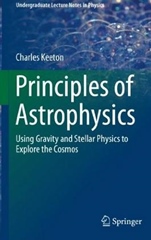
Principles of Astrophysics
ISBN 9781461492351
Autor: Keeton
Wydawca: Springer
Dostępność: 3-6 tygodni
Cena: 328,65 zł
Przed złożeniem zamówienia prosimy o kontakt mailowy celem potwierdzenia ceny.
ISBN13: |
9781461492351 |
Autor: |
Keeton |
Oprawa: |
Paperback |
Rok Wydania: |
2014 |
Ilość stron: |
434 |
Provides a physics-centered analysis of a broad range of astronomical systems that appeals to a large audience of advanced undergraduate students in physics and engineering
This book gives a survey of astrophysics at the advanced undergraduate level. It originates from a two-semester course sequence at Rutgers University that is meant to appeal not only to astrophysics students but also more broadly to physics and engineering students. The organization is driven more by physics than by astronomy; in other words, topics are first developed in physics and then applied to astronomical systems that can be investigated, rather than the other way around.
The first half of the book focuses on gravity. Gravity is the dominant force in many astronomical systems, so a tremendous amount can be learned by studying gravity, motion and mass. The theme in this part of the book, as well as throughout astrophysics, is using motion to investigate mass. The goal of Chapters 2-11 is to develop a progressively richer understanding of gravity as it applies to objects ranging from planets and moons to galaxies and the universe as a whole. The second half uses other aspects of physics to address one of the big questions. While “Why are we here?” lies beyond the realm of physics, a closely related question is within our reach: “How did we get here?” The goal of Chapters 12-20 is to understand the physics behind the remarkable story of how the Universe, Earth and life were formed. This book assumes familiarity with vector calculus and introductory physics (mechanics, electromagnetism, gas physics and atomic physics); however, all of the physics topics are reviewed as they come up (and vital aspects of vector calculus are reviewed in the Appendix).
Introduction: Tools of the Trade.- Part I: Using Gravity and Motion to Measure Mass.- Celestial Mechanics.- Gravitational One-Body Problem.- Gravitational Two-Body Problem.- Tidal Forces.- Gravitational Three-Body Problem.- Extended Mass Distributions: Spiral Galaxies.- N-Body Problem: Elliptical Galaxies.- Bending of Light by Gravity.- Relativity.- Cosmology: Expanding Universe.- Part II: Using Stellar Physics to Explore the Cosmos.- Planetary Atmospheres.- Planetary Temperatures.- Stellar Atmospheres.- Nuclear Fusion.- Stellar Structure and Evolution.- Stellar Remnants.- Charting the Universe with Stars.- Star and Planet Formation.- Cosmology: Early Universe.- Part III: Appendices.- Appendix A: Technical Background.- Appendix B: Solutions.
Koszyk
Książek w koszyku: 0 szt.
Wartość zakupów: 0,00 zł
Informacje


Kontakt
Gambit
Centrum Oprogramowania
i Szkoleń Sp. z o.o.
Al. Pokoju 29b/22-24
31-564 Kraków
Siedziba Księgarni
ul. Kordylewskiego 1
31-542 Kraków
+48 12 410 5991
+48 12 410 5987
+48 12 410 5989
Subskrypcje
Administratorem danych osobowych jest firma Gambit COiS Sp. z o.o. Na podany adres będzie wysyłany wyłącznie biuletyn informacyjny.
Autoryzacja płatności

Informacje na temat autoryzacji płatności poprzez PayU.

© Copyright 2012: GAMBIT COiS Sp. z o.o. Wszelkie prawa zastrzeżone.
Projekt i wykonanie: Alchemia Studio Reklamy