


Wydawcy
Katalog tematyczny
- Archeologia (109)
- Ekonomia, finanse, business (13704)
- Filozofia (1445)
- Historia (3040)
- Języki i językoznawstwo (2356)
- Lifestyle, hobby i rozrywka (475)
- Medycyna (9704)
- Nauki humanistyczne (4)
- Nauki o Ziemi i środowisku (2638)
- Nauki ścisłe (20412)
- Nauki społeczne (8486)
- Nauki techniczne (13450)
- Prawo (1696)
- Publikacje informacyjne i interdyscyplinarne (1288)
- Religia i wierzenia (917)
- Technika komputerowa (4067)
- Zdrowie, relacje międzyludzkie i rozwój osobisty (657)





Informacje szczegółowe o książce
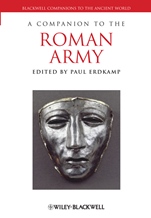
A Companion to the Roman Army
ISBN 9781444339215
Autor: Paul Erdkamp
Wydawca: Wiley
Dostępność: 3-6 tygodni
Cena: 253,05 zł
Przed złożeniem zamówienia prosimy o kontakt mailowy celem potwierdzenia ceny.
ISBN13: |
9781444339215 |
ISBN10: |
1444339214 |
Autor: |
Paul Erdkamp |
Oprawa: |
Paperback |
Rok Wydania: |
2010-11-23 |
Ilość stron: |
600 |
Wymiary: |
243x170 |
Tematy: |
HB |
Ancient Rome was a highly militaristic culture, at war almost annually throughout the period of the republic. The expert contributors to this volume delve into this culture, offering an extensive account of the Roman army, from its beginnings to its transformation in the later Roman Empire. Taking account of the latest scholarly and archaeological research, they examine the recruitment, training, organization, tactics, and weaponry that contributed to Rome’s effectiveness as a fighting machine. The volume recognizes that, as a military force, the Roman army functioned in a landscape and was an integral part of Roman politics and society. The contributors therefore also explore the ecological, economic, social, and political factors that help to explain the characteristic features of the army and its development over time, covering such topics as: demography and manpower, the army as a community, the religions of the soldiers, the emperor as military commander, and veterans in society.
List of Figures Notes on Contributors Introduction Part I: Early Rome: 1. Warfare and the Army in Early Rome: John Rich (University of Nottingham). 2. The Army and Centuriate Organization in Early Rome: Gary Forsythe (University of Lubbock). Part II: Mid and Late Republic: A. Battle, Tactices, and Legionary Structure. 3. Army and Battle During the Conquest of Italy (350–264 BC): Louis Rawlings (Cardiff University). 4. The Age of Overseas Expansion (264–146 BC): Dexter Hoyos (University of Sydney). 5. The Late Republican Army (146–30 BC): Pierre Cagniart (Texas State University at San Marcos). B. The Machinery of War. 6. War and State Formation in the Roman Republic: Paul Erdkamp (University of Leiden). 7. Roman Manpower and Recruitment During the Middle Republic: Luuk de Ligt (University of Leiden). 8. Military Command, Political Power, and the Republican Elite: Nathan Rosenstein (Ohio State University). 9. Colonization, Land Distribution, and Veteran Settlement: Will Broadhead (Massachusetts Institute of Technology). 10. Army and General in the Late Roman Republic: Lukas de Blois (University of Nijmegen). Part III: The Empire (Actium to Adrianople): A. The Structure of the Imperial Army. 11. The Augustan Reform and the Structure of the Imperial Army: Kate Gilliver (University of Wales, Cardiff). 12. Classes. The Evolution of the Roman Imperial Fleets: D. B. Saddington (University of Witwatersrand, South Africa). 13. Battle, Tactics, and the Emergence of the Limites in the West: James Thorne (University of Manchester). 14. The Army and the Limes in the East: Everett L. Wheeler (Duke University). 15. Strategy and Army Structure: Between Septimius Severus and Constantine the Great: Karl Strobel (University of Klagenfurt). B. Military Organization. 16. Military Documents, Languages, and Literacy: Sara Elise Phang (Independent scholar). 17. Finances and Costs of the Roman Army: Peter Herz (University of Regensburg). 18. War– and Peacetime Logistics: Supplying Armies in East and West: Peter Kehne (Leibniz University, Hannover). C. Army, Emporer and Empire. 19. The Roman Army and Propaganda: Olivier Hekster (Radboud University Nijmegen). 20. The Army and the Urban Elite: A Competition for Power: Clifford Ando (University of Chicago). 21. Making Emperors. Imperial Instrument or Independent Force? Anthony R. Birley (Vindolanda Museum). D. Soldiers and Veterans in Society. 22. Military Camps, Canabae and Vici. The archaeological evidence: Norbert Hanel (University of Koln). 23. Marriage, Families, and Survival: demographic aspects: Walter Scheidel (Stanford University). 24. Recruits and Veterans: Gabriele Wesch–Klein (University of Heidelberg). 25. The Religions of the Armies: Oliver Stoll (University of Mainz). Part IV: The Late Roman Empire: 26. Warlords and Landlords: Wolf Liebeschuetz (University of Nottingham). 27. The Foederati: Timo Stickler (Heinrich–Heine University, Düsseldorf). 28. Army and Society in the Late Roman World: A Context for Decline? Michael Whitby (University of Warwick). 29. Army and Battle in the Age of Justinian (527–565): Hugh Elton (Trent University). Index
Paul Erdkamp is Research Fellow in Ancient History at Leiden University. He is author of Hunger and the Sword: Warfare and Food Supply in Roman Republican Wars (264–30 BC) (1998) and The Grain Market in the Roman Empire (2005), and editor of The Roman Army and the Economy (2002).
"It is an excellent academic reference book and should prove a valuable resource for anyone interested in the development of the Roman Army as well as its interactions over a thousand years with the Empire it both served and influenced". (UNRV History, 1 April 2011)
Koszyk
Książek w koszyku: 0 szt.
Wartość zakupów: 0,00 zł
Informacje


Kontakt
Gambit
Centrum Oprogramowania
i Szkoleń Sp. z o.o.
Al. Pokoju 29b/22-24
31-564 Kraków
Siedziba Księgarni
ul. Kordylewskiego 1
31-542 Kraków
+48 12 410 5991
+48 12 410 5987
+48 12 410 5989
Subskrypcje
Administratorem danych osobowych jest firma Gambit COiS Sp. z o.o. Na podany adres będzie wysyłany wyłącznie biuletyn informacyjny.
Autoryzacja płatności

Informacje na temat autoryzacji płatności poprzez PayU.

© Copyright 2012: GAMBIT COiS Sp. z o.o. Wszelkie prawa zastrzeżone.
Projekt i wykonanie: Alchemia Studio Reklamy