


Wydawcy
Katalog tematyczny
- Archeologia (109)
- Ekonomia, finanse, business (13704)
- Filozofia (1445)
- Historia (3040)
- Języki i językoznawstwo (2356)
- Lifestyle, hobby i rozrywka (475)
- Medycyna (9704)
- Nauki humanistyczne (4)
- Nauki o Ziemi i środowisku (2638)
- Nauki ścisłe (20412)
- Astronomia (294)
- Biologia (5119)
- Biochemia (575)
- Biologia człowieka (14)
- Biologia komórkowa (377)
- Biologia molekularna (398)
- Biologia rozwoju (130)
- Biologia, ogólnie (1277)
- Botanika (280)
- Hydrobiologia (92)
- Mikrobiologia (363)
- Mykologia (22)
- Zoologia (303)
- Chemia (6540)
- Fizyka (3309)
- Matematyka (4574)
- Nauki ścisłe, ogólnie (503)
- Nauki społeczne (8486)
- Nauki techniczne (13450)
- Prawo (1696)
- Publikacje informacyjne i interdyscyplinarne (1288)
- Religia i wierzenia (917)
- Technika komputerowa (4067)
- Zdrowie, relacje międzyludzkie i rozwój osobisty (657)





Informacje szczegółowe o książce
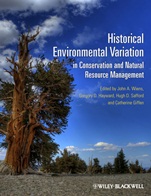
Historical Environmental Variation in Conservation and Natural Resource Management
ISBN 9781444337921
Autor: John A. Wiens, Gregory D. Hayward, Hugh D, Safford, Catherine Giffen
Wydawca: Wiley
Dostępność: 3-6 tygodni
Cena: 717,15 zł
Przed złożeniem zamówienia prosimy o kontakt mailowy celem potwierdzenia ceny.
ISBN13: |
9781444337921 |
ISBN10: |
1444337920 |
Autor: |
John A. Wiens, Gregory D. Hayward, Hugh D, Safford, Catherine Giffen |
Oprawa: |
Hardback |
Rok Wydania: |
2012-08-10 |
Ilość stron: |
352 |
Wymiary: |
251x194 |
Tematy: |
PS |
For decades, conservationists and resource managers have believed that the long–term persistence of populations and ecosystems requires maintaining the conditions they have experienced in the past the historical range of variation. With the environment now changing rapidly, conditions in the future may be quite different from those in the past, leading to questions about whether past history is relevant to future conservation and management. In this book, both scientists and practitioners consider how historical knowledge can be used in conservation and resource management, with particular emphasis on forests. Although future environments may depart from their past range of variation, the recent and long–term history of populations and ecosystems has determined what they are today, knowledge that is important in assessing their resiliency and adaptability to future environmental changes.
Contributors, vii
Foreword, x
Preface, xii
Acknowledgments, xiv
SECTION 1 BACKGROUND AND HISTORY, 1
JOHN A. WIENS
1 Setting the stage: theoretical and conceptual background of historical range of variation, 3
WILLIAM H. ROMME, JOHN A. WIENS, AND HUGH D. SAFFORD
2 Development of historical ecology concepts and their application to resource management and conservation, 19
WAYNE PADGETT, BARBARA SCHRADER, MARY MANNING, AND TIMOTHY TEAR
SECTION 2 ISSUES AND CHALLENGES, 29
HUGH D. SAFFORD
3 Challenges in the application of historical range of variation to conservation and land management, 32
GREGORY D. HAYWARD, THOMAS T. VEBLEN, LOWELL H. SURING, AND BOB DAVIS
4 Historical ecology, climate change, and resource management: can the past still inform the future? 46
HUGH D. SAFFORD, GREGORY D. HAYWARD, NICOLE E. HELLER, AND JOHN A. WIENS
5 What is the scope of "history" in historical ecology? Issues of scale in management and conservation, 63
JOHN A. WIENS, HUGH D. SAFFORD, KEVIN MCGARIGAL, WILLIAM H. ROMME, AND MARY MANNING
6 Native Americans, ecosystem development, and historical range of variation, 76
GREGORY J. NOWACKI, DOUGLAS W. MACCLEERY, AND FRANK K. LAKE
7 Conservation and resource management in a changing world: extending historical range of variation beyond the baseline, 92
STEPHEN T. JACKSON
SECTION 3 MODELING HISTORIC VARIATION AND ITS APPLICATION FOR UNDERSTANDING FUTURE VARIABILITY, 111
ROBERT E. KEANE
8 Creating historical range of variation (HRV) time series using landscape modeling: overview and issues, 113
ROBERT E. KEANE
9 Modeling historical range of variability at a range of scales: an example application, 128
KEVIN MCGARIGAL AND WILLIAM H. ROMME
SECTION 4 CASE STUDIES OF APPLICATIONS, 147
GREGORY D. HAYWARD
10 Regional application of historical ecology at ecologically defi ned scales: forest ecosystems in the Colorado Front Range, 149
THOMAS T. VEBLEN, WILLIAM H. ROMME, AND CLAUDIA REGAN
11 Incorporating concepts of historical range of variation in ecosystem–based management of British Columbia′s coastal temperate rainforest, 166
ANDY MACKINNON AND SARI C. SAUNDERS
12 Incorporating HRV in Minnesota national forest land and resource management plans: a practitioner′s story, 176
MARY SHEDD, JIM GALLAGHER, MICHAEL JIMÉNEZ, AND DUANE LULA
13 Applying historical fire–regime concepts to forest management in the western United States: three case studies, 194
THOMAS E. DEMEO, FREDERICK J. SWANSON, EDWARD B. SMITH, STEVEN C. BUTTRICK, JANE KERTIS, JEANNE RICE, CHRISTOPHER D. RINGO, AMY WALTZ, CHRIS ZANGER, CHERYL A. FRIESEN, AND JOHN H. CISSEL
14 Using historical ecology to inform wildlife conservation, restoration, and management, 205
BETH A. HAHN AND JOHN L. CURNUTT
15 River floodplain restoration experiments offer a window into the past, 218
RAMONA O. SWENSON, RICHARD J. REINER, MARK REYNOLDS, AND JAYMEE MARTY
16 Streams past and future: fluvial responses to rapid environmental change in the context of historical variation, 232
DANIEL A. AUERBACH, N. LEROY POFF, RYAN R. MCSHANE, DAVID M. MERRITT, MATTHEW I. PYNE, AND THOMAS K. WILDING
17 A framework for applying the historical range of variation concept to ecosystem management, 246
WILLIAM H. ROMME, GREGORY D. HAYWARD, AND CLAUDIA REGAN
SECTION 5 GLOBAL PERSPECTIVES, 263
JOHN A. WIENS
18 Ecological history guides the future of conservation: lessons from Africa, 265
A.R.E. SINCLAIR
19 Ecological history has present and future ecological consequences case studies from Australia, 273
DAVID LINDENMAYER
20 A view from the past to the future, 281
KEITH J. KIRBY
21 Is the historical range of variation relevant to rangeland management? 289
BRANDON T. BESTELMEYER
22 Knowing the Fennoscandian taiga: ecohistorical lessons, 297
YRJÖ HAILA
SECTION 6 CHALLENGES FOR THE FUTURE, 305
23 Reflections on the relevance of history in a nonstationary world, 307
JULIO L. BETANCOURT
24 The growing importance of the past in managing ecosystems of the future, 319
HUGH D. SAFFORD, JOHN A. WIENS, AND GREGORY D. HAYWARD
Index, 329
Colour plate pages fall between pp. 162 and 163
John Wiens is a landscape ecologist and conservation scientist who was on the faculties of several universities in the United States before joining The Nature Conservancy as Chief Scientist in 2002. He has published over 200 scientific papers and six books, and has conducted research in Europe, South America, and Australia as well as the United States. He is currently Chief Conservation Science Officer at PRBO Conservation Science in California and is a visiting faculty member at the University of Western Australia in Perth. He lives in Corvallis, Oregon.
Hugh Safford is Regional Ecologist for the USDA Forest Service Pacific Southwest Region, which includes California, Hawaii, and the Pacific Territories, and a research faculty affiliate with the Department of Environmental Science and Policy, University of California–Davis.
Greg Hayward, Regional Wildlife Ecologist with the U.S. Forest Service in Alaska is a population ecologist with a passion for helping resource managers understand the trade–offs associated with difficult land management decisions. As a conservation practitioner Greg brings an academic perspective from faculty positions at the University of Idaho and University of Wyoming. Greg s research extends from boreal owls and flying squirrels to Amur tigers and cutthroat trout with a focus on the consequences of broad scale ecological disturbance on wildlife dynamics.
Casey Giffen, most recently a biological scientist with the U.S. Forest Service National Office in Washington, DC, specializes in regulatory compliance and land management planning. Prior to working with the National Office she spent time in the eastern and western regions of the country working in forest management and natural resource planning. She has over 15 years of experience working with national, regional, and forest–level land management programs.
But each chapter provides guidance on how historical ecology may be fruitfully applied to specific cases of management giving the reader much hope for the future and for potential course corrections on the landscape. (Landscape Ecol, 15 January 2015)
"Overall, a very useful reference for advanced students in conservation and ecosystem management as well as researchers and managers developing future adaptation plans. Summing Up: Highly recommended. Upper–division undergraduates and above. (Choice, 1 March 2013)
Koszyk
Książek w koszyku: 0 szt.
Wartość zakupów: 0,00 zł
Informacje


Kontakt
Gambit
Centrum Oprogramowania
i Szkoleń Sp. z o.o.
Al. Pokoju 29b/22-24
31-564 Kraków
Siedziba Księgarni
ul. Kordylewskiego 1
31-542 Kraków
+48 12 410 5991
+48 12 410 5987
+48 12 410 5989
Subskrypcje
Administratorem danych osobowych jest firma Gambit COiS Sp. z o.o. Na podany adres będzie wysyłany wyłącznie biuletyn informacyjny.
Autoryzacja płatności

Informacje na temat autoryzacji płatności poprzez PayU.

© Copyright 2012: GAMBIT COiS Sp. z o.o. Wszelkie prawa zastrzeżone.
Projekt i wykonanie: Alchemia Studio Reklamy