


Wydawcy
Katalog tematyczny
- Archeologia (109)
- Ekonomia, finanse, business (13704)
- Filozofia (1445)
- Historia (3040)
- Języki i językoznawstwo (2356)
- Lifestyle, hobby i rozrywka (475)
- Medycyna (9704)
- Nauki humanistyczne (4)
- Nauki o Ziemi i środowisku (2638)
- Nauki ścisłe (20412)
- Astronomia (294)
- Biologia (5119)
- Biochemia (575)
- Biologia człowieka (14)
- Biologia komórkowa (377)
- Biologia molekularna (398)
- Biologia rozwoju (130)
- Biologia, ogólnie (1277)
- Botanika (280)
- Hydrobiologia (92)
- Mikrobiologia (363)
- Mykologia (22)
- Zoologia (303)
- Chemia (6540)
- Fizyka (3309)
- Matematyka (4574)
- Nauki ścisłe, ogólnie (503)
- Nauki społeczne (8486)
- Nauki techniczne (13450)
- Prawo (1696)
- Publikacje informacyjne i interdyscyplinarne (1288)
- Religia i wierzenia (917)
- Technika komputerowa (4067)
- Zdrowie, relacje międzyludzkie i rozwój osobisty (657)





Informacje szczegółowe o książce
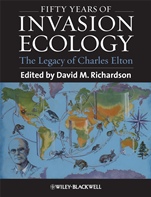
Fifty Years of Invasion Ecology: The Legacy of Charles Elton
ISBN 9781444335859
Autor: David M. Richardson
Wydawca: Wiley
Dostępność: 3-6 tygodni
Cena: 757,05 zł
Przed złożeniem zamówienia prosimy o kontakt mailowy celem potwierdzenia ceny.
ISBN13: |
9781444335859 |
ISBN10: |
1444335855 |
Autor: |
David M. Richardson |
Oprawa: |
Hardback |
Rok Wydania: |
2010-12-24 |
Ilość stron: |
456 |
Wymiary: |
256x195 |
Tematy: |
PS |
Invasion ecology is the study of the causes and consequences of the introduction of organisms to areas outside their native range. Interest in this field has exploded in the past few decades. Explaining why and how organisms are moved around the world, how and why some become established and invade, and how best to manage invasive species in the face of global change are all crucial issues that interest biogeographers, ecologists and environmental managers in all parts of the world. This book brings together the insights of more than 50 authors to examine the origins, foundations, current dimensions and potential trajectories of invasion ecology. It revisits key tenets of the foundations of invasion ecology, including contributions of pioneering naturalists of the 19th century, including Charles Darwin and British ecologist Charles Elton, whose 1958 monograph on invasive species is widely acknowledged as having focussed scientific attention on biological invasions.
Spis treści:
Contributors.
Foreword.
Introduction.
PART 1 HISTORICAL PERSPECTIVES.
1 A world of thought: ′The Ecology of Invasions by Animals and Plants′ and Charles Elton′s life′s work (ROGER L. KITCHING).
2 Charles Elton: neither founder nor siren, but prophet (DANIEL SIMBERLOFF).
3 The inviolate sea? Charles Elton and biological invasions in the world′s oceans (JAMES T. CARLTON).
4 The rise and fall of biotic nativeness: a historical perspective (MATTHEW K. CHEW AND ANDREW L. HAMILTON).
PART 2 EVOLUTION AND CURRENT DIMENSIONS OF INVASION ECOLOGY.
5 Patterns and rate of growth of studies in invasion ecology (HUGH J. MACISAAC, RAHEL A. TEDLA AND ANTHONY RICCIARDI).
6 Invasion ecology and restoration ecology: parallel evolution in two fi elds of endeavour (RICHARD J. HOBBS AND DAVID M. RICHARDSON).
PART 3 NEW TAKES ON INVASION
PATTERNS.
7 Biological invasions in Europe 50 years after Elton: time to sound the ALARM (PETR PYŠEK AND PHILIP E. HULME).
8 Fifty years of tree pest and pathogen invasions, increasingly threatening world forests (MICHAEL J. WINGFIELD, BERNARD SLIPPERS, JOLANDA ROUX AND BRENDA D. WINGFIELD).
PART 4 THE NUTS AND BOLTS OF INVASION ECOLOGY.
9 A movement ecology approach to study seed dispersal and plant invasion: an overview and application of seed dispersal by fruit bats (ASAF TSOAR, DAVID SHOHAMI AND RAN NATHAN).
10 Biodiversity as a bulwark against invasion: conceptual threads since Elton (JASON D. FRIDLEY).
11 Soil biota and plant invasions: biogeographical effects on plant–microbe interactions (RAGAN M. CALLAWAY AND MARNIE E. ROUT).
12 Mutualisms: key drivers of invasions ... key casualties of invasions (ANNA TRAVESET AND DAVID M. RICHARDSON).
13 Fifty years on: confronting Elton′s hypotheses about invasion success with data from exotic birds (TIM M. BLACKBURN, JULIE L. LOCKWOOD AND PHILLIP CASSEY).
14 Is rapid adaptive evolution important in successful invasions? (ELEANOR E. DORMONTT, ANDREW J. LOWE AND PETER J. PRENTIS).
15 Why reproductive systems matter for the invasion biology of plants (SPENCER C.H. BARRETT).
16 Impacts of biological invasions on freshwater ecosystems (ANTHONY RICCIARDI AND HUGH J. MACISAAC).
17 Expanding the propagule pressure concept to understand the impact of biological invasions (ANTHONY RICCIARDI, LISA A. JONES, ÅSA M. KESTRUP AND JESSICA M. WARD).
PART 5 POSTER–CHILD INVADERS, THEN AND NOW.
18 Elton′s insights into the ecology of ant invasions: lessons learned and lessons still to be learned (NATHAN J. SANDERS AND ANDREW V. SUAREZ).
19 Fifty years of ′Waging war on cheatgrass′: research advances, while meaningful control languishes (RICHARD
N. MACK).
PART 6 NEW DIRECTIONS AND TECHNOLOGIES, NEW CHALLENGES.
20 Researching invasive species 50 years after Elton: a cautionary tale (MARK A. DAVIS).
21 Invasions and ecosystems: vulnerabilities and the contribution of new technologies (PETER M. VITOUSEK, CARLA M. D’ANTONIO AND GREGORY P. ASNER).
22 DNA barcoding of invasive species (HUGH B. CROSS, ANDREW J. LOWE, C. FREDERICO D. GURGEL).
23 Biosecurity: the changing face of invasion biology (PHILIP E. HULME).
24 Elton and the economics of biological invasions (CHARLES PERRINGS).
25 Modelling spread in invasion ecology: a synthesis (CANG HUI, RAINER M. KRUG AND DAVID M. RICHARDSON).
26 Responses of invasive species to a changing climate and atmosphere (JEFFREY S. DUKES).
27 Conceptual clarity, scientifi c rigour and ′The Stories We Are′: engaging with two challenges to the objectivity of invasion biology (JOHAN HATTINGH).
28 Changing perspectives on managing biological invasions: insights from South Africa and the Working for Water programme (BRIAN W. VAN WILGEN, AHMED KHAN AND CHRISTO MARAIS).
PART 7 CONCLUSIONS.
29 Invasion science: the roads travelled and the roads ahead (DAVID M. RICHARDSON).
30 A compendium of essential concepts and terminology in invasion ecology (DAVID M. RICHARDSON, PETR PYSˇEK AND JAMES T. CARLTON).
Taxonomic Index.
General Index.
Nota biograficzna:
David M. Richardson is Professor in the Department of Botany & Zoology at Stellenbosch University, South Africa, and is Deputy Director: Science Strategy at the DST–NRF Centre of Excellence for Invasion Biology. He is one of the most prolific authors in invasion ecology and was awarded the 2006 Hans Sigrist Prize for his work in this field. He is a Fellow of the Royal Society of South Africa, Member of the Academy of Scien
ce of South Africa and since 1998 has been Editor–in–Chief of the international journal Diversity and Distributions (Wiley–Blackwell).
Okładka tylna:
Invasion ecology is the study of the causes and consequences of the introduction of organisms to areas outside their native range. Interest in this field has exploded in the past few decades. Explaining why and how organisms are moved around the world, how and why some become established and invade, and how best to manage invasive species in the face of global change are all crucial issues that interest biogeographers, ecologists and environmental managers in all parts of the world. This book brings together the insights of more than 50 authors to examine the origins, foundations, current dimensions and potential trajectories of invasion ecology. It revisits key tenets of the foundations of invasion ecology, including contributions of pioneering naturalists of the 19th century, including Charles Darwin and British ecologist Charles Elton, whose 1958 monograph on invasive species is widely acknowledged as having focussed scientific attention on biological invasions.
Koszyk
Książek w koszyku: 0 szt.
Wartość zakupów: 0,00 zł
Informacje


Kontakt
Gambit
Centrum Oprogramowania
i Szkoleń Sp. z o.o.
Al. Pokoju 29b/22-24
31-564 Kraków
Siedziba Księgarni
ul. Kordylewskiego 1
31-542 Kraków
+48 12 410 5991
+48 12 410 5987
+48 12 410 5989
Subskrypcje
Administratorem danych osobowych jest firma Gambit COiS Sp. z o.o. Na podany adres będzie wysyłany wyłącznie biuletyn informacyjny.
Autoryzacja płatności

Informacje na temat autoryzacji płatności poprzez PayU.

© Copyright 2012: GAMBIT COiS Sp. z o.o. Wszelkie prawa zastrzeżone.
Projekt i wykonanie: Alchemia Studio Reklamy