


Wydawcy
Katalog tematyczny
- Archeologia (109)
- Ekonomia, finanse, business (13704)
- Filozofia (1445)
- Historia (3040)
- Języki i językoznawstwo (2356)
- Lifestyle, hobby i rozrywka (475)
- Medycyna (9704)
- Nauki humanistyczne (4)
- Nauki o Ziemi i środowisku (2638)
- Nauki ścisłe (20412)
- Nauki społeczne (8486)
- Edukacja (229)
- Kryminologia, opieka spełeczna (284)
- Obronność (10)
- Polityka (1389)
- Psychologia (777)
- Socjologia (410)
- Społeczeństwo i kultura (187)
- Nauki techniczne (13450)
- Prawo (1696)
- Publikacje informacyjne i interdyscyplinarne (1288)
- Religia i wierzenia (917)
- Technika komputerowa (4067)
- Zdrowie, relacje międzyludzkie i rozwój osobisty (657)





Informacje szczegółowe o książce
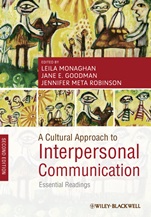
A Cultural Approach to Interpersonal Communication: Essential Readings
ISBN 9781444335316
Autor: Leila Monaghan, Jane E. Goodman, Jennifer Meta Robinson
Wydawca: Wiley
Dostępność: 3-6 tygodni
Cena: 244,65 zł
Przed złożeniem zamówienia prosimy o kontakt mailowy celem potwierdzenia ceny.
ISBN13: |
9781444335316 |
ISBN10: |
1444335316 |
Autor: |
Leila Monaghan, Jane E. Goodman, Jennifer Meta Robinson |
Oprawa: |
Paperback |
Rok Wydania: |
2012-02-03 |
Numer Wydania: |
2nd Edition |
Ilość stron: |
504 |
Wymiary: |
243x172 |
Tematy: |
JBK |
A Cultural Approach to Interpersonal Communication presents key readings from the fields of cultural and linguistic anthropology, sociolinguistics, and communication studies that explore the ways in which interpersonal communication is socially and culturally mediated. Starting from the premise that interpersonal communication is inseparable from culture, the readings reveal the rich diversity of communicative practices of social communities within the U.S. and around the world. This fully revised second edition features several new chapters that highlight interpersonal communication in a digital world, covering such topics as situated engagements with social media, text messaging, digitally simulated spaces, television, and public video–sharing sites. Other readings explore interpersonal interactions in wide–ranging settings that include high school slang in California, sports talk in New Zealand, Tuareg greetings in the Sahara Desert, avatar–mediated conversations in Second Life, frat talk at a Midwest college, whispered rumors about Nevada′s top–secret Area 51, and many more. In addition, a variety of ethnographic case studies serve to heighten awareness of the reader′s own interpersonal language practices. A Cultural Approach to Interpersonal Communication provides rich insights into the crucial role of culture in shaping our understanding of interpersonal communication.
Preface for Instructors ix Editors’ Acknowledgments xi Introduction 1 Jane E. Goodman, Jennifer Meta Robinson, and Leila Monaghan Part I: Ethnographer’s Toolkit 7 1 Body Ritual among the Nacirema 9 Horace Miner 2 Culture Blends 12 Michael Agar 3 Culture: Can You Take It Anywhere? 24 Michael Agar 4 Five Principles 27 Richard Bauman 5 Thick Description: Toward an Interpretive Theory of Culture 29 Clifford Geertz 6 Winking as Social Business 32 Jane E. Goodman 7 Speaking of Ethnography 34 Leila Monaghan 8 The Emergent Quality of Performance 38 Richard Bauman 9 Poetics, Play, Process, and Power: The Performative Turn in Anthropology 41 Dwight Conquergood Part II: Applying the Ethnographer’s Toolkit 45 10 Greetings in the Desert 47 Ibrahim Ag Youssouf, Allen D. Grimshaw, and Charles S. Bird 11 Let Your Words Be Few: Symbolism of Speaking and Silence among Seventeenth–Century Quakers 60 Richard Bauman 12 “To Give Up on Words”: Silence in Western Apache Culture 73 Keith Basso 13 Saying Hello in a Digital World: Emergent Performance and Social Competence 84 Jennifer Meta Robinson 14 Writing Cousin Joe: Choice and Control Over Orthographic Representation in a Blues Singer’s Autobiography 93 Harriet Joseph Ottenheimer 15 And Then She Texted Me: Entextualization and the End of Relationships 110 Ilana Gershon 16 The License: Poetics, Power, and the Uncanny 120 Susan Lepselter Part III: Ethnography of Talk: From Language Form to Social Solidarity 133 17 The Triangle of Linguistic Structure 135 Robin Tolmach Lakoff 18 The Grammar of Politics and the Politics of Grammar: From Bangladesh to the United States 141 James Wilce 19 Conversations: The Link between Words and the World 152 Leila Monaghan 20 Conversational Signals and Devices 157 Deborah Tannen 21 A Cultural Approach to Male–Female Miscommunication 168 Daniel N. Maltz and Ruth A. Borker 22 “Put Down that Paper and Talk to Me!”: Rapport–talk and Report–talk 186 Deborah Tannen 23 Talking Text and Talking Back: “My BFF Jill” from Boob Tube to YouTube 199 Graham M. Jones and Bambi B. Schieffelin 24 On the Uses of Obscenity in Live Stand–Up Comedy 220 Susan Seizer 25 Swearing as a Function of Gender in the Language of Midwestern American College Students 233 Thomas E. Murray Part IV: Communication and Social Groups: The Work of Belonging 243 26 Ethnography of Communication 245 Donal Carbaugh 27 Encounters 249 Erving Goffman 28 Symbols of Category Membership 255 Penelope Eckert 29 Word Up: Social Meanings of Slang in California Youth Culture 274 Mary Bucholtz 30 Odd Girl Out: The Hidden Culture of Aggression in Girls 298 Rachel Simmons 31 Sporting Formulae in New Zealand English: Two Models of Male Solidarity 315 Koenraad Kuiper 32 Inner–City Teens and Face–Work: Avoiding Violence and Maintaining Honor 324 Robert Garot 33 From Websites to Wal–Mart: Youth, Identity Work, and the Queering of Boundary Publics in Small Town, USA 347 Mary L. Gray 34 “If I’m Lyin, I’m Flyin”: The Game of Insult in Black Language 356 Geneva Smitherman Part V: Interpersonal Communication in Institutional Settings: Structure, Agency, and the Exercise of Power 365 35 Power and the Language of Men 367 Scott Fabius Kiesling 36 Linguistic Ideology and Praxis in US Law School Classrooms 385 Elizabeth Mertz 37 Participant Structures and Communicative Competence: Warm Springs Children in Community and Classroom 395 Susan U. Philips 38 Footing 412 Erving Goffman 39 “An Association for the 21st Century”: Performance and Social Change among Berbers in Paris 416 Jane E. Goodman 40 Signing 429 Leila Monaghan 41 Variation in Sign Languages 433 Barbara LeMaster and Leila Monaghan 42 The Founding of Two Deaf Churches: The Interplay of Deaf and Christian Identities 438 Leila Monaghan Appendix I: Read This First: How to Read and Present on Complex Texts 455 Appendix II: Ethnography Assignments 462 Source Acknowledgments 468 Index 473
Leila Monaghan currently teaches anthropology and disability studies at the University of Wyoming and the University of Maryland University College. She served as course director of Interpersonal Communication in the Department of Communication and Culture at Indiana University for four years. Her publications include the co–edited volumes Many Ways to be Deaf and HIV/AIDS and Deaf Communities. Jane E. Goodman is an associate professor in the Department of Communication and Culture at Indiana University. She is the author of Berber Culture on the World Stage: From Village to Video , and editor of Bourdieu in Algeria: Colonial Politics, Ethnographic Practices, Theoretical Developments . She served as course director of Interpersonal Communication in the Department of Communication and Culture at Indiana University for three years. Jennifer Meta Robinson is a senior lecturer in the Department of Communication and Culture at Indiana University. She is author of The Farmers′ Market Book: Growing Food, Cultivating Community , editor of Teaching Environmental Literacy: Across Campus and Across the Curriculum , and editor of the Indiana University Press book series Scholarship of Teaching and Learning . She has served as course director of Interpersonal Communication in the Department of Communication and Culture at Indiana University since 2006.
“This style, and the wide–ranging subject matter, should encourage both student and academic readers to follow the editors’ suggestion to see the material as a stepping stone towards their own research, rather than ‘the final word’ (p. 5). The reference lists at the end of the chapters could be another of these stones.” ( Discourse Studies , 16 January 2014)
Koszyk
Książek w koszyku: 0 szt.
Wartość zakupów: 0,00 zł
Informacje


Kontakt
Gambit
Centrum Oprogramowania
i Szkoleń Sp. z o.o.
Al. Pokoju 29b/22-24
31-564 Kraków
Siedziba Księgarni
ul. Kordylewskiego 1
31-542 Kraków
+48 12 410 5991
+48 12 410 5987
+48 12 410 5989
Subskrypcje
Administratorem danych osobowych jest firma Gambit COiS Sp. z o.o. Na podany adres będzie wysyłany wyłącznie biuletyn informacyjny.
Autoryzacja płatności

Informacje na temat autoryzacji płatności poprzez PayU.

© Copyright 2012: GAMBIT COiS Sp. z o.o. Wszelkie prawa zastrzeżone.
Projekt i wykonanie: Alchemia Studio Reklamy