


Wydawcy
Katalog tematyczny
- Archeologia (109)
- Ekonomia, finanse, business (13704)
- Filozofia (1445)
- Historia (3040)
- Języki i językoznawstwo (2356)
- Lifestyle, hobby i rozrywka (475)
- Medycyna (9704)
- Nauki humanistyczne (4)
- Nauki o Ziemi i środowisku (2638)
- Nauki ścisłe (20412)
- Nauki społeczne (8486)
- Nauki techniczne (13450)
- Budownictwo lądowe (1045)
- Budownictwo komunikacyjne (9)
- Hydraulika (33)
- Konstrukcje budowlane (95)
- Mechanika konstrukcji (182)
- Przemysł budowlany (7)
- Chemia przemysłowa (2258)
- Elektronika i telekomunikacja (3287)
- Energetyka (1122)
- Inne nauki stosowane (363)
- Inżynieria biochemiczna (507)
- Inżynieria transportu (232)
- Mechanika i materiały (3316)
- Nauka o środowisku (321)
- Rolnictwo (507)
- Technika, ogólnie (475)
- Prawo (1696)
- Publikacje informacyjne i interdyscyplinarne (1288)
- Religia i wierzenia (917)
- Technika komputerowa (4067)
- Zdrowie, relacje międzyludzkie i rozwój osobisty (657)





Informacje szczegółowe o książce
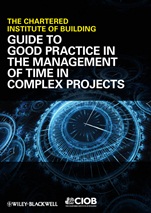
Guide to Good Practice in the Management of Time in Complex Projects
ISBN 9781444334937
Autor: CIOB (The Chartered Institute of Building)
Wydawca: Wiley
Dostępność: 3-6 tygodni
Cena: 351,75 zł
Przed złożeniem zamówienia prosimy o kontakt mailowy celem potwierdzenia ceny.
ISBN13: |
9781444334937 |
ISBN10: |
144433493X |
Autor: |
CIOB (The Chartered Institute of Building) |
Oprawa: |
Paperback |
Rok Wydania: |
2010-12-10 |
Ilość stron: |
170 |
Wymiary: |
296x214 |
Tematy: |
TN |
Delayed completion affects IT, process plant, oil and gas, civil engineering, shipbuilding and marine work contracts. In fact it affects all industries in all countries and the bigger the project, the more damage delayed completion causes to costs, to reputation and sometimes, even to the survival of the contracting parties themselves.
In simple projects, time can be managed intuitively by any reasonably competent person, but complex projects cannot and a more analytical approach is necessary if the project is to succeed. Although much has been written about how to apportion liability for delay after a project has gone wrong there was, until recently, no guidance on how to manage time pro–actively and effectively on complex projects.
In 2008, the CIOB embarked upon a 5–year strategy to provide standards, education, training and accreditation in time management. The first stage, this Guide to Good Practice in Managing Time in Complex Projects, sets down the process and standards to be achieved in preparing and managing the time model.
As a handbook for practitioners it uses logical step by step procedures and examples from inception and risk appraisal, through design and construction to testing and commissioning, to show how an effective and dynamic time model can be used to manage the risk of delay to completion of construction projects.
Spis treści:
Table of figures.
Table of acronyms.
Time–Management Working–Group member and contributor details.
Preface.
Acknowledgements.
1 Preamble.
1.1 Core principles.
1.2 Mission statement.
1.3 Genesis of the Guide.
1.4 Purpose of the Guide.
1.5 Applicability of the Guide.
1.6 Planning and scheduling.
1.7 The project scheduler.
1.8 Project control.
2 Strategy.
2.1 Planning.
2.2 Schedule preparation.
2.3 Schedule review.
2.4 Progress update.
2.5 Change management.
2.6 Planning method statement.
2.7
Record keeping.
2.8 Time–management quality control.
2.9 Communications.
3 Developing the time–model.
3.1 Introduction.
3.2 Developing the schedule.
3.3 Schedule types.
3.4 Scheduling techniques.
3.5 Resource planning and scheduling.
3.6 Software considerations.
3.7 Schedule design 26
3.8 Schedule preparation.
4 Managing the time–model.
4.1 Introduction.
4.2 Schedule review and revision.
4.3 Record keeping.
4.4 Updating the schedule.
4.5 Change control.
4.6 Progress monitoring.
5 Communicating and integrating the model.
5.1 Introduction.
5.2 Report types.
5.3 Reporting formats.
5.4 Feedback and benchmarking.
Benchmarking procedure.
APPENDICES.
1 Appendix 1 – Time risks which may be borne by the employer.
2 Appendix 2 – Desirable attributes of scheduling software.
3 Appendix 3 – Sample notice of delay.
4 Appendix 4 – Industry productivity guides common in the UK.
Glossary of terms.
Index.
Okładka tylna:
Delayed completion affects IT, process plant, oil and gas, civil engineering, shipbuilding and marine work contracts. In fact it affects all industries in all countries and the bigger the project, the more damage delayed completion causes to costs, to reputation and sometimes, even to the survival of the contracting parties themselves.
In simple projects, time can be managed intuitively by any reasonably competent person, but complex projects cannot and a more analytical approach is necessary if the project is to succeed. Although much has been written about how to apportion liability for delay after a project has gone wrong there was, until recently, no guidance on how to manage time pro–actively and effectively on complex projects.
In 2008, the CIOB embarked upon a 5–year strategy to provide standards, education, training and accreditation in time management. The f
irst stage, this Guide to Good Practice in Managing Time in Complex Projects, sets down the process and standards to be achieved in preparing and managing the time model.
As a handbook for practitioners it uses logical step by step procedures and examples from inception and risk appraisal, through design and construction to testing and commissioning, to show how an effective and dynamic time model can be used to manage the risk of delay to completion of construction projects.
Koszyk
Książek w koszyku: 0 szt.
Wartość zakupów: 0,00 zł
Informacje


Kontakt
Gambit
Centrum Oprogramowania
i Szkoleń Sp. z o.o.
Al. Pokoju 29b/22-24
31-564 Kraków
Siedziba Księgarni
ul. Kordylewskiego 1
31-542 Kraków
+48 12 410 5991
+48 12 410 5987
+48 12 410 5989
Subskrypcje
Administratorem danych osobowych jest firma Gambit COiS Sp. z o.o. Na podany adres będzie wysyłany wyłącznie biuletyn informacyjny.
Autoryzacja płatności

Informacje na temat autoryzacji płatności poprzez PayU.

© Copyright 2012: GAMBIT COiS Sp. z o.o. Wszelkie prawa zastrzeżone.
Projekt i wykonanie: Alchemia Studio Reklamy