


Wydawcy
Katalog tematyczny
- Archeologia (109)
- Ekonomia, finanse, business (13704)
- Filozofia (1445)
- Historia (3040)
- Języki i językoznawstwo (2356)
- Lifestyle, hobby i rozrywka (475)
- Medycyna (9704)
- Nauki humanistyczne (4)
- Nauki o Ziemi i środowisku (2638)
- Nauki ścisłe (20412)
- Nauki społeczne (8486)
- Nauki techniczne (13450)
- Budownictwo lądowe (1045)
- Chemia przemysłowa (2258)
- Elektronika i telekomunikacja (3287)
- Energetyka (1122)
- Inne nauki stosowane (363)
- Inżynieria biochemiczna (507)
- Inżynieria transportu (232)
- Mechanika i materiały (3316)
- Nauka o środowisku (321)
- Rolnictwo (507)
- Technika, ogólnie (475)
- Prawo (1696)
- Publikacje informacyjne i interdyscyplinarne (1288)
- Religia i wierzenia (917)
- Technika komputerowa (4067)
- Zdrowie, relacje międzyludzkie i rozwój osobisty (657)





Informacje szczegółowe o książce
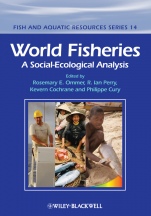
World Fisheries: A Social–Ecological Analysis
ISBN 9781444334678
Autor: Rosemary Ommer, Ian Perry, Kevern L. Cochrane, Philippe Cury
Wydawca: Wiley
Dostępność: 3-6 tygodni
Cena: 915,60 zł
Przed złożeniem zamówienia prosimy o kontakt mailowy celem potwierdzenia ceny.
ISBN13: |
9781444334678 |
ISBN10: |
1444334670 |
Autor: |
Rosemary Ommer, Ian Perry, Kevern L. Cochrane, Philippe Cury |
Oprawa: |
Hardback |
Rok Wydania: |
2011-03-04 |
Ilość stron: |
440 |
Wymiary: |
249x172 |
Tematy: |
TV |
Difficulties in developing understanding and collaboration between natural scientists, social scientists, and knowledge users on issues of global change in marine socialecological systems include a lack of clarity on the underlying conceptual issues of marine and human community interactions, poor appreciation of the process of knowledge transfer from science to society, and a lack of opportunity to meet and discuss these issues. By “global change”, we include climate change, but also resource over–exploitation, competing uses of the marine environment, changing lifestyles, and the globalization of trade and economies. While the focus of this volume is on climate and environmental change, how these interact with other global changes are important considerations.
This book brings together work in social–ecological marine research that cuts across disciplines, and identifies key next steps and common elements and approaches that promote resilience of marine social–ecological systems in the face of global changes. The book has contributions on conceptual issues relating to social–ecological responses in marine systems to global changes; offers illustrative case studies of specific examples of social–ecological responses in marine systems to significant environmental changes manifested locally; develops a synthesis between natural and social scientists on the topic, and points the way forward with innovative approaches to the use of science and knowledge in management, policy and advice. Case studies provide the raw material for the synthesis and global interpretations. The book stems from a symposium held at FAO Headquarters in Rome, Italy, from 8–11 July, 2008 that included participation by a wide range of scholars, including natural and social scientists, marine resources managers, and development and community organizations.
World Fisheries is a landmark publication providing essential information for fis
heries managers, sociologists, marine scientists, ecologists and environmental scientists. Libraries in all universities and research establishments where these subjects are studied and taught should have copies of this most valuable volume on their shelves.
Spis treści:
List of Contributors.
Series Foreword.
Acknowledgements.
Part I Social–Ecological Systems in Fisheries.
1 Introduction (Rosemary E. Ommer and R. Ian Perry).
Reference.
2 Restoring Unity: The Concept of Marine Social–Ecological Systems (Fikret Berkes).
Part II Modeling.
3 Predicting the Impacts and Socio–Economic Consequences of Climate Change on Global Marine Ecosystems and Fisheries: The QUEST—Fish Framework (Manuel Barange, Icarus Allen, Eddie Allison, Marie–Caroline Badjeck, Julia Blanchard, Benjamin Drakeford, Nicholas K. Dulvy, James Harle, Robert Holmes, Jason Holt, Simon Jennings, Jason Lowe, Gorka Merino, Christian Mullon, Graham Pilling, Lynda Rodwell, Emma Tompkins, and Francisco Werner).
4 Fleets, Sites, and Conservation Goals: Game Theoretic Insights on Management Options for Multinational Tuna Fisheries (Kathleen Miller, Peter Golubtsov, and Robert McKelvey).
5 Fishing the Food Web: Integrated Analysis of Changes and Drivers of Change in Fisheries of the Bay of Biscay (Olivier Thébaud and Fabian Blanchard).
6 Interdisciplinary Modeling for an Ecosystem Approach to Management in Marine Social–Ecological Systems (Anthony M. Starfield and Astrid Jarre).
7 People′s Seas: "Ethno–oceanography" as an Interdisciplinary Means to Approach Marine Ecosystem Change (Maria A. Gasalla and Antonio C. S. Diegues).
Part III Knowledge.
8 The Utility of Economic Indicators to Promote Policy–Relevant Science for Climate Change Decisions (Judith Kildow).
9 Scientific Advice for Fisheries Management in
West Africa in the Context of Global Change (Bora Masumbuko, Moctar Bâ, P. Morand, P. Chavance, and Pierre Failler).
10 Knowledge and Research on Chilean Fisheries Resources: Diagnosis and Recommendations for Sustainable Development (Eleuterio Yáñez, Exequiel González, Luis Cubillos, Samuel Hormazábal, Héctor Trujillo, Lorena Álvarez, Alejandra Órdenes, Milton Pedraza, and Gustavo Aedo).
11 Moving Forward: Social–Ecological Interactivity, Global Marine Change and Knowledge for the Future (Barbara Neis).
Part IV Values.
12 Unaccounted Values: Under–reporting Sardine Catches as a Strategy Against Poverty in the Bali Strait, Indonesia (Eny Anggraini Buchary, Tony J. Pitcher, and Ussif Rashid Sumaila).
13 "You Don′t Know What You′ve Got ′Til It′s Gone": The Case for Spiritual Values in Marine Ecosystem Management (Nigel Haggan).
14 Social–Ecological Restructuring and Implications for Social Values (Grant Murray).
15 Economic Valuation of Mangroves in the Niger Delta: An Interdisciplinary Approach (Godstime K. James, Jimmy O. Adegoke, Ekechukwu Saba, Peter Nwilo, Joseph Akinyede, and Sylvester Osagie).
16 US Marine Ecosystem Habitat Values (Ussif Rashid Sumaila, Jackie Alder, G. Ishimura, William. W. L. Cheung, L. Dropkin, S. Hopkins, S. Sullivan, and A. Kitchingman).
Part V Governance.
17 Historical Transitions in Access to and Management of Alaska’s Commercial Fisheries, 1880–1980 (Emilie Springer).
18 Can Fishers’ Virtuous Behavior Improve Large Marine Ecosystem Health? (Valentina Giannini).
19 Ecosystem–based Management in the Asia–Pacific Region (Mitsutaku Makino and Hiroyuki Matsuda).
20 A Network Approach to Understanding Coastal Management and Governance of Small–scale Fisheries in the Eastern Car
ibbean (Kemraj Parsram and Patrick McConney).
21 Uncertainty Demands an Adaptive Management Approach to the Use of Marine Protected Areas as Management Tools (Michel J. Kaiser).
22 Building Resilience to Climatic and Global Change in High–Latitude Fishing Communities: Three Case Studies from Iceland and Alaska (James R. McGoodwin).
23 Coping with Environmental Change: Systemic Responses and the Roles of Property and Community in Three Fisheries (Bonnie J. McCay, Wendy Weisman, and Carolyn Creed).
Part VI Conclusions.
24 Conclusion: Hierarchy, Power, and Potential Regime Shifts in Marine Social–Ecological Systems (Rosemary E. Ommer and R. Ian Perry).
References.
Index.
A color plate section.
Nota biograficzna:
Rosemary E. Ommer, Department of History, University of Victoria, Canada
R. Ian Perry, Fisheries and Oceans Canada, Pacific Biological Station, Nanaimo, Canada
Kevern Cochrane, United Nations Food and Agriculture Organisation, Viale delle Terme di Caracalla, Rome, Italy
Philippe Cury, Institut de Recherche pour le Développement, Centre de Recherche Halieutique Méditerranéenne et Tropicale, IRD – IFREMER & Université Montpellier II, France
Okładka tylna:
Difficulties in developing understanding and collaboration between natural scientists, social scientists, and knowledge users on issues of global change in marine socialecological systems include a lack of clarity on the underlying conceptual issues of marine and human community interactions, poor appreciation of the process of knowledge transfer from science to society, and a lack of opportunity to meet and discuss these issues. By “global change”, we include climate change, but also resource over–exploitation, competing uses of the marine environment, changing lifestyles, and the globalization of tra
de and economies. While the focus of this volume is on climate and environmental change, how these interact with other global changes are important considerations.
This book brings together work in social–ecological marine research that cuts across disciplines, and identifies key next steps and common elements and approaches that promote resilience of marine social–ecological systems in the face of global changes. The book has contributions on conceptual issues relating to social–ecological responses in marine systems to global changes; offers illustrative case studies of specific examples of social–ecological responses in marine systems to significant environmental changes manifested locally; develops a synthesis between natural and social scientists on the topic, and points the way forward with innovative approaches to the use of science and knowledge in management, policy and advice. Case studies provide the raw material for the synthesis and global interpretations. The book stems from a symposium held at FAO Headquarters in Rome, Italy, from 8–11 July, 2008 that included participation by a wide range of scholars, including natural and social scientists, marine resources managers, and development and community organizations.
World Fisheries is a landmark publication providing essential information for fisheries managers, sociologists, marine scientists, ecologists and environmental scientists. Libraries in all universities and research establishments where these subjects are studied and taught should have copies of this most valuable volume on their shelves.
Koszyk
Książek w koszyku: 0 szt.
Wartość zakupów: 0,00 zł
Informacje


Kontakt
Gambit
Centrum Oprogramowania
i Szkoleń Sp. z o.o.
Al. Pokoju 29b/22-24
31-564 Kraków
Siedziba Księgarni
ul. Kordylewskiego 1
31-542 Kraków
+48 12 410 5991
+48 12 410 5987
+48 12 410 5989
Subskrypcje
Administratorem danych osobowych jest firma Gambit COiS Sp. z o.o. Na podany adres będzie wysyłany wyłącznie biuletyn informacyjny.
Autoryzacja płatności

Informacje na temat autoryzacji płatności poprzez PayU.

© Copyright 2012: GAMBIT COiS Sp. z o.o. Wszelkie prawa zastrzeżone.
Projekt i wykonanie: Alchemia Studio Reklamy