


Wydawcy
Katalog tematyczny
- Archeologia (109)
- Ekonomia, finanse, business (13704)
- Filozofia (1445)
- Historia (3040)
- Języki i językoznawstwo (2356)
- Lifestyle, hobby i rozrywka (475)
- Medycyna (9704)
- Nauki humanistyczne (4)
- Nauki o Ziemi i środowisku (2638)
- Nauki ścisłe (20412)
- Nauki społeczne (8486)
- Edukacja (229)
- Kryminologia, opieka spełeczna (284)
- Obronność (10)
- Polityka (1389)
- Psychologia (777)
- Socjologia (410)
- Społeczeństwo i kultura (187)
- Nauki techniczne (13450)
- Prawo (1696)
- Publikacje informacyjne i interdyscyplinarne (1288)
- Religia i wierzenia (917)
- Technika komputerowa (4067)
- Zdrowie, relacje międzyludzkie i rozwój osobisty (657)





Informacje szczegółowe o książce
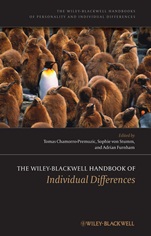
The Wiley–Blackwell Handbook of Individual Differences
ISBN 9781444334388
Autor: Tomas Chamorro–Premuzic, Sophie von Stumm, Adrian Furnham
Wydawca: Wiley
Dostępność: 3-6 tygodni
Cena: 814,80 zł
Przed złożeniem zamówienia prosimy o kontakt mailowy celem potwierdzenia ceny.
ISBN13: |
9781444334388 |
ISBN10: |
1444334387 |
Autor: |
Tomas Chamorro–Premuzic, Sophie von Stumm, Adrian Furnham |
Oprawa: |
Hardback |
Rok Wydania: |
2011-04-05 |
Ilość stron: |
848 |
Wymiary: |
251x181 |
Tematy: |
JC |
The Wiley–Blackwell Handbook of Individual Differences provides a comprehensive, up–to–date overview of recent research, current perspectives, practical applications, and likely future developments in the field of individual differences. Bringing together the work of top researchers in the field from around the world, this essential reference work covers methodological, theoretical, and paradigm changes in the area of individual differences.
Separate chapters cover core disciplines of individual differences including–but not limited to–personality and intelligence, biological, genetic, and social causes of individual differences, and creativity and emotional intelligence. The unparalleled scope of this work makes it a must–have resource for advanced psychology students, academics, and practitioners.
Spis treści:
List of Plates.
List of Figures.
List of Tables.
List of Contributors.
Preface.
List of Abbreviations.
Part I Individual differences: An up–to–date historical and methodological overview.
Chapter 1 Individual Differences and Differential Psychology: A brief history and prospect (William Revelle, David M. Condon, and Joshua Wilt).
Chapter 2 Methodological Advances in Differential Psychology (William Revelle, David M. Condon, and Joshua Wilt).
Section II Intelligence and Personality: Structure and Development.
Part 1 Personality.
Chapter 3 Personality Development Across the Life Span (Jaap J. A. Denissen, Marcel A. G. van Aken, and Brent W. Roberts).
Chapter 4 Reinforcement Sensitivity Theory, Research, Applications and Future (Luke D. Smillie, Natalie J. Loxton, and Rachel E. Avery).
Chapter 5 The General Factor of Personality: Normal and Abnormal (J. Philippe Rushton and Paul Irwing).
Chapter 6 Five Into One Doesn’t Go: A Critique of the General Factor of Personality (Eamonn Ferguson, Tomas Chamorro–Premuzic, Alan Pickering, and Alexander Weiss).
Part 2 Intelligence.
Chapter 7 The Nature and Structure of “Intelligence” Charlie L. Reeve & Silvia Bonaccio).
Chapter 8 Re–visiting Intelligence–Personality Associations: Vindicating Intellectual Investment (Sophie von Stumm, Tomas Chamorro–Premuzic, and Philip L. Ackerman).
Chapter 9 Individual Differences in Cognitive Aging (Elliot M. Tucker–Drob, and Timothy A. Salthouse).
Section III Biological Causes of Individual Differences.
Chapter 10 Behavior Genetics (Frank M. Spinath and Wendy Johnson).
Chapter 11 Molecular Genetic Aspects of Personality (Alexander Strobel and Burkhard Brocke).
Chapter 12 Understanding Human Intelligence Imaging the Brain (Roberto Colom and Paul M. Thompson).
Chapter 13 Evolutionary psychology and individual differences (Satoshi Kanazawa).
Section IV Individual Differences and real–world outcomes
Part 1 Work.
Chapter 14 Individual Differences at Work (Deniz S. Ones and Chockalingam Viswesvaran).
Chapter 15 Leadership (Robert Hogan and Ghufran Ahmad).
Part 2 Health, Longevity and Death.
Chapter 16 Cognitive Epidemiology: concepts, evidence, and future directions (Catherine M. Calvin, G. David Batty, and Ian J. Deary).
Chapter 17 Personality and Differences in Health and Longevity (Margaret L. Kern and Howard S. Friedman).
Part 3 Society.
Chapter 18 Personality and the laws of history (Robert Hogan & Tomas Chamorro–Premuzic).
Chapter 19 Individual differences and antisocial behaviour. (Vincent Egan).
Chapter 20 Intelligence and Social Inequality: Why the Biological Link? (Linda S. Gottfredson).
Section V Motivation and Vocational Inter
ests.
Chapter 21 Goal Setting: A State Theory but Related to Traits (Gary P. Latham, Deshani B. Ganegoda, and Edwin A. Locke).
Chapter 22 Personality and Approaches to Learning (Adrian Furnham).
Chapter 23 Vocational Interests: The Road Less Traveled (Patrick Ian Armstrong, Rong Su, and James Rounds).
Section VI Competence beyond IQ.
Part 1 Special Abilities.
Chapter 24 Exceptional Talent and Genius (Dean Keith Simonton).
Chapter 25 Emotional Intelligence(K. V. Petrides).
Chapter 26 Individual Differences in Creativity (James C. Kaufman).
Part 2 Relationships and Subjective Well–being.
Chapter 27 Personality and Happiness: Predicting the Experience of Subjective Well–Being (William Pavot and Ed Diener).
Chapter 28 Self–Esteem: Enduring Issues and Controversies (M. Brent Donnellan, Kali H. Trzesniewski, and Richard W. Robins).
Chapter 29 Love at first sight? Individual differences and the psychology of initial romantic attraction (Viren Swami).
Chapter 30 Manifestations of Individual Differences in Physical and Virtual Environments(Lindsay T. Graham, Carson J. Sandy, and Samuel D. Gosling).
Index.
Nota biograficzna:
Tomas Chamorro–Premuzic is Reader at Goldsmiths, University of London, Research Fellow at University College London, and Visiting Professor at NYU in London. Chamorro–Premuzic has published more than 100 scientific articles and authored four books, including the textbook Personality and Individual Differences (also published by Wiley–Blackwell). He is a keynote speaker of the Institute of Economic Affairs and makes frequent media appearances in the UK and internationally.
Sophie von Stumm is an award–winning young scientist who completed her postgraduate training at the University of Edinburgh and Goldsmiths, University of L
ondon. She is currently a Senior Lecturer at the University of Chichester. Her research interests focus on intelligence–personality associations in relation to educational, social, and health outcomes.
Adrian Furnham is currently Professor of Psychology at University College London. He has lectured widely abroad and held scholarships and visiting professorships at, among others, the University of New South Wales, the University of the West Indies, the University of Hong Kong, and the University of KwaZulu–Natal. Furnham is a Fellow of the British Psychological Society and has written over 700 scientific papers and 60 books. He is on the editorial board of a number of international journals, as well as the past elected President of the International Society for the Study of Individual Differences.
Okładka tylna:
The Wiley–Blackwell Handbook of Individual Differences provides a comprehensive, up–to–date overview of recent research, current perspectives, practical applications, and likely future developments in the field of individual differences. Bringing together the work of top researchers in the field from around the world, this essential reference work covers methodological, theoretical, and paradigm changes in the area of individual differences.
Separate chapters cover core disciplines of individual differences including–but not limited to–personality and intelligence, biological, genetic, and social causes of individual differences, and creativity and emotional intelligence. The unparalleled scope of this work makes it a must–have resource for advanced psychology students, academics, and practitioners.
Koszyk
Książek w koszyku: 0 szt.
Wartość zakupów: 0,00 zł
Informacje


Kontakt
Gambit
Centrum Oprogramowania
i Szkoleń Sp. z o.o.
Al. Pokoju 29b/22-24
31-564 Kraków
Siedziba Księgarni
ul. Kordylewskiego 1
31-542 Kraków
+48 12 410 5991
+48 12 410 5987
+48 12 410 5989
Subskrypcje
Administratorem danych osobowych jest firma Gambit COiS Sp. z o.o. Na podany adres będzie wysyłany wyłącznie biuletyn informacyjny.
Autoryzacja płatności

Informacje na temat autoryzacji płatności poprzez PayU.

© Copyright 2012: GAMBIT COiS Sp. z o.o. Wszelkie prawa zastrzeżone.
Projekt i wykonanie: Alchemia Studio Reklamy