


Wydawcy
Katalog tematyczny
- Archeologia (109)
- Ekonomia, finanse, business (13704)
- Filozofia (1445)
- Historia (3040)
- Języki i językoznawstwo (2356)
- Lifestyle, hobby i rozrywka (475)
- Medycyna (9704)
- Chirurgia (272)
- Inne gałęzie medycyny (1871)
- Medycyna kliniczna (4187)
- Choroby wewnętrzne (514)
- Dermatologia (51)
- Diagnostyka medyczna (3)
- Endokrynologia (144)
- Gastroenterologia (27)
- Geriatria (50)
- Ginekologia i położnictwo (134)
- Hematologia (46)
- Hepatologia (10)
- Kardiologia (71)
- Laryngologia (12)
- Nefrologia (10)
- Neurologia (500)
- Oftalmologia (50)
- Pediatria (33)
- Pulmunologia (32)
- Reumatologia (14)
- Terapia genowa (1)
- Układ mięśniowo-szkieletowy (1)
- Urologia (14)
- Medycyna niekonwencjonalna (14)
- Medycyna przedkliniczna (269)
- Medycyna, ogólnie (1740)
- Medyczne służby pomocnicze (745)
- Studia medyczne (16)
- Weterynaria (548)
- Nauki humanistyczne (4)
- Nauki o Ziemi i środowisku (2638)
- Nauki ścisłe (20412)
- Nauki społeczne (8486)
- Nauki techniczne (13450)
- Prawo (1696)
- Publikacje informacyjne i interdyscyplinarne (1288)
- Religia i wierzenia (917)
- Technika komputerowa (4067)
- Zdrowie, relacje międzyludzkie i rozwój osobisty (657)





Informacje szczegółowe o książce
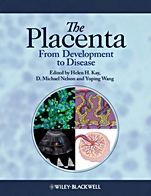
The Placenta: From Development to Disease
ISBN 9781444333664
Autor: Helen Kay, D. Michael Nelson, Yuping Wang
Wydawca: Wiley
Dostępność: 3-6 tygodni
Cena: 790,65 zł
Przed złożeniem zamówienia prosimy o kontakt mailowy celem potwierdzenia ceny.
ISBN13: |
9781444333664 |
ISBN10: |
1444333666 |
Autor: |
Helen Kay, D. Michael Nelson, Yuping Wang |
Oprawa: |
Hardback |
Rok Wydania: |
2011-04-05 |
Ilość stron: |
360 |
Wymiary: |
253x189 |
Tematy: |
MJ |
The Placenta – friend not foe
The placenta is central to the survival of the fetus. Placental dysfunction, whether from disease or maldevelopment, therefore threatens the fetus and its mother. Disruption to normal placental function can disrupt fetal development in ways that are not apparent until long after birth. The crucial role of the placenta for fetal well being, the developmental origins of human adult disease and cardiovascular health and maternal placental syndromes is now being unravelled.
The Placenta: From Development to Disease examines research into placental function and its clinical implications to provide a springboard for improving clinical practice and enhancing medical research. Influential information is extracted from the compelling narrative by the use of ′take home′ features including:Clinical Pearls – point to important issues in clinical practiceResearch Spotlights – highlight key insights into placental understandingTeaching Points – explain basic concepts for novice readers
The Placenta: From Development to Disease is ideal for both experienced clinicians and researchers and those new to the field. Anyone who needs to understand the central importance of the placenta in the well being of their maternal and fetal patients should read this book.
Spis treści:
List of Contributors.
Foreword.
Preface.
Part 1: Fetal origins of adult disease/programming.
1 Maternal Undernutrition and Fetal Programming: Role of the Placenta (Louiza Belkacemi, D. Michael Nelson, Mina Desai and Michael G. Ross).
2 Cardiovascular Health and Maternal Placental Syndromes (Shahzya S Huda and Ian A. Greer).
Part 2: Placental development, physiology and immunology.
3 Development and Anatomy of the Human Placenta (Roxane Rampersad, Mila Cervar–Zivkovic and D. Michael Nelson).
4 Immunologic Aspects of
Pregnancy (Joan S. Hunt and Margaret G. Petroff).
5 Vascular Development in the Placenta (Berthold Huppertz).
6 Hypoxia and the Placenta (Stacy Zamudio).
7 Placental Metabolism (Nicholas P. Illsley).
8 Placental Hormones: Physiology, Disease and Prenatal Diagnosis (Jennifer M. McNamara and Helen H. Kay).
9 Placental Transfer in Health and Disease (Caroline Wright and Colin P. Sibley).
10 Placental Fat Trafficking (Christina Scifres and Yoel Sadovsky).
11 Maternal–Fetal Cell Trafficking and Microchimerism (Hilary S. Gammill, Suzanne E. Peterson and J. Lee Nelson).
12 Imprinting in the Human Placenta (Shu Wen and Ignatia B. Van den Veyver).
13 Placental membranes and amniotic fluid retention (Marie H. Beall and Michael G. Ross).
Part 3: Examination of the placenta, membranes, cord.
14 Examination of the Placenta, Membranes and Cord (Frederick T. Kraus).
15 The Umbilical Cord (Raymond W. Redline).
16 Ultrasound Imaging and Doppler Studies of the Placenta (Methodius G. Tuuli and Anthony O. Odibo).
17 Magnetic Resonance Imaging and Positron Emission Tomography of the Placenta (Christine H. Comstock and Helen H. Kay).
18 Chorionic Villous Sampling and Amniocentesis (Marion S. Verp).
19 Cordocentesis and Fetoscopy (Cristiano Jodicke and Ray Bahado–Singh).
Part 4: Research techniques to study the placenta.
20 Trophoblast Isolation and Culture (Mila Cervar–Zivkovic and Christina Stern).
21 Isolation and Culture of Human Umbilical Cord Vein Endothelial Cells (Yuping Wang).
22 Perfusion Technique for Studying the Placenta Cotyledon (Leslie Myatt).
23 Three–Dimensional Culture Modeling of the Placenta (Douglas A. Kniss and Teng Ma).
24 The Use of Ultrasound Contrast Agents in Placental Imaging (Jacques S. Abramowicz).
25 Micro
scopy and the Placenta (William E. Ackerman IV, Toshihiro Takizawa and John M. Robinson).
26 Proteomics & the Placenta (Gregory E. Rice).
27 Stable Isotope Methodologies for the Study of Transport and Metabolism In Vivo (Irene Cetin and Chiara Mandò).
Part 5: Medical diseases and complications.
28 The Role of the Placenta in Autoimmune Disease and Early Pregnancy Loss (Daniel L Jackson and Danny J. Schust).
29 The Placenta in Preterm Prelabor Rupture of Membranes and Preterm Labor (Chong Jai Kim, Roberto Romero and Sonia S. Hassan).
30 Diabetes and the Placenta (Ursula Hiden, Julia Froehlich and Gernot Desoye).
31 Placental Origins of Intrauterine Growth Restriction (Ian P. Crocker).
32 The Placenta in Preeclampsia (Fiona Lyall).
33 Thrombophilia and the Placenta (Christina S. Han and Michael J. Paidas).
34 Infections in the Placenta (Samuel Parry).
35 Aneuploidy and Polyploidy (Dan Diego–Alvarez and Wendy P. Robinson).
36 Gestational Trophoblastic Disease and Placental Tumors (Katja Gwin and Aliya N. Husain).
37 Multiple Gestation and Twin–Twin Transfusion syndrome (Ramesha Papanna and Kenneth Moise).
38 Previa and Abruption (Helen H. Kay).
39 The Placenta as a Functional Barrier to Fetal Drug Exposure (Tatiana N. Nanovskaya, Gary D. V. Hankins and Mahmoud S. Ahmed).
40 Placental Drug Transport (Clifford W. Mason and Carl P. Weiner).
Part 6: Future clinical applications.
41 Umbilical Cord Blood Banking (Gilad A. Gross, Thinh Nguyen and Laura Meints).
42 Stem Cells from the Placenta (Thaddeus G. Golos).
43 Fetal DNA, RNA and prenatal diagnosis (Olav Lapaire and Wolfgang Holzgreve).
Nota biograficzna:
Helen Kay, MD, Department of Obstetrics and Gynecology, Washington University School of Medicine, St. Louis, MO, US
A
D. Michael Nelson, MD, PhD, Department of Obstetrics and Gynecology, Washington University School of Medicine, St. Louis, MO, USA
Yuping Wang, MD, PhD, Departments of Obstetrics and Gynecology, and Molecular and Cellular Physiology, Louisiana State University Health Sciences Center – Shreveport, Shreveport, LA, USA
Okładka tylna:
The Placenta – friend not foe
The placenta is central to the survival of the fetus. Placental dysfunction, whether from disease or maldevelopment, therefore threatens the fetus and its mother. Disruption to normal placental function can disrupt fetal development in ways that are not apparent until long after birth. The crucial role of the placenta for fetal well being, the developmental origins of human adult disease and cardiovascular health and maternal placental syndromes is now being unravelled.
The Placenta: From Development to Disease examines research into placental function and its clinical implications to provide a springboard for improving clinical practice and enhancing medical research. Influential information is extracted from the compelling narrative by the use of ′take home′ features including:Clinical Pearls – point to important issues in clinical practiceResearch Spotlights – highlight key insights into placental understandingTeaching Points – explain basic concepts for novice readers
The Placenta: From Development to Disease is ideal for both experienced clinicians and researchers and those new to the field. Anyone who needs to understand the central importance of the placenta in the well being of their maternal and fetal patients should read this book.
Koszyk
Książek w koszyku: 0 szt.
Wartość zakupów: 0,00 zł
Informacje


Kontakt
Gambit
Centrum Oprogramowania
i Szkoleń Sp. z o.o.
Al. Pokoju 29b/22-24
31-564 Kraków
Siedziba Księgarni
ul. Kordylewskiego 1
31-542 Kraków
+48 12 410 5991
+48 12 410 5987
+48 12 410 5989
Subskrypcje
Administratorem danych osobowych jest firma Gambit COiS Sp. z o.o. Na podany adres będzie wysyłany wyłącznie biuletyn informacyjny.
Autoryzacja płatności

Informacje na temat autoryzacji płatności poprzez PayU.

© Copyright 2012: GAMBIT COiS Sp. z o.o. Wszelkie prawa zastrzeżone.
Projekt i wykonanie: Alchemia Studio Reklamy