


Wydawcy
Katalog tematyczny
- Archeologia (109)
- Ekonomia, finanse, business (13704)
- Filozofia (1445)
- Historia (3040)
- Języki i językoznawstwo (2356)
- Lifestyle, hobby i rozrywka (475)
- Medycyna (9704)
- Nauki humanistyczne (4)
- Nauki o Ziemi i środowisku (2638)
- Nauki ścisłe (20412)
- Nauki społeczne (8486)
- Edukacja (229)
- Kryminologia, opieka spełeczna (284)
- Obronność (10)
- Polityka (1389)
- Psychologia (777)
- Socjologia (410)
- Społeczeństwo i kultura (187)
- Nauki techniczne (13450)
- Prawo (1696)
- Publikacje informacyjne i interdyscyplinarne (1288)
- Religia i wierzenia (917)
- Technika komputerowa (4067)
- Zdrowie, relacje międzyludzkie i rozwój osobisty (657)





Informacje szczegółowe o książce
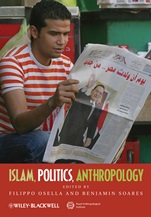
Islam, Politics, Anthropology
ISBN 9781444332957
Autor: Filippo Osella, Benjamin Soares
Wydawca: Wiley
Dostępność: 3-6 tygodni
Cena: 158,55 zł
Przed złożeniem zamówienia prosimy o kontakt mailowy celem potwierdzenia ceny.
ISBN13: |
9781444332957 |
ISBN10: |
1444332953 |
Autor: |
Filippo Osella, Benjamin Soares |
Oprawa: |
Paperback |
Rok Wydania: |
2010-01-11 |
Ilość stron: |
252 |
Wymiary: |
244x170 |
Tematy: |
JB |
Anthropology has enjoyed a lengthy – and at times problematic – engagement with Islam and Muslim societies. Islam, Politics, Anthropology offers critical reflections on past and current studies of Islam and politics in anthropology and charts new analytical approaches to examining Islam in the highly charged atmosphere of the post–9/11 world. Working with an intentionally broad understanding of politics, the volume considers not just the state, formal politics, and organizations, but also everyday politics and micropolitics – arenas where anthropology is especially adept at analysis. Essays explore contemporary ways of being Muslim and the complex politics of Muslim self–fashioning, and consider current debates about religious practice and ethics, the nature of the state, citizenship, and Muslims’ efforts to simply get by in the current historical conjuncture. Challenging formalist models of political participation in the social sciences, widespread assumptions about Muslim exceptionalism, and the recent so–called ′ethical turn,′ the volume highlights the complexities, contingencies, and contradictions in the political engagements of contemporary Muslims in a variety of locales in Africa, Asia, the Middle East, and North America. Provocative and timely, Islam, Politics, Anthropology represents a valuable contribution to understanding the place of Islam in the 21st century world.
Spis treści:
Note on Contributors
1. Islam, politics, anthropology: Benjamin Soares (Afrika–Studiecentrum) and Filippo Osella (University of Sussex)
2. Being good in Ramadan: ambivalence, fragmentation, and the moral self in the lives of young Egyptians: Samuli Schielke (Zentrum Moderner Orient)
3. Doubt, faith, and knowledge: the reconfiguration of the intellectual field in post–Nasserist Cairo: Hatsuki Aishima (University of Oxford) and Armando Salvatore (University of Naples, L&
#8217;Orientale)
4. A tour not so grand: mobile Muslims in northern Pakistan: Magnus Marsden (School of Oriental and African Studies)
5. Muslim politics in postcolonial Kenya: negotiating knowledge on the double–periphery: Kai Kresse (Zentrum Moderner Orient and University of St Andrews)
6. Between dialogue and contestation: gender, Islam, and the challenges of a Malian public sphere: Rosa De Jorio (University of North Florida)
7. Piety politics and the role of a transnational feminist analysis: Lara Deeb (University of California at Irvine)
8. Mukadas′s struggle: veils and modernity in Kyrgyzstan: Julie McBrien (Amsterdam School for Social Science Research)
9. Genealogy of the Islamic state: reflections on Maududi′s political thought and Islamism: Irfan Ahmad (Monash University)
10. Talking jihad and piety: reformist exertions among Islamist women in Bangladesh: Maimuna Huq (University of South Carolina)
11. Market Islam in Indonesia: Daromir Rudnyckyj (University of Victoria)
12. Muslim entrepreneurs in public life between India and the Gulf: making good and doing good: Filippo Osella (University of Sussex) and Caroline Osella (School of Oriental and African Studies)
13. Islam and the politics of enchantment: Gregory Starrett (University of North Carolina at Charlotte)
Index
Nota biograficzna:
Filippo Osella is a Reader in Anthropology at the University of Sussex, UK. For the past 20 years, Osella has conducted research in South India, and more recently in a number of West Asian Gulf countries. His current research focuses on the emergence of Islamic reformist movements and the rise of a new Muslim middle class in Kerala.
Benjamin Soares is an anthropologist and Senior Research Fellow at the Afrika–Studiecentrum in Leiden, The Netherlands. Soares′ publications include Islam and the Prayer Economy (2005) and two edited volumes, Islam and Muslim Po
litics in Africa (2007) and Muslim–Christian Encounters in Africa (2006).
Okładka tylna:
Anthropology has enjoyed a lengthy – and at times problematic – engagement with Islam and Muslim societies. Islam, Politics, Anthropology offers critical reflections on past and current studies of Islam and politics in anthropology and charts new analytical approaches to examining Islam in the highly charged atmosphere of the post–9/11 world. Working with an intentionally broad understanding of politics, the volume considers not just the state, formal politics, and organizations, but also everyday politics and micropolitics – arenas where anthropology is especially adept at analysis. Essays explore contemporary ways of being Muslim and the complex politics of Muslim self–fashioning, and consider current debates about religious practice and ethics, the nature of the state, citizenship, and Muslims’ efforts to simply get by in the current historical conjuncture. Challenging formalist models of political participation in the social sciences, widespread assumptions about Muslim exceptionalism, and the recent so–called ′ethical turn,′ the volume highlights the complexities, contingencies, and contradictions in the political engagements of contemporary Muslims in a variety of locales in Africa, Asia, the Middle East, and North America. Provocative and timely, Islam, Politics, Anthropology represents a valuable contribution to understanding the place of Islam in the 21st century world.
Koszyk
Książek w koszyku: 0 szt.
Wartość zakupów: 0,00 zł
Informacje


Kontakt
Gambit
Centrum Oprogramowania
i Szkoleń Sp. z o.o.
Al. Pokoju 29b/22-24
31-564 Kraków
Siedziba Księgarni
ul. Kordylewskiego 1
31-542 Kraków
+48 12 410 5991
+48 12 410 5987
+48 12 410 5989
Subskrypcje
Administratorem danych osobowych jest firma Gambit COiS Sp. z o.o. Na podany adres będzie wysyłany wyłącznie biuletyn informacyjny.
Autoryzacja płatności

Informacje na temat autoryzacji płatności poprzez PayU.

© Copyright 2012: GAMBIT COiS Sp. z o.o. Wszelkie prawa zastrzeżone.
Projekt i wykonanie: Alchemia Studio Reklamy