


Wydawcy
Katalog tematyczny
- Archeologia (109)
- Ekonomia, finanse, business (13704)
- Filozofia (1445)
- Historia (3040)
- Języki i językoznawstwo (2356)
- Lifestyle, hobby i rozrywka (475)
- Medycyna (9704)
- Nauki humanistyczne (4)
- Nauki o Ziemi i środowisku (2638)
- Nauki ścisłe (20412)
- Nauki społeczne (8486)
- Edukacja (229)
- Kryminologia, opieka spełeczna (284)
- Obronność (10)
- Polityka (1389)
- Psychologia (777)
- Socjologia (410)
- Społeczeństwo i kultura (187)
- Nauki techniczne (13450)
- Prawo (1696)
- Publikacje informacyjne i interdyscyplinarne (1288)
- Religia i wierzenia (917)
- Technika komputerowa (4067)
- Zdrowie, relacje międzyludzkie i rozwój osobisty (657)





Informacje szczegółowe o książce
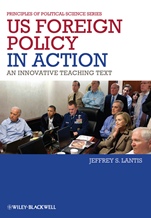
US Foreign Policy in Action: An Innovative Teaching Text
ISBN 9781444330991
Autor: Jeffrey S. Lantis
Wydawca: Wiley
Dostępność: 3-6 tygodni
Cena: 392,70 zł
Przed złożeniem zamówienia prosimy o kontakt mailowy celem potwierdzenia ceny.
ISBN13: |
9781444330991 |
ISBN10: |
1444330993 |
Autor: |
Jeffrey S. Lantis |
Oprawa: |
Hardback |
Rok Wydania: |
2012-12-14 |
Ilość stron: |
356 |
Wymiary: |
252x172 |
Tematy: |
JPS |
US foreign policy has shaped today’s world in profound ways. US engagement in global politics has sometimes promoted order and stability, and other times challenged principles of multilateral cooperation. We might not have agreed with White House reasoning on foreign affairs over the decades, but would we have behaved differently had we held the levers of power? This innovative teaching text views the US foreign policy decisionmaking process through the lens of political debate and exchange. As well as being a sound introduction to the historical developments and theories of US foreign policy, it provides students with creative learning exercises that engage them in the cut–and–thrust politics of foreign policy process, and offers experiential lessons in the complexities of international relations. The book is designed to bring the politics of foreign policy to life – by encouraging critical reflection of contending perspectives in political debates, detailing relevant historical information, and providing analytical exercises in resolving foreign policy dilemmas. In addition to a detailed narrative, chapters include discussion questions and lists of additional resources. They also feature in–text references to the companion website, with many online resources, information about teaching and learning with technology and film, and an appendix to the book.
List of Photos List of Figures List of Maps List of Tables Preface and Acknowledgments 1 Introduction: United States Foreign Policy in Action Historical Foundations Major Actors in the Foreign Policy Process Pedagogical Approach: How to Use This Book Key Features Overview of the Book 2 The History of US Foreign Policy Revolutionary Values The Struggle to Defi ne the New Nation Manifest Destiny? The Civil War Rise to Globalism The "American Century" and World Wars Discussion Questions 3 Foreign Policy in the Cold War and Post–Cold War Era Introduction The Cold War The Truman Doctrine Korea and Vietnam Redefi ning Values and Interests? The End of the Cold War Engagement and Enlargement Interests versus Values? The War on Terrorism Discussion Questions 4 Key Government Institutions: The President, Congress, and the Courts Section I: Constitutional Authority and the "Invitation to Struggle" The President and the Executive Branch Presidential Influence Instruments of Presidential Power Congress: The Legislative Branch The Courts: The Judicial Branch Conclusion Discussion Questions Section II: Structured Debate: Leadership in Action and the War on Terrorism Guidelines and Rules of Procedure Debate: Executive Dominance and the War on Terrorism Background: The War on Terrorism Framing the Debate: Values and Interests Position 1: YES, The President Should Have Greater Authority in the War on Terrorism Additional Resources Position 2: NO, The President Should Not Have More Foreign Policy Authority Additional Resources 5 Bureaucracies: Unelected Actors in the Foreign Policy Process Section I: Bureaucracies and Foreign Policy Key Characteristics of Bureaucracies The Theory of Bureaucratic Politics The Department of Defense The Department of State Intelligence Bureaucracies Discussion Questions Section II: National Security Council Simulation: Bureaucratic Politics in Action Exercise Scenario: Proliferation Threats Iranian Nuclear Ambitions Appendices: Templates and Role Assignments Additional Resources 6 Interest Groups and Political Parties Section I: The Power of Unelected Actors Interest Groups What Do You Want? How to Lobby Effectively Types of Interest Groups Political Parties Conclusion: Are All Politics "Local"? Discussion Questions Section II: Interest Groups in Action: Case–Based Learning Pedagogical Approach Environmental Policy: The United States, Interest Groups, and Climate Change A Change of Climate? Legislative Showdown Case Discussion Questions 7 Public Opinion and the Media Section I: Reaching the Masses? Public Opinion and the Media Public Opinion Public Attitudes and Foreign Policy: A Direct Line? Media and Foreign Policy The Functions of Media Contemporary Trends in Media Coverage Discussion Questions Section II: Public Opinion and the Media in Action: Problem–Based Cooperative Learning Research Project 1: Alternative News Media and Foreign Policy: Educating the Public? Research Project 2: The Media and National Security: Is There a Public "Right to Know"? 8 Grand Strategy: Then and Now Section I: What is Grand Strategy? Alternative Grand Strategy Frames for US Foreign Policy Positions Hegemony/Unilateralism Multilateralism Isolationism/Parochialism Formulating Grand Strategy in the Post–9/11 World Discussion Questions Section II: Structured Debate: A New Grand Strategy for the Twenty–First Century? Guidelines and Rules of Procedure Framing the Debate Position 1: YES, A New Foreign Policy Should be Strongly Multilateral – Vital Interests are Global What Does Multilateralism Mean for Foreign Policy? Transnational Issues and Multilateral Solutions Additional Resources Position 2: NO, A New Foreign Policy Should be Isolationist/Parochial – Vital Interests are Domestic "It′s the Economy, Stupid" What Does Parochialism Mean for US Foreign Policy? The War on Terror and US Parochialism A Sustainable Foreign Policy Agenda? Additional Resources 9 Contemporary Foreign Policy Analysis Fundamental Dynamics of Foreign Policy Obama Foreign Policy The Arab Spring Meets Liberal Engagement Domestic Political Constraints Foreign Policy Continuity versus Change What Can You Do? Bibliography Index
Jeffrey S. Lantis is Professor of Political Science at The College of Wooster, USA.
Koszyk
Książek w koszyku: 0 szt.
Wartość zakupów: 0,00 zł
Informacje


Kontakt
Gambit
Centrum Oprogramowania
i Szkoleń Sp. z o.o.
Al. Pokoju 29b/22-24
31-564 Kraków
Siedziba Księgarni
ul. Kordylewskiego 1
31-542 Kraków
+48 12 410 5991
+48 12 410 5987
+48 12 410 5989
Subskrypcje
Administratorem danych osobowych jest firma Gambit COiS Sp. z o.o. Na podany adres będzie wysyłany wyłącznie biuletyn informacyjny.
Autoryzacja płatności

Informacje na temat autoryzacji płatności poprzez PayU.

© Copyright 2012: GAMBIT COiS Sp. z o.o. Wszelkie prawa zastrzeżone.
Projekt i wykonanie: Alchemia Studio Reklamy