


Wydawcy
Katalog tematyczny
- Archeologia (109)
- Ekonomia, finanse, business (13704)
- Filozofia (1445)
- Historia (3040)
- Języki i językoznawstwo (2356)
- Lifestyle, hobby i rozrywka (475)
- Medycyna (9704)
- Nauki humanistyczne (4)
- Nauki o Ziemi i środowisku (2638)
- Nauki ścisłe (20412)
- Nauki społeczne (8486)
- Nauki techniczne (13450)
- Prawo (1696)
- Publikacje informacyjne i interdyscyplinarne (1288)
- Religia i wierzenia (917)
- Technika komputerowa (4067)
- Zdrowie, relacje międzyludzkie i rozwój osobisty (657)





Informacje szczegółowe o książce
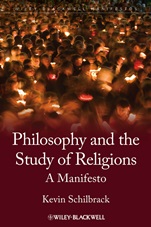
Philosophy and the Study of Religions: A Manifesto
ISBN 9781444330526
Autor: Kevin Schilbrack
Wydawca: Wiley
Dostępność: 3-6 tygodni
Cena: 380,10 zł
Przed złożeniem zamówienia prosimy o kontakt mailowy celem potwierdzenia ceny.
ISBN13: |
9781444330526 |
ISBN10: |
1444330527 |
Autor: |
Kevin Schilbrack |
Oprawa: |
Hardback |
Rok Wydania: |
2014-02-14 |
Ilość stron: |
246 |
Wymiary: |
230x162 |
Tematy: |
HP |
The knowledge we share of the world is growing and its boundaries shrinking, and consequently the field of religious studies is developing and changing as we become more familiar with the variety of religions across the globe in the twenty–first century. It is within this context of growth that Schilbrack provides a rallying call for a long–overdue transformation of the philosophy of religion. He argues for a shift from its current narrow focus on questions of God – primarily of interest to Christian theologians – to one providing a fully global critical reflection on religions in all their variety and dimensions. The time has come to shed the restrictive nature of traditional philosophy of religion, and open the discipline to the religious diversity that characterizes the world today. This is a manifesto for a philosophy of religion centered on the study of how religions are lived and practiced rather than an imposition of a set of intellectual values. It advocates a cross–cultural approach, not limited to questions of classical monotheism, but one in conversation with other fields of religious study. Philosophy of religion was invented in the Enlightenment and reflected the Eurocentric understanding of the world in that day; this manifesto persuasively argues that the discipline now needs reinventing in order to function in, and reflect our present, more complicated world.
Acknowledgements Preface Chapter 1: The Proper Task of Philosophy of Religion i. What is “traditional philosophy of religion”? ii. The first task of philosophy of religion iii. The second task of philosophy of religion iv. The third task of philosophy of religion v. What is the big idea? Chapter 2: Are Religious Practices Philosophical? i. Towards a philosophy of religious practice ii. Embodiment as a paradigm for philosophy of religion iii. Conceptual metaphors and embodied religious reason iv. Religious material culture as cognitive prosthetics v. A toolkit for the philosophical study of religious practices Chapter 3: Must Religious People Have Religious Beliefs? i. The place of belief in the study of religions ii. Objections to the concept of religious belief iii. Holding one’s beliefs in public iv. What we presuppose when we attribute beliefs v. The universality of belief Chapter 4: Do Religions Exist? i. The critique of “religion” ii. The ontology of “religion” iii. Can there be religion without “religion”? iv. “Religion” as distortion v. The ideology of “religion” Chapter 5: What Isn’t Religion? i. Strategies for defining religion ii. Making promises: The functional or pragmatic aspect of religion iii. Keeping promises: The substantive or ontological aspect of religion iv. The growing variety of religious realities v. What this definition excludes Chapter 6: Are Religions out of Touch with Reality? i. Religious metaphysics in a post–metaphysical age ii. Anti–metaphysics today iii. Constructive postmodernism and unmediated experience iv. Unmediated experience and metaphysics v. The rehabilitation of religious metaphysics Chapter 7: The Academic Study of Religions: A Map with Bridges i. Religious studies as a tripartite field ii. Describing and explaining religious phenomena iii. Evaluating religious phenomena iv. Do evaluative approaches belong in the academy? v. Interdisciplinary bridges Bibliographic essay Bibliography
Kevin Schilbrack is Professor and Head of Department of Religion and Philosophy at Western Carolina University. Schilbrack has served as president of the American Academy of Religion for the Southeast, as a senior fellow with Harvard University’s Center for the Study of World Religions, and as a participant in a Fulbright–Hays Faculty Development Seminar in Taiwan and Thailand. An award–winning teacher, he has published numerous articles in philosophy and theory of religion, and is the contributing editor of Thinking through Rituals: Philosophical Perspectives (2007) and The Wiley–Blackwell Companion to Religious Diversity (forthcoming).
Koszyk
Książek w koszyku: 0 szt.
Wartość zakupów: 0,00 zł
Informacje


Kontakt
Gambit
Centrum Oprogramowania
i Szkoleń Sp. z o.o.
Al. Pokoju 29b/22-24
31-564 Kraków
Siedziba Księgarni
ul. Kordylewskiego 1
31-542 Kraków
+48 12 410 5991
+48 12 410 5987
+48 12 410 5989
Subskrypcje
Administratorem danych osobowych jest firma Gambit COiS Sp. z o.o. Na podany adres będzie wysyłany wyłącznie biuletyn informacyjny.
Autoryzacja płatności

Informacje na temat autoryzacji płatności poprzez PayU.

© Copyright 2012: GAMBIT COiS Sp. z o.o. Wszelkie prawa zastrzeżone.
Projekt i wykonanie: Alchemia Studio Reklamy