


Wydawcy
Katalog tematyczny
- Archeologia (109)
- Ekonomia, finanse, business (13704)
- Filozofia (1445)
- Historia (3040)
- Języki i językoznawstwo (2356)
- Lifestyle, hobby i rozrywka (475)
- Medycyna (9704)
- Nauki humanistyczne (4)
- Nauki o Ziemi i środowisku (2638)
- Nauki ścisłe (20412)
- Astronomia (294)
- Biologia (5119)
- Biochemia (575)
- Biologia człowieka (14)
- Biologia komórkowa (377)
- Biologia molekularna (398)
- Biologia rozwoju (130)
- Biologia, ogólnie (1277)
- Botanika (280)
- Hydrobiologia (92)
- Mikrobiologia (363)
- Mykologia (22)
- Zoologia (303)
- Chemia (6540)
- Fizyka (3309)
- Matematyka (4574)
- Nauki ścisłe, ogólnie (503)
- Nauki społeczne (8486)
- Nauki techniczne (13450)
- Prawo (1696)
- Publikacje informacyjne i interdyscyplinarne (1288)
- Religia i wierzenia (917)
- Technika komputerowa (4067)
- Zdrowie, relacje międzyludzkie i rozwój osobisty (657)





Informacje szczegółowe o książce
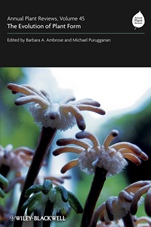
Annual Plant Reviews: The Evolution of Plant Form
ISBN 9781444330014
Autor: Barbara A. Ambrose, Michael D. Purugganan
Wydawca: Wiley
Dostępność: 3-6 tygodni
Cena: 825,30 zł
Przed złożeniem zamówienia prosimy o kontakt mailowy celem potwierdzenia ceny.
ISBN13: |
9781444330014 |
ISBN10: |
1444330012 |
Autor: |
Barbara A. Ambrose, Michael D. Purugganan |
Oprawa: |
Hardback |
Rok Wydania: |
2013-01-11 |
Ilość stron: |
400 |
Wymiary: |
242x165 |
Tematy: |
PS |
The Evolution of Plant Form is an exceptional new volume in Wiley–Blackwell’s highly successful and well established Annual Plant Reviews. Written by recognised and respected researchers, this book delivers a comprehensive guide to the diverse range of scientific perspectives in land plant evolution, from morphological evolution to the studies of the mechanisms of evolutionary change and the tools with which they can be studied. This title distinguishes itself from others in plant evolution through its synthesis of these ideas, which then provides a framework for future studies and exciting new developments in this field. The first chapter explores the origins of the major morphological innovations in land plants and the following chapters provide an exciting, in depth analysis of the morphological evolution of land plant groups including bryophytes, lycophytes, ferns, gymnosperms and angiosperms. The second half of the book focuses on evolutionary studies in land plants including genomics, adaptation, development and phenotypic plasticity. The final chapter provides a summary and perspective for future studies in the evolution of plant form. The Evolution of Plant Form provides essential information for plant scientists and evolutionary biologists. All libraries and research establishments, where biological and agricultural sciences are studied and taught, will find this important work a vital addition to their shelves.
List of Contributors xiii Preface xv Acknowledgments xvii 1 Phylogenetic Analyses and Morphological Innovations in Land Plants 1 James A. Doyle 1.1 Introduction 2 1.2 Basic innovations in cell structure and life cycle: aquatic streptophytes 4 1.3 Invasion of the land: “bryophytes” 9 1.4 Origin of vascular plants: the importance of fossils 11 1.5 Early innovations within vascular plants: leaves, roots, and heterospory 13 1.6 Innovations on the line to seed plants: “progymnosperms” and “seed ferns” 18 1.7 Innovations within seed plants, especially conifers 22 1.8 Origin of angiosperms and their innovations 26 1.9 Innovations within angiosperms: monocots and eudicots 33 Acknowledgments 36 References 36 2 The Evolution of Body Form in Bryophytes 51 Bernard Goffinet and William R. Buck 2.1 Fundamental Bauplan of bryophytes 53 2.1.1 The apical meristem is unicellular and growth is modular 53 2.1.2 The architecture of the gametophyte varies within bryophytes 54 2.1.3 Bryophytes differ consistently in their sporophytes 54 2.2 Phylogenetic relationships of bryophytes 55 2.3 Evolution of plant form in liverworts 61 2.3.1 The gametophyte 61 2.3.2 The sporophyte 64 2.3.3 Evolutionary trends 65 2.4 Evolution of plant form in mosses 67 2.4.1 The gametophyte 67 2.4.2 The sporophyte 73 2.4.3 Evolutionary trends 76 2.5 Evolution of plant form in hornworts 78 2.5.1 The gametophyte 78 2.5.2 The sporophyte 80 2.5.3 Evolutionary trends 80 2.6 The ancestral developmental toolbox of land plants 80 Acknowledgments 84 References 84 3 The Morphology and Development of Lycophytes 91 Barbara A. Ambrose 3.1 Introduction 91 3.2 Vasculature 96 3.3 Shoot apical meristems 96 3.4 Sporophyte architecture 99 3.5 Microphylls 101 3.6 Sporangia 103 3.7 Roots 105 3.8 Structural enigmas 106 3.8.1 Ligules 106 3.8.2 Rhizophores 108 3.9 Conclusions 109 Acknowledgments 110 References 110 4 Evolutionary Morphology of Ferns (Monilophytes) 115 Harald Schneider 4.1 Introduction 115 4.2 Context of evolutionary plant morphology 117 4.2.1 Perspective 1: rapid radiation versus stasis in the evolution of fern body plans 120 4.2.2 Perspective 2: key structures and organs of fern body plans 123 4.2.3 Perspective 3: genomics and evo–devo of ferns 132 Acknowledgments 134 References 134 5 Gymnosperms 141 Dennis Wm. Stevenson 5.1 Introduction 141 5.2 Architecture 142 5.3 Shoots 144 5.4 Leaves 147 5.5 Roots 150 5.6 Seeds 152 5.7 Seedlings 153 5.8 Embryology 154 References 159 6 Identifying Key Features in the Origin and Early Diversification of Angiosperms 163 Paula J. Rudall 6.1 Introduction: key features of flowering plants 163 6.2 Patterning of flowers and inflorescences 164 6.3 Eight extant lineages of flowering plants 167 6.4 Origin of the angiosperms: the phylogenetic framework 169 6.5 Resolving conflicting hypotheses of flower origin 170 6.6 Evolution of the perianth 174 6.7 Carpels, gynoecia, and organ fusion 174 6.8 Origins of floral diversity: deep–node characters and genome duplications 176 6.9 Contrasting floral ground plans 178 6.10 Iterative origins of floral symmetry patterns and floral novelties 179 6.11 Constraints and canalization in floral evolution 180 Acknowledgments 181 References 181 7 Genomics, Adaptation, and the Evolution of Plant Form 189 Kristen Shepard 7.1 Overview 189 7.2 The types of genetic variation present within species 191 7.3 From phenotype to genotype: map–based approaches to identifying adaptive genes 193 7.3.1 The genetic architecture of quantitative traits 193 7.3.2 Family–based mapping 193 7.3.3 Advantages and disadvantages of family–based QTL mapping 194 7.3.4 Population–based mapping 195 7.3.5 Advantages and disadvantages of populationbased QTL mapping 196 7.3.6 Additional considerations in QTL mapping 196 7.3.7 Emerging approaches for detecting QTL 197 7.4 From genotype to phenotype: molecular population genetics and adaptive evolution 197 7.4.1 Overview of molecular population genetics 197 7.4.2 Signatures of selection on DNA sequences 198 7.4.3 Demographic factors can complicate inferences of selection 199 7.4.4 Gathering nucleotide sequence data 199 7.4.5 Interpreting the sequence data: summary statistics and tests of neutrality 200 7.4.6 Nucleotide diversity and divergence 201 7.4.7 Analysis of the site frequency spectrum: Tajima’s D and similar tests 201 7.4.8 Analyses of linkage disequilibrium: haplotype–based tests 202 7.4.9 Comparing diversity to divergence: McDonald–Kreitman and HKA tests 202 7.4.10 Detecting local adaptation: population differentiation and reduced variability 203 7.5 Bringing it all together—the need for thorough testing of adaptive hypotheses 204 7.5.1 Techniques for testing the functional consequences of polymorphisms 204 7.5.2 Testing adaptive hypotheses 206 7.6 Case studies in molecular population genomic approaches to the evolution of plant form 207 7.6.1 Case study 1: Identifying novel components of developmental regulatory networks—BREVIS RADIX in Arabidopsis roots 207 7.6.2 Case study 2: Identifying potential targets of positive selection via a genomic scan in a nonmodel species—signatures of selection in sunflower SSRs 209 7.6.3 Case study 3: Microevolution of a small gene family—phytochromes in Arabidopsis 211 7.6.4 Phytochrome A 212 7.6.5 Phytochrome B 213 7.6.6 Phytochrome C 213 7.6.7 Case study 4: Combining association mapping and population genomics—the Arabidopsis flowering time network 215 7.7 Conclusion 219 References 220 8 Comparative Evolutionary Genomics of Land Plants 227 Amy Litt 8.1 Evolution of nuclear genome size 229 8.1.1 Gene number 232 8.2 Whole genome duplications 233 8.2.1 Whole genome duplications in non–flowering plants 236 8.2.2 Whole genome duplications in angiosperms 237 8.2.3 Impact of whole genome duplications on plant evolution 240 8.3 Transposable elements 241 8.3.1 Retrotransposons 242 8.3.2 DNA elements 243 8.3.3 Transposable elements and genome size 244 8.3.4 Dynamics of TE amplification and removal 246 8.3.5 Distribution of transposable elements in plant genomes 248 8.3.6 Impact of transposable elements on genome structure 249 8.3.7 Impact on gene diversity, expression, and function 250 8.4 Gene family expansions 252 8.4.1 Land plant gene diversification 252 8.4.2 Angiosperm gene diversification 254 8.5 Tandem gene duplications 257 8.6 Fern and gymnosperm genomes 258 8.7 Arabidopsis genome 260 8.8 Domestication 261 8.9 Future directions 263 References 265 9 Development and the Evolution of Plant Form 277 Barbara A. Ambrose and Cristina Ferrandiz 9.1 Introduction 277 9.1.1 A brief historical overview of evolutionary developmental biology 278 9.1.2 General concepts in evolutionary developmental biology 279 9.2 Plant evolutionary developmental biology 280 9.2.1 The evolution and development of the flower 281 9.2.2 The evolution and development of leaves 293 9.3 Future directions 301 9.3.1 Morphological features 301 9.3.2 Alternation of generations 301 9.3.3 Gametophytes 303 9.3.4 Sporangia and spores 304 9.3.5 Meristems 305 9.3.6 Development of model organisms 307 9.4 Conclusions 308 References 308 10 Development in the Wild: Phenotypic Plasticity 321 Kathleen Donohue 10.1 Development in the wild is phenotypic plasticity 321 10.1.1 Why are some traits more plastic than others? 323 10.1.2 Manifestations of phenotypic plasticity in plants 324 10.2 Why are some traits more plastic than others? The evolution of phenotypic plasticity 327 10.2.1 The adaptive value of plasticity: scales of environmental variation 327 10.2.2 Genetic constraints on the evolution of plasticity 332 10.3 The genetic basis of phenotypic plasticity and genetic constraints on plasticity 332 10.3.1 Molecular mechanisms of phenotypic plasticity: gene–environment interactions 333 10.3.2 How does the molecular mechanism of plasticity translate to genetic constraints on plasticity? 341 10.4 Phenotypic plasticity and local adaptation 343 10.4.1 Plasticity, niche width, and ecological isolation 344 10.4.2 Phenotypic plasticity as an intermediate stage of specialization 345 10.4.3 Does plasticity prevent or promote divergence? 346 10.5 Conclusion 348 References 349 11 The Evolution of Plant Form: a Summary Perspective 357 Michael Purugganan References 363 Index 367 A color plate section falls between pages 62 and 63
Barbara A. Ambrose is the Cullman Assistant Curator of Plant Genomics at The New York Botanical Garden, Bronx, New York, USA. Michael Purugganan is the Dorothy Schiff Professor of Genomics at the Department of Biology, Center for Genomics and Systems Biology, New York University, New York, USA, and at the Center for Genomics and Systems Biology, NYU Abu Dhabi Institute, New York University Abu Dhabi, Abu Dhabi, United Arab Emirates.
“In summary, the very good introductory parts make the book more easily accessible for beginners, undergraduates, and teachers, while the up–to–date and in–depth discussions are highly useful for every scientist who is interested in the evolution of plant forms. Overall, I will finish with my congratulations to the authors for this extremely interesting, excellent, state–of–the–art, and well–prepared book.” ( Journal of Plant Physiology , 14 September 2013) “Overall I felt that this book will be a great first port of call for those interested in morphological evolution and it will be useful at all levels from undergraduate onwards. It will be particularly useful for molecular and developmental biologists wishing to move into a comparative approach.” ( Annals of Botany , 1 July 2013)
Koszyk
Książek w koszyku: 0 szt.
Wartość zakupów: 0,00 zł
Informacje


Kontakt
Gambit
Centrum Oprogramowania
i Szkoleń Sp. z o.o.
Al. Pokoju 29b/22-24
31-564 Kraków
Siedziba Księgarni
ul. Kordylewskiego 1
31-542 Kraków
+48 12 410 5991
+48 12 410 5987
+48 12 410 5989
Subskrypcje
Administratorem danych osobowych jest firma Gambit COiS Sp. z o.o. Na podany adres będzie wysyłany wyłącznie biuletyn informacyjny.
Autoryzacja płatności

Informacje na temat autoryzacji płatności poprzez PayU.

© Copyright 2012: GAMBIT COiS Sp. z o.o. Wszelkie prawa zastrzeżone.
Projekt i wykonanie: Alchemia Studio Reklamy