


Wydawcy
Katalog tematyczny
- Archeologia (109)
- Ekonomia, finanse, business (13704)
- Filozofia (1445)
- Historia (3040)
- Języki i językoznawstwo (2356)
- Lifestyle, hobby i rozrywka (475)
- Medycyna (9704)
- Nauki humanistyczne (4)
- Nauki o Ziemi i środowisku (2638)
- Nauki ścisłe (20412)
- Astronomia (294)
- Biologia (5119)
- Chemia (6540)
- Chemia analityczna (361)
- Chemia fizyczna (346)
- Chemia nieorganiczna (137)
- Chemia organiczna (535)
- Krystalografia (27)
- Minerologia (46)
- Fizyka (3309)
- Matematyka (4574)
- Nauki ścisłe, ogólnie (503)
- Nauki społeczne (8486)
- Nauki techniczne (13450)
- Prawo (1696)
- Publikacje informacyjne i interdyscyplinarne (1288)
- Religia i wierzenia (917)
- Technika komputerowa (4067)
- Zdrowie, relacje międzyludzkie i rozwój osobisty (657)





Informacje szczegółowe o książce
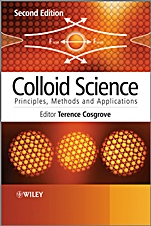
Colloid Science: Principles, Methods and Applications
ISBN 9781444320190
Autor: Terence Cosgrove
Wydawca: Wiley
Dostępność: 3-6 tygodni
Cena: 684,60 zł
Przed złożeniem zamówienia prosimy o kontakt mailowy celem potwierdzenia ceny.
ISBN13: |
9781444320190 |
ISBN10: |
144432019X |
Autor: |
Terence Cosgrove |
Oprawa: |
Hardback |
Rok Wydania: |
2010-03-12 |
Numer Wydania: |
2nd Edition |
Ilość stron: |
398 |
Wymiary: |
251x170 |
Tematy: |
PN |
Reviews of the first edition
‘the book of the course (Spring School in Colloid Science, Bristol University), is very welcome and I′m sure will be of immense benefit to those who need the basics of colloid science for their industrial or academic activities.’
‘Editor Terence Cosgrove has done an excellent job in balancing the scope and length of the various contributions... The book sets its smooth, readable style with an introduction to colloidal dispersions.’
Mike Garvey, University of Liverpool, Chemistry and Industry 2006
′Each of the chapters is lucid and insightful.′
Journal of Colloid and Interface Science 2005
Colloids have been the subject of scientific investigation for over 150 years, and yet the practical applications of colloid science show no signs of abating. Common in everyday life, colloids form the basis of a wide range of consumer, industrial and high technology products, from toothpaste to fire–fighting foam. Today there is a drive to use the tools of colloid science to microscopically engineer and synthesise new materials and develop biotechnology. This presents genuinely new and exciting challenges in physics, chemistry, engineering and biology.
Based on the highly successful Bristol Colloid Centre Spring School, Colloid Science Second Edition provides a thoroughly updated introduction to the principles and practical applications of colloid and surface science.
NEW! chapters on emulsions and surface forces.
Spis treści:
Preface
Introduction
Acknowledgements
List of Contributors
1 Introduction to Colloids
Roy Hughes
1.1 Introduction
1.2 Basic Definitions
1.3 Stability
1.4 The end of colloids
References
2 Charge in Colloidal Systems
David Fermin and Jason Riley
2.1 Introduction
2.2 The Ori
gin of Surface Charge
2.3 The Electrochemical Double layer
2.4 Electrokinetic Properties
References
3 Stability of charge stabilised colloids
John Eastman
3.1 Introduction
3.2 The colloidal pair potential
3.3 Criteria for stability
3.4 Kinetics of coagulation
3.5 Conclusions
References
4 Surfactant aggregation and adsorption at interfaces
Julian Eastoe
4.1 Characteristic features of surfactants
4.2 Classification and applications of surfactants
4.3 Adsorption of surfactants at interfaces
4.4 Surfactant solubility
4.5 Micellisation
4.6 Liquid Crystalline mesophases
4.7 Advanced Surfactants
References
5 Microemulsions
Julian Eastoe
5.1 Microemulsions: Definition and History
5.2 Theory of Formation and Stability
5.3 Physicochemical Properties
5.4 Developments and Applications
References
6 Emulsions
Brian Vincent
6.1 Introduction
6.2 Preparation
6.3 Stability
References
Textbooks and General reading
7 Polymers and Polymer Solutions
Terence Cosgrove
7.1 Introduction
7.2 Polymerisation
7.3 Copolymers
7.4 Polymer physical properties
7.5 Polymer Uses
7.6 Theoretical Models of Polymer Structure
7.7 Measuring Polymer Molecular Weight
7.8 Polymer Solutions
References
8 Polymers at Interfaces
Terence Cosgrove
8.1 Introduction
8.2 Adsorption of polymers
8.3 Models and Simulations for Terminally Attached Chains
8.4 Experimental Aspects
8.5 Copolymers
8.6 Polymer brushes
8.7 Conclusions
References
9 Effect of Polymers
on Colloid Stability
Jeoren van Duijneveldt
9.1 Introduction
9.2 Particle interaction potential
9.3 Steric Stabilisation
9.4 Depletion interactions
9.5 Bridging Interactions
9.6 Conclusion
References
10 Wetting of Surfaces
Paul Reynolds
10.1 Introduction
10.2 Surfaces and Definitions
10.3 Surface Tension
10.4 Surface Energy
10.5 Contact Angles
10.6 Wetting
10.7 Liquid Spreading and Spreading Coefficients
10.8 Cohesion and Adhesion
10.9 Two liquids on a surface
10.10 Detergency
10.11 Spreading of a Liquid on a Liquid
10.12 Characterisation of a Solid Surface
10.13 Polar and Dispersive components
10.14 Polar Materials
10.15 Wettability Envelopes
10.16 Measurement Methods
10.17 Conclusions
References
11 Aerosols
Nana–Owusua A. Kwamena and Jonathan P. Reid
11.1 Introduction
11.2 Generating and Sampling Aerosol
11.3 Determining the particle Concentration and Size
11.4 Determining Particle Composition
11.5 The Equilibrium State of Aerosols
11.6 The Kinetics of Aerosol Transformation
11.7 Concluding Remarks
References
12 Practical Rheology
Roy Hughes
12.1 Introduction
12.2 Making Measurements
12.3 Rheometry & Viscoelasticity
12.4 Examples of Soft Materials
12.5 Summary
References
13 Scattering and Reflection Techniques
Robert Richardson
13.1 Introduction
13.2 The Principle of a Scattering Experiment
13.3 Radiation for Scattering Experiments
13.4 Light Scattering
13.5 Dynamic Light Scattering
13.6 Small Angle Scattering
<
b>13.7 Sources of Radiation
13.8 Small Angle Scattering Apparatus
13.9 Scattering and absorption by Atoms
13.10 Scattering Length Density
13.11 Small Angle Scattering from a Dispersion
13.12 Form Factor for Spherical Particle
13.13 Determining particle size from SANS and SAXS
13.14 Guinier plots to determine radius of gyration
13.15 Determination of particle shape
13.16 Polydispersity
13.17 Determination of particle size distribution
13.18 Alignment of anisotropic particles
13.19 Concentrated Dispersions
13.20 Contrast Variation using SANS
13.21 High Q Limit: Porod Law
13.22 Introduction to X–Ray and Neutron Reflection
13.23 Reflection Experiment
13.24 A Simple Example of a Reflection Measurement
13.25 Conclusion
References
14 Optical Manipulation
Paul Bartlett
14.1 Introduction
14.2 Manipulating matter with light
14.3 Force generation in optical tweezers
14.4 Nanofabrication
14.5 Single particle dynamics
14.6 Conclusions
References
15 Electron Microscopy
Sean Davis
15.1 General Features of (Electron) Optical Imaging Systems
15.2 Conventional TEM
15.3 Conventional SEM
15.4 Summary
References
16 Surface Forces
Wuge Briscoe
16.1 Introduction
16.2 Forces and energy; size and shape
16.3 Surface force measurement techniques
16.4 Different types of surface forces
16.5 Recent examples of surface force measurement
16.6 Future challenges
References
Index
Okładka tylna:
Reviews of the first edition
‘the book of the course (Spring School in Colloid Science, Bristol University), is very welc
ome and I′m sure will be of immense benefit to those who need the basics of colloid science for their industrial or academic activities.’
‘Editor Terence Cosgrove has done an excellent job in balancing the scope and length of the various contributions... The book sets its smooth, readable style with an introduction to colloidal dispersions.’
Mike Garvey, University of Liverpool, Chemistry and Industry 2006
′Each of the chapters is lucid and insightful.′
Journal of Colloid and Interface Science 2005
Colloids have been the subject of scientific investigation for over 150 years, and yet the practical applications of colloid science show no signs of abating. Common in everyday life, colloids form the basis of a wide range of consumer, industrial and high technology products, from toothpaste to fire–fighting foam. Today there is a drive to use the tools of colloid science to microscopically engineer and synthesise new materials and develop biotechnology. This presents genuinely new and exciting challenges in physics, chemistry, engineering and biology.
Based on the highly successful Bristol Colloid Centre Spring School, Colloid Science Second Edition provides a thoroughly updated introduction to the principles and practical applications of colloid and surface science.
NEW! chapters on emulsions and surface forces.
Koszyk
Książek w koszyku: 0 szt.
Wartość zakupów: 0,00 zł
Informacje


Kontakt
Gambit
Centrum Oprogramowania
i Szkoleń Sp. z o.o.
Al. Pokoju 29b/22-24
31-564 Kraków
Siedziba Księgarni
ul. Kordylewskiego 1
31-542 Kraków
+48 12 410 5991
+48 12 410 5987
+48 12 410 5989
Subskrypcje
Administratorem danych osobowych jest firma Gambit COiS Sp. z o.o. Na podany adres będzie wysyłany wyłącznie biuletyn informacyjny.
Autoryzacja płatności

Informacje na temat autoryzacji płatności poprzez PayU.

© Copyright 2012: GAMBIT COiS Sp. z o.o. Wszelkie prawa zastrzeżone.
Projekt i wykonanie: Alchemia Studio Reklamy